
 Recruit


What is a PEO company?
Running a business is no small feat and when HR, payroll, and compliance start eating into your time, a Professional Employer Organization (PEO) can help lighten the load. A PEO acts as a co-employer, stepping in to manage everything from tax filings and employee benefits to onboarding and labor law compliance, so you can stay focused on growth.
Whether you’re a startup hiring your first remote employee or an established company expanding across state lines, a PEO can give you the full power of an HR department, without having to build one from scratch.
In this guide, we’ll walk through how PEOs work, who they’re for, what they handle, and how to know if it’s the right move for your business.
Key Benefits of a PEO:
- Simplified Payroll and Tax Management: Handles payroll processing and ensures tax compliance.
- Access to Competitive Benefits: Provides group benefits such as health insurance and retirement plans.
- Compliance Support: Assists in navigating employment laws and maintaining regulatory compliance.
- HR Expertise: Offers resources and support for employee management and HR system administration.
- Cost Efficiency: Reduces administrative burden, allowing you to focus on business growth.

How Does a PEO Work?
Think of a PEO as your behind-the-scenes HR partner. When you sign up with a Professional Employer Organization, you enter into a co-employment relationship. This means your employees are technically employed by both your business and the PEO – on paper, the PEO handles the HR and compliance side; in practice, you still manage your team’s daily work.
Here’s what the PEO typically takes care of:
- Payroll and tax filings – including W-2s, withholdings, and payments to federal and state agencies
- Employee benefits – group health plans, dental and vision coverage, retirement options, and more
- Workers’ compensation and unemployment insurance – keeping you compliant with state-specific requirements
- HR support – onboarding, policy handbooks, training, and even performance guidance
- Regulatory compliance – helping you follow employment laws in every state where your team works
Because the PEO becomes the employer of record for tax and legal purposes, they also take on liability for certain HR functions. That’s a big win for small and mid-sized companies that don’t have in-house legal or compliance teams.
Want to see how this compares to an Employer of Record (EOR)? Check out our PEO vs. EOR: What’s The Difference Guide for a full breakdown.
For companies with a distributed workforce, especially across multiple states, partnering with a PEO can be a game changer. You can even explore state-specific PEO pages to see how local compliance works in places like North Carolina or Massachusetts.
PEO vs. EOR: What’s the Difference?
People often confuse Professional Employer Organizations (PEOs) with Employers of Record (EORs), and while they both help you manage teams, they serve different needs.
PEO: A PEO enters into a co-employment agreement. You still run the business and manage your team, but the PEO becomes the legal employer for things like payroll, taxes, and benefits. This works best when you already have a U.S. business entity and need help supporting your team.
EOR: An EOR, on the other hand, is the legal employer and the business entity. This is ideal for companies hiring in countries or states where they don’t yet have a presence. The EOR handles all legal obligations so you don’t need to open a local entity.
Here’s a quick way to think about it:
- Use a PEO when you’re already established and want help managing HR.
- Use an EOR when you want to hire without setting up shop in a new region.
PEO vs. HCM: What’s the Difference?
Let’s clear up another common mix-up: PEOs vs. HCM platforms. At first glance, they both help with HR, but what they actually do is very different.
An HCM (Human Capital Management) platform is a software solution. It gives you the tools to manage HR functions like payroll, performance reviews, onboarding, and benefits, but you still have to do the work. Think of it as self-service.
A PEO, by contrast, offers a full-service HR partnership. It’s not just a platform. It’s a provider that actually runs the day-to-day admin on your behalf. The PEO processes payroll, files taxes, manages compliance, and deals with benefits vendors, so your team doesn’t have to.
Quick comparison:
- HCM = tools (DIY HR)
- PEO = team + tools (done-for-you HR)
If you’re not sure which route makes the most sense, check out our guide on how to choose the right PEO or HR solution.
What Is a CPEO and Why Does It Matter?
Not all PEOs are created equal and that’s where CPEO status comes in. A Certified Professional Employer Organization (CPEO) is a PEO that has met strict IRS requirements for financial stability, tax compliance, and transparency. This certification, introduced by the IRS in 2017, gives businesses extra peace of mind when partnering with a PEO.
Why does it matter?
- Fewer tax risks: With a CPEO, you won’t be held liable for certain federal employment taxes if something goes wrong on their end. The CPEO assumes responsibility.
- Verified financial health: To maintain certification, a CPEO must undergo annual audits and maintain a solid financial foundation.
- Federal recognition: CPEO status signals that the IRS has officially vetted the provider; a rare badge of trust in the HR services space.
If you’re considering a PEO, ask if they’re a CPEO. It’s not mandatory, but it’s a strong sign of reliability.
Want to learn more? You can review the full list of IRS-certified CPEOs here.
State Registration Requirements for PEOs
PEOs don’t just need to keep the IRS happy. They also have to comply with state-level regulations, which can vary widely across the U.S.
In most states, PEOs must register or obtain a license to legally operate. This usually involves providing proof of:
- Financial responsibility (such as bonding or audited financial statements)
- Workers’ compensation insurance coverage
- Proper business registration and tax status
- Compliance with co-employment laws
Some states go further, requiring annual renewals, client disclosures, or approval of PEO contracts. Others, like Florida, Texas, and Massachusetts, have dedicated agencies overseeing PEO compliance.
The goal? To protect businesses and employees by ensuring any PEO operating in the state is financially stable and operating above board.
Top Benefits of Using a PEO
A Professional Employer Organization is a workaround for HR headaches and it’s a strategic upgrade for growing businesses. Here are some of the biggest advantages:
- Access to High-Quality Benefits: PEOs negotiate with top-tier providers to offer health, dental, vision, retirement plans, life insurance, and more at rates small businesses usually can’t touch.
- Full-Service Payroll and Tax Filing: From W-2s and 1099s to withholdings and multi-state filings, your payroll is handled accurately and on time.
- Built-In Compliance Support: Labor laws change fast. A PEO keeps your policies, contracts, and processes in sync with evolving federal and state laws (including ACA, EEOC, and FMLA).
- Risk Mitigation: Reduce legal exposure around employee disputes, wrongful termination claims, and classification issues, as many PEOs even provide Employment Practices Liability Insurance (EPLI).
- Streamlined Hiring and Onboarding: Many PEOs offer applicant tracking systems, background checks, and fast digital onboarding to get new hires started seamlessly.
- Scalability: Whether you’re growing locally or expanding across state lines, a PEO helps you stay nimble with fewer administrative slowdowns.
The National Association of Professional Employer Organizations (NAPEO) reports that businesses using PEOs grow 7–9% faster and experience lower employee turnover than those that don’t.
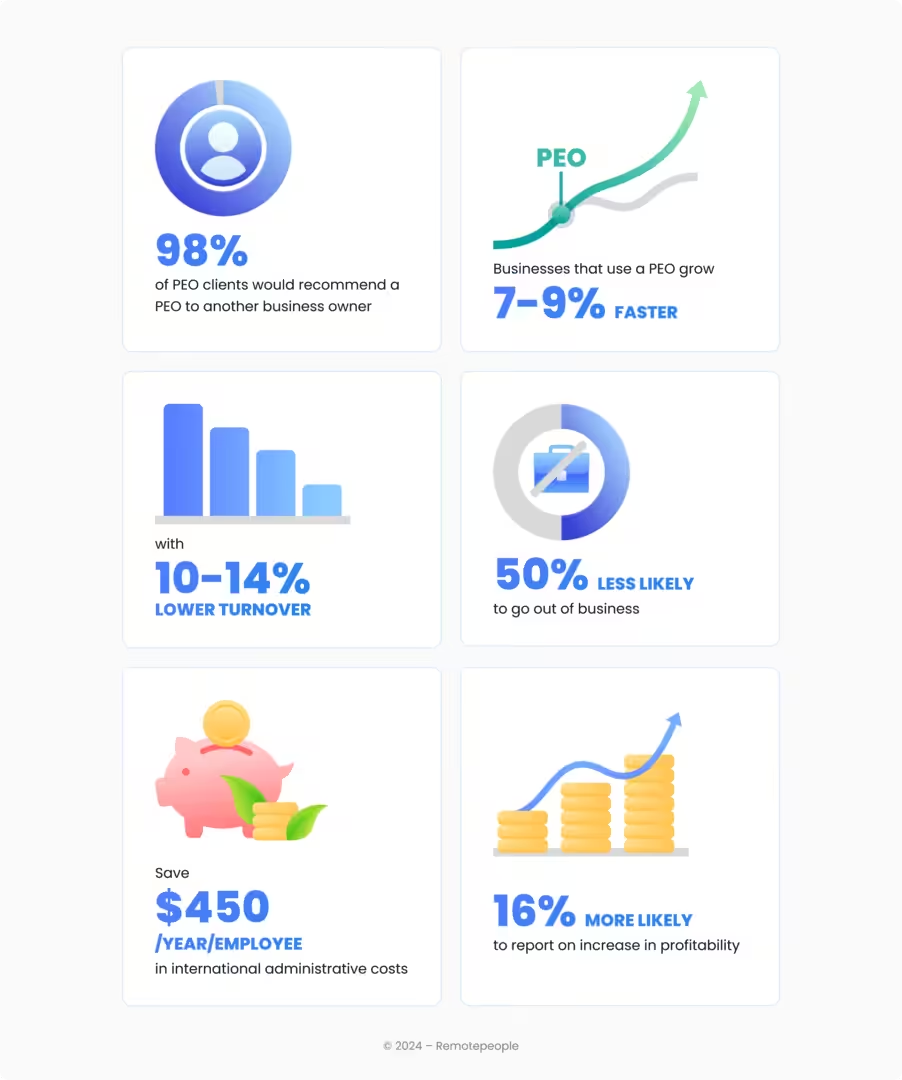
The National Association of Professional Employer Organizations (NAPEO)—why you need a PEO
What Are the Disadvantages of Using a PEO?
While PEOs offer huge upsides, they’re not the perfect fit for every company. Before jumping in, it’s important to weigh the potential drawbacks:
- Less Control Over HR Processes: Because you’re sharing employment responsibilities, some decisions, like benefit plan design or workers’ comp coverage, may be influenced by the PEO’s framework rather than your own preferences.
- Co-Employment Confusion: The idea that your employees are legally co-employed by another company can feel murky. It’s essential to understand where your responsibilities begin and end.
- Lack of Customization: Some PEOs operate on a one-size-fits-all model. If your business needs highly tailored HR support, or you want to retain full control over every HR decision, a PEO might feel too rigid.
- Contract Commitments: Some providers lock clients into annual agreements with steep termination fees. Make sure you understand the fine print and service terms before signing.
- Technology Limitations: Not all PEOs offer modern, user-friendly platforms. If seamless integrations or intuitive dashboards matter to your workflow, vet each provider’s tools thoroughly.
These disadvantages don’t cancel out the benefits, but they are worth considering, especially if you’re comparing PEOs to other HR solutions like HCM platforms or Employer of Record (EOR) services.
Overcoming the Potential PEO Downsides
Most of the challenges that come with using a PEO aren’t deal breakers. In fact, with the right questions and planning, you can avoid common pitfalls altogether.
Here’s how to navigate them:
- Ask About Flexibility: Not all PEOs are rigid. Many now offer modular services, allowing you to keep certain tasks in-house or bring your own broker for benefits. Don’t be afraid to negotiate a package that fits your structure.
- Clarify the Co-Employment Agreement: A trustworthy PEO will outline exactly what they manage, like payroll, compliance, and risk mitigation, and what stays on your plate, such as hiring decisions and daily team oversight. Knowing who handles what avoids confusion and keeps your operations running smoothly.
- Vet the Tech: Request a platform demo before committing. Can your team easily manage onboarding, PTO, and payroll? Does it integrate with your current systems? Clean, intuitive software makes a world of difference.
- Start with a Shorter Commitment: If you’re unsure, look for providers that offer month-to-month or short-term contracts with clear exit terms. This gives you flexibility while you test the waters.
- Choose a Provider With Industry & State Expertise: Especially in regulated industries or states like California, Massachusetts, or New York, local labor laws matter. A provider familiar with your region and sector will help you stay compliant and avoid costly missteps.
In short? Do your homework. Not all PEOs are created equal, but the right one can become a true extension of your business.
What Are the Alternatives to Using a PEO?
A PEO isn’t your only option for handling HR, payroll, and compliance, especially if you’re looking for more control, specific capabilities, or a different level of support. Here are the most common alternatives:
1. In-House HR Team
Building your own internal HR department gives you full control over policies, systems, and employee management.
Best for: Larger companies with the budget and capacity to manage HR internally
Watch out for: High overhead costs and steep learning curves with multi-state or international compliance
2. HR Software or HCM Platforms
Human Capital Management (HCM) tools like Gusto, Rippling, or BambooHR provide software-driven solutions for payroll, time tracking, and onboarding, without co-employment.
Best for: Companies that want control with automation and modern integrations
Watch out for: You’ll still be responsible for compliance and legal obligations
Explore our full PEO vs HCM comparison to see which model fits your goals.
3. Employer of Record (EOR)
An Employer of Record is ideal for global hiring. EORs act as the legal employer for your international workers and take care of everything from contracts to taxes.
Best for: Companies expanding internationally without opening a local entity
Watch out for: EORs usually aren’t used for domestic hires within your home country
4. Staffing Agencies
Staffing firms provide temporary or contract workers to fill immediate gaps.
Best for: Short-term projects or seasonal needs
Watch out for: Limited control over culture fit and long-term costs
If you’re not sure which model fits your team, check out our guide on how to choose the right employment model.
Examples of top-rated PEO companies
There are many reputable PEO companies out there, so it’s important to do your research to find the one that’s the best fit for your business. A few top-rated PEO companies include:
- G&A Partners: G&A Partners offers a full suite of HR solutions, including ASO, HRO, and PEO. It also goes beyond the offerings of many providers with recruitment process and accounting outsourcing as well.
- TriNet: Trinet integrates its own HR platform into its PEO and HR offerings and is focused on the small and medium enterprises (SMEs) market. Since 1995, it has been accredited by the Employer Services Assurance Corporation (ESAC). Read more about these PEO and HR solutions in our TriNet review.
- Insperity: Insperity is a full-service PEO and HR company serving businesses of all sizes. It focuses on the customer experience. For more information, see our Insperity review.
- Justworks: This is a newer PEO with a state-of-the-art platform that sports comprehensive employee management tools, such as time tracking. Read more in our detailed Justworks PEO analysis.
- ADP: Arguably the most established company in the industry, existing for over 70 years, ADP offers a comprehensive range of payroll, PEO, and HR solutions. Read more about the ADP PEO solution in our review.
Is a PEO the Right Solution for Your Business?
Still wondering if a PEO is the right move? Here’s a quick way to tell.
You might be ready for a PEO if:
- You’re spending more time on HR tasks than growing your business
- You want to offer better benefits but can’t negotiate affordable rates on your own
- Your team is growing quickly across multiple states
- You’re unsure how to stay compliant with changing labor laws
- You don’t have an in-house HR department or it’s stretched thin
A PEO might not be your best fit if:
- You need total control over every HR decision
- You already have strong internal HR infrastructure
- You’re hiring only internationally (in which case, an EOR might make more sense)
At the end of the day, a PEO isn’t just about outsourcing. It’s about elevating. If you’re looking to streamline operations, reduce risk, and take better care of your team, partnering with the right PEO can be a strategic win.
Frequently Asked Questions
A PEO (Professional Employer Organization) handles payroll, HR, benefits, and compliance for businesses. It helps save time and money, offers access to better employee benefits, and ensures you stay compliant with labor and tax laws.
PEOs are especially useful for small to mid-sized businesses, typically those with 5 to 200 employees. They offer enterprise-level HR support without the overhead of building an in-house department.
Absolutely. Many companies use a PEO to complement their internal HR team. You can offload administrative tasks like payroll and benefits, freeing your team to focus on strategy and culture.
Yes, but it’s a co-employment arrangement. You maintain control over daily operations and employee management, while the PEO handles legal and administrative employer responsibilities.
By pooling employees across multiple clients, PEOs can offer access to better benefits at lower costs. They also help reduce risk and avoid penalties by ensuring legal compliance.
Yes. Most PEO agreements include termination clauses; just make sure to review contract terms, notice periods, and any transition services offered before signing on.




