
 Recruit


Summary: A job interview is a formal meeting between a job applicant and company representatives to learn more about the candidate and determine if they are a good fit for the position.
Job Interview and its purpose
A job interview is a formal meeting between a job applicant and company representatives (it could be someone from human resources (HR), the hiring manager, or the team the applicant would be working with) to learn more about the candidate and determine if they are a good fit for the position.
The key objectives of a job interview:
- Evaluate qualifications: A job interview is a good time for the employer to learn more about the applicant’s skills, experience, and qualifications to determine if they are a suitable fit and would succeed in the role.
- Assess cultural fit: During the job interview, the employer can assess whether the candidate would fit well within the company culture. This can be done by learning more about their goals, values, work style, and approach to handling job requirements.
- Verify information: A job interview presents the employer with the opportunity to ask the candidate more about the information on their resume, like their background, education, and experience. Employers and recruiters can also ask for references to verify information like job history and get a second opinion on the candidate’s qualifications.
- Mutual exploration: While the job interview is primarily for the employer to learn more about the candidate and their qualifications, it’s also a chance for the applicant to ask questions about the role and the company so that both parties are better informed in making a decision.
What are the different types of job interviews?
- One-on-one interview: This is the most traditional type of job interview, in which an employer and candidate meet face-to-face to discuss the role in person. It can be unstructured, where the interview is conducted more like a conversation, or structured, where the interviewer asks the same questions from each potential hire.
- Video interview: This is when the interview is conducted using video, either through a video chat (for example, Zoom) or a pre-recorded video that could involve the candidate responding to a set of prompts or questions. This interview style has become more prevalent in recent years with the advancement of technology and the rise of remote and hybrid working arrangements.
- Phone interview: This interview is conducted over the phone and can be a good way for an employer to do preliminary screening to narrow the batch of potential hires before moving on to a more thorough interview stage.
- Group interview: This is where several candidates are interviewed simultaneously, which allows the employer to interview more efficiently and see how a candidate interacts with others.
- Panel interview: This is when a “panel” or group of interviewers focuses on one candidate. The different interviewers might represent different departments in the company, or the interview could be tiered, with varying levels of managers up to senior executives.
- Behavioral interview: This is when an interviewer asks a job candidate how they might respond to certain situations or how they may have dealt with situations in past job experiences. This can let the employer know if the candidate’s approach and behavioral traits fit the role well. It also might be included in another interview style.
- Skills-based interview: Also known as a competency-based interview, this interview style allows the employer to assess the candidate’s skill sets. For example, in a technical position like coding or computer engineering, this interview style might be used to determine if the applicant has the right technical skills to perform in the position.
- Informal interview: This is a more casual approach to an interview that might be structured more like a conversation over lunch or coffee. Similar to a phone interview, this style can be used as a screening tool to narrow down a batch of candidates.
How to Prepare for a Job Interview
Job interviews can be challenging, but with proper preparation, you can approach the process with confidence and leave a strong, lasting impression. The goal is to be ready to showcase why you’re the ideal candidate and leave the interviewer with a clear sense of why you’d be a great fit for the team.
Here are some essential tips to help you prepare for a job interview and improve your chances of success:
1. Research the Company
Before the interview, make sure you research the company. Understand its mission, values, products, services, and culture. This will not only help you tailor your responses but also demonstrate that you’re genuinely interested in the organization.
2. Understand the Job Role
Carefully read the job description and note the key responsibilities and required skills. Be ready to explain how your experience aligns with these requirements, and provide examples that showcase your qualifications.
3. Prepare for Common Interview Questions
Some questions are almost guaranteed to come up in most interviews, such as:
- “Tell me about yourself.”
- “What are your strengths and weaknesses?”
- “Why do you want to work here?”
- “Where do you see yourself in five years?”
Practice answering these questions clearly and confidently, focusing on your skills and achievements. You can read more about this in our Guide to the Most Common Interview Questions and Answers.
In addition to practicing responses, leverage resources like Glassdoor to gain insights into the interview process. Glassdoor provides valuable information on the types of questions asked by specific companies, the overall difficulty of their interviews, and the experiences of previous candidates. By reviewing this information, you can better tailor your preparation to meet the expectations of the employer and enhance your performance.
REMOTE PEOPLE IMPORTANT TIP
You can visit Glassdoor’s “Interview Questions & Reviews” section for specific questions that are commonly asked by employers in your field. This will give you a clearer idea of what to prepare for and make you feel more confident walking into the interview.
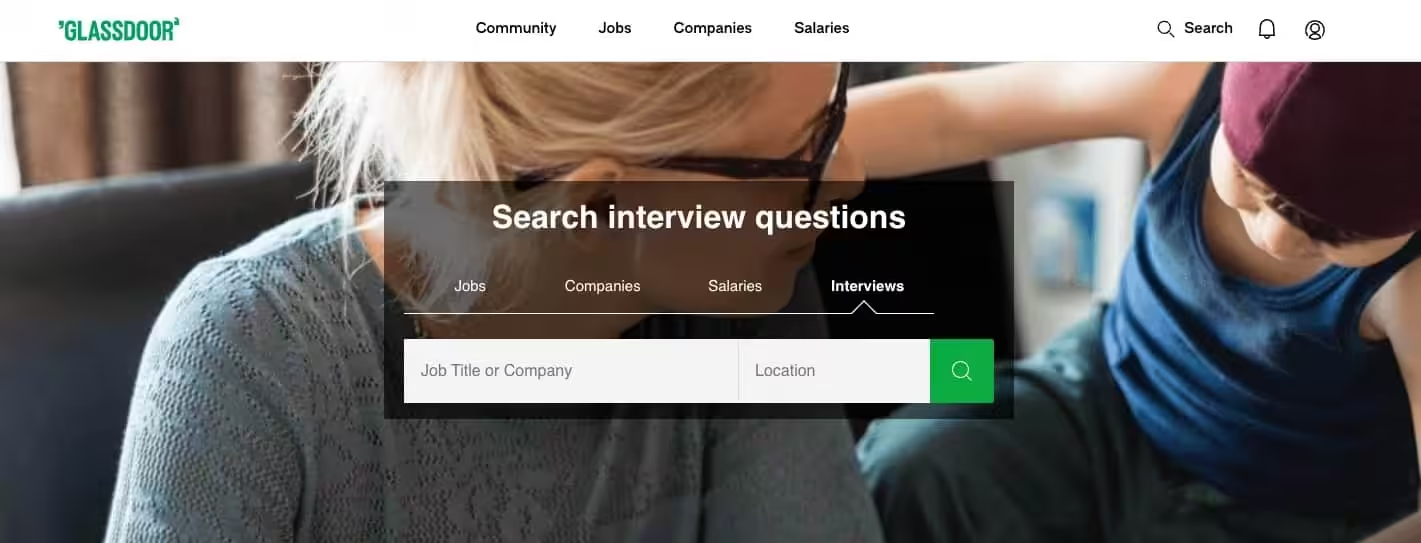
You can find information on common interview questions asked by employers, interview difficulty levels, and candidate experiences.
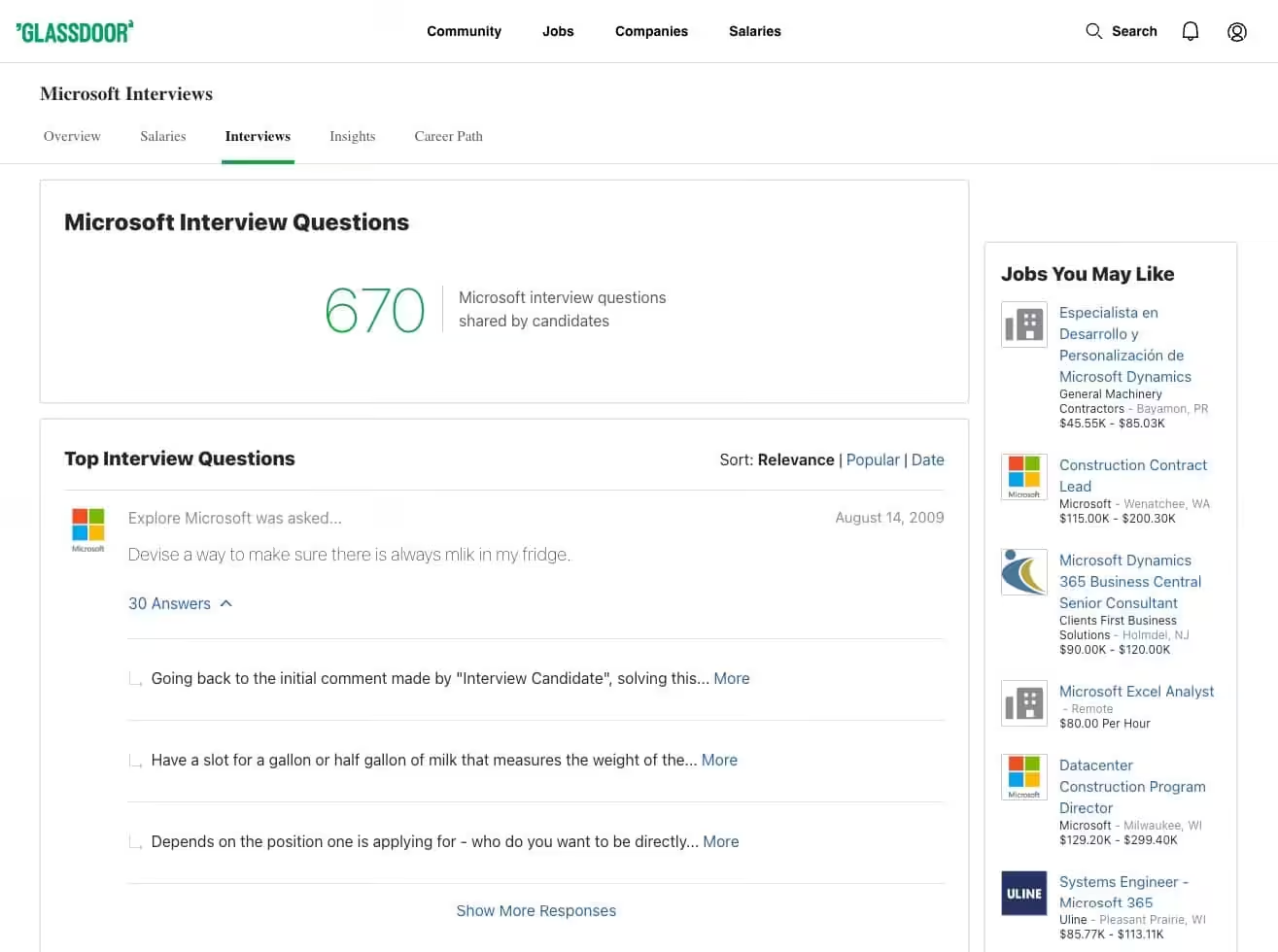
The platform provides insights into the interview process by sharing real interview questions asked by candidates, along with ratings on interview difficulty. This helps you assess the level of preparation needed based on others’ experiences.

In addition to detailed questions, Glassdoor offers information on how candidates landed their interviews, which can help you understand the best ways to approach the application process. For those aiming for top positions, Glassdoor also highlights interviews for high-demand roles and provides additional resources such as salary data, company reviews, and tips on navigating the hiring process.
4. Use the STAR Method
For behavioral interview questions, use the STAR method (Situation, Task, Action, Result) to structure your answers. This method helps you present clear, concise responses backed by examples.
5. Prepare Questions for the Interviewer
An interview is a two-way street, so be sure to have questions ready for the interviewer. This shows you’re prepared and interested in the role.
Ask about the company’s culture, team dynamics, or what success looks like in the role you’re applying for.
6. Dress Appropriately
Dressing appropriately for an interview is crucial. Choose attire that matches the company’s culture and the job role. When in doubt, it’s better to be slightly overdressed than underdressed.
7. Arrive Early
Being on time is key. Arriving 10-15 minutes early not only shows punctuality but also gives you time to settle and calm any nerves before the interview starts.
8. Be Yourself
Be yourself during the interview. Employers want to know who you are as a person and whether you’ll fit well into the company culture. Authenticity can go a long way in building a connection with the interviewer.
How can employers prepare for conducting effective job interviews?
- Preparing in advance by thoroughly reading the applicant’s resume and cover letter, if included, to better select specific questions that can help determine if they are suited for the position.
- When preparing the interview questions, be very clear on the job’s expectations, responsibilities, and qualifications.
- Using a structured approach or standardized questions for all applicants can improve the consistency and fairness of the interview process.
- Many job seekers find interviews nerve-wracking, so ensuring the environment is comfortable can help them relax and be more open and engaging when answering questions.
- Take notes. When interviewing multiple people for a position, it’s helpful to have notes to reference later to recall key details of the interview and how the applicant compares to other candidates.
- Leave room for questions from the applicant at the end of the interview. This can inform the applicant and provide the interviewer insight into how prepared the candidate is and what they might be looking for in a job or company.
What happens during and after a job interview?
During the job interview
The interview usually starts with an introduction of the interviewer and an overview of the company and the job. The interviewer might also begin with an icebreaker or some small talk to help make the environment more relaxing.
Most interviews involve a question-and-answer session to evaluate the candidate’s skills, experience, and fit for the role and the company culture. Depending on the role, the candidate may be asked to perform specific tasks or exercises during the interview, especially if the interviewer needs to confirm specific technical skills or qualifications required in the role.
At the end of the interview, the interviewer typically explains the next steps in the hiring process. This could include additional interviews or testing. The interviewer usually also gives the candidate a general time frame for hearing back regarding any decision.
After the job interview
Following the interview, the company will typically examine the candidate’s interview responses, skills, and suitability for the role. This could include a standard scoring system or a recommendation from the interviewer based on their assessment. The company or interviewer might also use this time to contact the references a potential candidate has supplied for more information gathering or verification.
Once a decision is reached, a successful candidate typically receives a job offer with details about the salary, benefits, and other employment terms. If the candidate accepts, the onboarding process can begin.
It’s considered ideal for an interviewer to still communicate with unsuccessful candidates to let them know the company has decided to go in another direction, thank them for their interest, and/or inform them about any particular factors that weighed in the final decision.

Drew Donnelly
Director, Regulatory Affairs
Andrew (Drew) joined the Remote People team in 2020 and is currently Director, Regulatory Affairs. For the past 13 years, he has been a trusted advisor to C-Suite executives and government ministers on international compliance and regulatory issues. Drew holds a law degree from the University of Otago, a PhD from the University of Sydney, and is an enrolled Barrister and Solicitor of the High Court of New Zealand.