
 Recruit


The Employer of Record (EOR) model has long been a convenient solution for companies expanding internationally. However, recent regulatory changes worldwide may be challenging its viability. This article explores the increasing restrictions on EORs globally, examining whether these developments signal the end of the EOR model as we know it.
Note, the focus here is on recent regulatory changes and proposed bans on EOR. For general information on where Employer of Record services are legal, see our ‘Is Employer of Record Legal?‘ Guide.
What is the Employer of Record Model?
An Employer of Record (EOR) is a third-party organization that becomes the legal employer for a company’s workforce in a specific country or region. This arrangement allows businesses to hire employees in foreign markets without the need to establish a local legal entity. The EOR handles all employment-related tasks, including payroll, taxes, benefits, and compliance with local labor laws, while the client company directs the day-to-day activities of the employees.
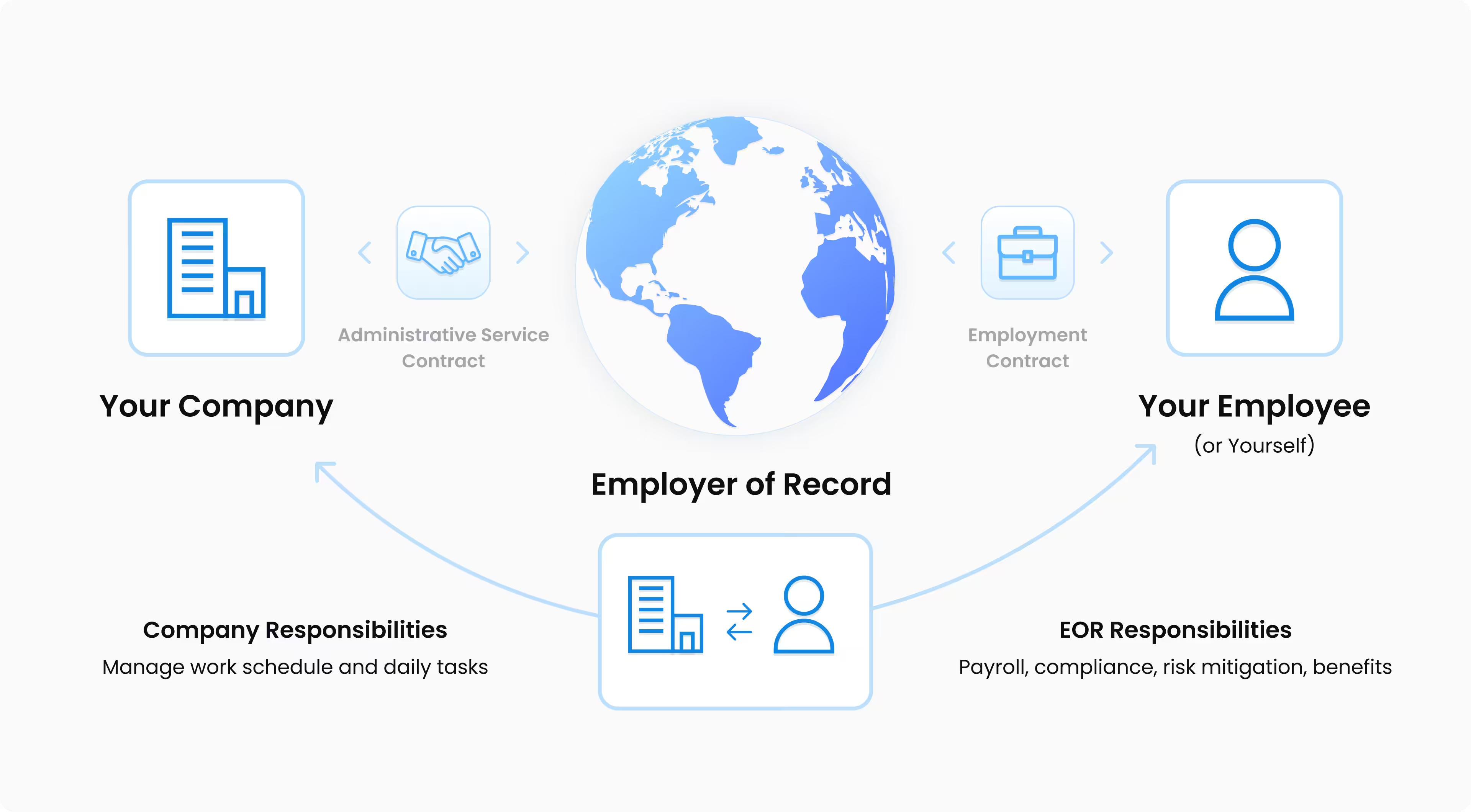
An Employer of Record (EOR) is a third-party organization that becomes the legal employer for a company’s workforce in a specific country or region. This arrangement allows businesses to hire employees in foreign markets without the need to establish a local legal entity. The EOR handles all employment-related tasks, including payroll, taxes, benefits, and compliance with local labor laws, while the client company directs the day-to-day activities of the employees.
For a more detailed explanation, you can refer to this Comprehensive Guide on Employer of Record.
Traditional Use Cases
Traditionally, the EOR model has been used as a temporary bridge for entering new markets. Companies looking to test the waters in a foreign country could employ staff quickly without the time and expense of setting up a local subsidiary. This approach facilitated a quick setup, allowing businesses to capitalize on market opportunities without significant upfront investment.
Moreover, Employer of Record companies have been invaluable in handling compliance with local labor laws, payroll, and benefits administration. Navigating the complex regulatory environments of different countries can be challenging, and mistakes can lead to legal penalties. EORs possess the expertise to ensure that all employment practices adhere to local regulations, mitigating risks associated with non-compliance.
Evolution of EORs
Over time, the role of EORs has evolved significantly. What began as a temporary solution has shifted toward long-term employment arrangements. Companies began relying on EORs not just for initial market entry but as an ongoing strategy to manage their international workforce. This shift was driven by the desire to maintain operational flexibility and reduce costs associated with establishing and maintaining foreign entities.
EORs expanded their services to include hiring expatriates and managing larger workforces. They began offering assistance with obtaining visas and work permits, enabling companies to deploy their own employees internationally through the EOR framework. Additionally, EORs started managing employee benefits, compliance training, and even human resources functions, further integrating into the client company’s operations.
This expansion of services has arguably blurred the lines between temporary staffing solutions and permanent operational strategies. While beneficial for companies seeking to minimize overhead, it raised concerns among regulators about compliance, taxation, and the circumvention of labor laws designed to protect workers.
Global Regulatory Crackdown on EORs
The global expansion of EOR usage has prompted regulatory authorities to scrutinize and, in some cases, restrict the model’s application. Several key factors have contributed to this increased attention.
- Immigration Control: EORs facilitating the employment of foreign nationals can undermine a country’s ability to manage its immigration policies effectively. By hiring through an EOR, companies may bypass traditional visa and work permit processes, potentially leading to unregulated influxes of foreign workers and impacting local job markets.
- Loss of Tax Revenue Due to the Misuse of EOR Arrangements: When companies operate through an EOR without establishing a legal entity, they may avoid corporate taxes and other financial obligations in the host country. This practice can deprive governments of substantial revenue and create an uneven playing field for local businesses.
- Facilitating Core Business Activities Without Legal Entity Commitments: This circumvention can undermine regulatory frameworks intended to ensure that businesses operating within a country contribute economically and adhere to local laws.
For a deeper exploration of the legality and implications of the EOR model, you can read this insightful article.
Country-Specific Restrictions
Regulatory responses vary by country, with some nations implementing strict measures to control or limit the use of EORs. Below is an in-depth examination of these restrictions.
🇸🇬
Singapore
Singapore has implemented a stringent ban on EORs hiring non-Singaporean nationals. The Ministry of Manpower introduced this policy to safeguard local employment opportunities and ensure transparency in hiring practices. Under this regulation, EORs are prohibited from employing foreign workers on behalf of client companies.
This ban significantly impacts companies that relied on EORs to hire expatriates without establishing a local presence. Now, businesses must set up a representative office or incorporate a legal entity in Singapore to hire foreign talent. This requirement increases operational costs and administrative burdens but aligns with Singapore’s commitment to controlling immigration and promoting local employment.
For more details on Singapore’s EOR ban and its implications, you can visit this detailed analysis.
🇬🇧
United Kingdom
In the United Kingdom, there is a growing focus on regulating umbrella company arrangements, which function similarly to EORs. In April 2024, the UK Government announced measures to increase transparency and prevent tax avoidance schemes associated with these entities.
Umbrella companies have been under scrutiny for facilitating practices that may lead to reduced tax contributions and exploitation of workers through misclassification. The proposed laws seek to ensure that workers receive appropriate employment rights and that companies fulfill their tax obligations.
Additionally, the UK government has increased funding for tax enforcement officers, signaling a commitment to crack down on non-compliance. This move emphasizes the importance of adhering to legal and tax regulations when engaging in alternative employment arrangements.
While there has been no announcement that these measures will be extended to UK Employers of Record, some commentators believe this would be a natural extension of the proposals.
Note, as of yet there is no plan to ban umbrella company or EOR arrangements in the UK. Proposed changes would only seek to regulate the practice more closely.
To understand the nuances of umbrella companies and their regulatory landscape, refer to this comprehensive guide.
🇧🇪
Belgium
Under a long-standing rule in the Employee Lending Act 1987, traditional EOR arrangements are restricted in Belgium. That Act only allows one party, the legal employer, to have ultimate authority over employment terms, conditions, and management. It cannot be shared between EOR and client company.
This law was updated in 2013 through a Royal Decree, specifying that there must be a written document setting out which instructions can be given to employees by the client company, and that ultimate authority lies with the EOR. This document must then be provided to the relevant Works Council and other authorities.
This regulatory approach aims to prevent the misclassification of employees and the potential exploitation that can arise when client companies exert undue control. By formalizing the relationship through detailed contracts, Belgium seeks to protect workers’ rights and maintain compliance with labor laws.
Note, this is not a complete ban on EOR operations. EORs can still operate in Belgium either through an interim agency license or as a service provider.
For more information on Belgium’s Employer of Record regulations, visit this informative resource.
🇮🇹
Italy
Italy’s approach involves requiring EORs to be established through authorized employment agencies with proper labor-leasing contracts. This means that only agencies meeting specific criteria and holding the necessary licenses can offer EOR services.
This regulation ensures that EOR providers adhere to Italian labor laws, taxation policies, and social security obligations. It also serves to prevent unregulated entities from entering the market, thereby protecting both employees and the integrity of the employment system.
For companies looking to use EOR services in Italy, this requirement necessitates working with authorized providers or considering alternative arrangements, such as establishing a local entity.
Detailed information on Italy’s Employer of Record requirements can be found in this guide.
🇩🇪
Germany
Germany has implemented an 18-month limit on employment terms through an EOR. After this period, companies must either hire the employee directly or terminate the assignment. This rule is part of Germany’s strict labor laws designed to prevent the long-term use of temporary employment arrangements.
The regulation aims to promote job security and ensure that employees receive the full benefits and protections of permanent employment. Companies must plan their staffing strategies accordingly, considering the implications of the time limit on their operations.
Non-compliance can result in significant legal consequences, including fines and potential restrictions on future hiring through EORs. Companies operating in Germany must be diligent in monitoring employment durations and exploring options for direct hiring when necessary.
For comprehensive guidance on Germany’s Employer of Record policies, consult this resource.
🇫🇷
France
France has tightened compliance requirements for EORs, enforcing stricter adherence to labor and tax laws. The government is particularly vigilant about preventing the misuse of EOR arrangements to circumvent regulations designed to protect workers.
An important concept in the French employment landscape is Portage Salarial, a system where professionals operate as self-employed individuals while being legally employed by a portage company. This model shares similarities with EOR arrangements but is subject to specific regulations.
By emphasizing compliance and drawing connections to established models like Portage Salarial, France aims to ensure that all employment arrangements meet legal standards. Companies must be careful to structure their EOR relationships in a way that aligns with French law.
To learn more about Portage Salarial and its relevance, read this explanatory article.
🇮🇳
India
India has undergone significant labor law reforms, consolidating numerous statutes into four labor codes. These changes impact hiring and firing practices, affecting the flexibility of EOR arrangements.
The new regulations introduce stricter guidelines on contract labor, fixed-term employment, and termination procedures. EORs operating in India must navigate these complex laws to ensure compliance, which may involve revising employment contracts and HR policies.
Additionally, the reforms aim to improve working conditions and protect workers’ rights, aligning with international labor standards. Companies using EORs in India must stay informed about these changes to avoid legal risks and maintain smooth operations.
For insights into India’s Employer of Record landscape, visit this detailed page.
🇦🇺
Australia
Australia has clarified definitions of employees and employers, impacting worker classification and the application of labor laws. The Fair Work Commission and the Australian Taxation Office have increased scrutiny of employment arrangements to prevent misclassification and ensure proper tax reporting.
These clarifications affect EORs by reinforcing the need for compliance with local employment standards, including minimum wage laws, superannuation contributions, and leave entitlements. Misclassification can lead to significant penalties and reputational damage.
Companies using EORs in Australia must ensure that their arrangements accurately reflect the nature of the employment relationship and comply with all regulatory requirements.
For more information on Australia’s Employer of Record requirements, refer to this resource.
🇳🇿
New Zealand
New Zealand’s Triangular Employment Law, introduced in 2019, addresses situations where employees work under the control of a third party, common in EOR arrangements. The law allows employees to bring personal grievances against both their legal employer and the controlling third party.
This legislation increases potential liability for both EOR providers and client companies. It emphasizes the need for clear agreements and careful management of employment relationships to avoid disputes and legal issues.
Companies must assess their use of EORs in New Zealand, ensuring that they understand their responsibilities and the rights of their employees under this law.
For further details on how the Triangular Employment Law affects EORs, visit this informative page.
🇲🇽
Mexico
Mexico has introduced strict restrictions on hiring through intermediaries, significantly impacting the EOR model. Reforms to the Federal Labor Law prohibit outsourcing of personnel through intermediaries, except for specialized services not part of the company’s core business.
These changes aim to eliminate practices that undermine workers’ rights and ensure that employers meet their tax and social security obligations. Companies using EORs in Mexico must reassess their arrangements, possibly registering with authorities and modifying contracts to comply with the new regulations.
Non-compliance can result in severe penalties, including substantial fines and criminal charges. Companies must understand the legal framework and take proactive steps to align their operations accordingly.
You can review the legal text in the Federal Labor Law and explore a summarized overview at this resource.
🇧🇷
Brazil
Brazil presents challenges for the Employer of Record (EOR) model due to its strict labor laws and regulatory stance on workforce intermediation. EORs in Brazil are often regarded as “interposed or intermediary companies” (empresa interposta), which are viewed as an attempt to circumvent the employment relationship under Brazilian law. This is because the employees hired through an EOR are effectively directed and managed by the client company, not the EOR itself, violating the principle of legal subordination—a key element in defining an employment relationship. The Brazilian legal system prioritizes the reality of the working relationship over formal contracts, meaning that courts may recognize the client company as the true employer, exposing it to significant legal risks and obligations.
As a result, companies using EORs in Brazil may face judicial claims where employees seek recognition of an employment relationship directly with the client company, leading to liabilities for employee benefits, salaries, and compliance with labor laws. Additionally, the client company could become the target of administrative assessments or investigations by the Ministry of Labor and Employment or the Public Labor Prosecutor’s Office, potentially resulting in fines and damages. To operate compliantly, foreign companies need to work carefully with their EOR to establish liability.
For detailed guidance on this complex landscape, consult this resource on Employer of Record in Brazil.
Implications for Multinational Companies
Risks of Continued EOR Use
The escalating restrictions on Employer of Record (EOR) arrangements present significant challenges for multinational companies that continue to rely on this model. One of the foremost risks is exposure to legal penalties and fines. Authorities worldwide are intensifying their enforcement of labor, tax, and immigration laws, and non-compliance can lead to substantial financial repercussions. In some instances, companies may also confront potential double taxation if their EOR arrangements inadvertently establish a taxable presence in the host country.
Compliance issues with local labor laws are a pressing concern. Each country has its unique set of regulations governing employment, and misalignment with these laws can result in disputes, legal actions, and operational disruptions.
🚩 Potential Risk of Non-Compliance
Employing staff through an EOR in jurisdictions where such arrangements are restricted or prohibited could lead to contracts being invalidated, leaving the company without legal protection.
Reputational damage is another significant risk. Perceptions of non-compliance or attempts to circumvent local laws can erode trust among customers, partners, and regulatory bodies. This loss of credibility can have long-term effects on a company’s ability to operate and expand internationally.
To gain a deeper insight into these risks, you may refer to the article on 7 Risks of Using a Global EOR.
Limitations of EORs
Beyond legal and compliance risks, EORs come with inherent limitations that can impede a company’s operations.
- Limitation #1 – Restriction on engaging in core business activities
Many countries prohibit employees hired through an EOR from performing tasks central to the company’s primary functions. This constraint can hinder productivity and limit the company’s ability to fully leverage its international workforce. - Limitation 2 – Time limits on employment terms
In countries like Germany, there are legal restrictions on the duration an employee can work under an EOR arrangement. After a specified period, the company must either transition the employee to direct employment or terminate the assignment.
Such limitations necessitate careful workforce planning and can disrupt ongoing projects and relationships with key personnel. - Limitation 3 – Lack the capacity to provide visas and work permits at scale without establishing a taxable presence
Immigration laws typically require employers sponsoring foreign workers to have a registered entity within the country. Without this, companies may find it difficult or impossible to legally deploy expatriate staff or expand their operations internationally.
Transitioning Away from EORs
Establishing a Legal Entity
In light of the growing restrictions associated with EORs, many multinational companies are opting to establish local legal entities as a viable alternative. Setting up a subsidiary or branch in the target country offers several advantages. Primarily, it grants the company greater control over its operations and employees. Direct management of staff ensures consistent implementation of company policies, culture, and strategic objectives.
Establishing a legal entity also facilitates enhanced compliance with local regulations. With a formal presence, companies can more effectively adhere to labor, tax, and employment laws, thereby reducing the risk of legal penalties. This approach demonstrates a commitment to operating within the host country’s legal framework, fostering trust with local authorities and stakeholders.
While the process involves initial costs and administrative efforts, the long-term benefits include operational stability and unrestricted engagement in core business activities.
For a detailed comparison between using an EOR and establishing a legal entity, you may consult this resource on EOR vs. Legal Entity.
Alternative Employment Arrangements
Beyond establishing a local entity, companies can explore other employment arrangements to maintain compliance while achieving operational objectives. Direct hiring through local entities allows companies to employ staff in full accordance with local employment laws, integrating employees more seamlessly into the organization.
Utilizing authorized employment agencies is another alternative. In jurisdictions where labor leasing is permitted and regulated, partnering with certified agencies enables companies to hire workers legally while adhering to local regulations. This method offers flexibility and reduces some of the risks associated with EORs.
Hiring Freelancers or Independent Contractors
Engaging freelancers or independent contractors can be an effective solution for specific projects or specialized tasks. This arrangement offers flexibility and can result in cost savings. However, companies must be vigilant about the risk of misclassification. Incorrectly classifying an employee as an independent contractor can lead to legal penalties, back taxes, and obligations to provide employment benefits.
To mitigate this risk, companies may utilize Contractor Management Compliance services, which ensure that independent contractors are properly classified and that all legal requirements are met.
For more information, you can read about Contractor Management Compliance.
📍 Additional further reading on how a Contractor of Record (COR) can assist in managing administrative and compliance aspects in this Contractor of Record glossary entry.
Strategic Considerations
Transitioning away from EORs requires thoughtful strategic planning. Companies should evaluate the number, roles, and tenure of employees currently under EOR arrangements. A clear assessment of the international workforce helps in determining the most appropriate approach for each market.
Aligning global expansion strategies with the regulatory environments of target countries is crucial. This involves assessing legal, economic, and cultural factors that could impact operations. By understanding these elements, companies can make informed decisions about where to establish legal entities, which employment arrangements to adopt, and how to structure international operations for sustained success.
Planning for long-term compliance and operational stability is essential. This includes not only adhering to current laws but also anticipating future regulatory changes. Building flexibility into strategies and maintaining awareness of legislative trends positions companies to adapt effectively to new developments.
Adapting to the Changing Landscape
Staying Informed
- Monitor regulatory changes: Keep abreast of new legislation, court rulings, and policy updates in target markets.
- Understand legal obligations: Ensure compliance with existing laws and prepare for future requirements.
- Prevent legal issues and maintain uninterrupted operations: A proactive approach is crucial.
Seeking Expert Guidance
- Consult global tax and legal professionals: Gain valuable insights and guidance.
- Interpret complex regulations: Identify risks and develop compliant strategies.
- Conduct legal entity rationalizations: Ensure structural efficiency and compliance.
- Streamline corporate structures: Reduce administrative burdens and enhance operational effectiveness.
Proactive Compliance Measures
- Consult global tax and legal professionals: Gain valuable insights and guidance.
- Interpret complex regulations: Identify risks and develop compliant strategies.
- Conduct legal entity rationalizations: Ensure structural efficiency and compliance.
- Streamline corporate structures: Reduce administrative burdens and enhance operational effectiveness.
Is This the End of EOR?
The increasing global restrictions on Employer of Record arrangements reflect significant shifts in how countries regulate foreign business operations and employment practices. While EORs have provided a convenient solution for international expansion, the tightening regulations challenge the viability of this model.
Note, however, that no country has banned Employer of Record outright. Rather, restrictions have been introduced requiring alterations to the model in some countries. Companies should proactively adapt their global strategies to address these regulatory changes successfully. Staying informed, seeking expert guidance, and implementing proactive compliance measures are critical actions.
For more information on whether Employer of Record is banned in a proposed country of hire, get in touch with our EOR experts.




