
 Recruit
Employer of Record (EOR) in Greenland
-
 Drew Donnelly
- Published
- September 21, 2026
Greenland’s unique labor regulations include Danish-influenced social contributions and Arctic-specific rules, and a Greenlandic EOR handles compliance with no local entity needed.
Hire in Greenland — book a free 30-minute demo
Tell us what you need. You'll get a tailored, transparent proposal within 24 hours, plus a free call to walk through it.
Tell us about your company
So we can match you with a specialist who knows your market — and unlock volume pricing tiers.
* All fields are required.
Where and when are you hiring?
Tell us the geography and timing and we'll quote each country line by line, with onboarding timelines.
* All fields are required.
Help us beat your current setup
We'll benchmark your current deal and send a line-by-line proposal in 24 hours — showing exactly where we cut cost, time, or risk. After you submit, you can book a call to walk through it together.
* All fields are required.
Thanks! Your proposal is on its way.
Expect a tailored, line-by-line proposal in your inbox within 24 hours. In the meantime…
Want to walk through it together?
Book a free 30-minute call with one of our specialists. We'll explain every line, answer your questions, and tailor the proposal further if you need.
No obligation. Pick a time that works for you.








- Hire in Greenland — book a free 30-minute demo
- Tell us about your company
- Where and when are you hiring?
- Help us beat your current setup
- Thanks! Your proposal is on its way.
- How an Employer of Record Works in Greenland
- Employment Laws and Regulations in Greenland
- Work Permits and Visas in Greenland
- Payroll, Taxes, and Social Security in Greenland
- Cost of Hiring Through an EOR in Greenland
- Benefits of Using an EOR in Greenland
- Termination and Offboarding in Greenland
- EOR vs. Other Hiring Models in Greenland
- Public Holidays in Greenland
- How to Get Started with an EOR in Greenland
- Where companies hiring in Greenland expand next
- Frequently Asked Questions
- Related EOR Destinations

Start hiring in Greenland
Let RemotePeople handle payroll, compliance, and HR admin worldwide so you can focus on building your team.
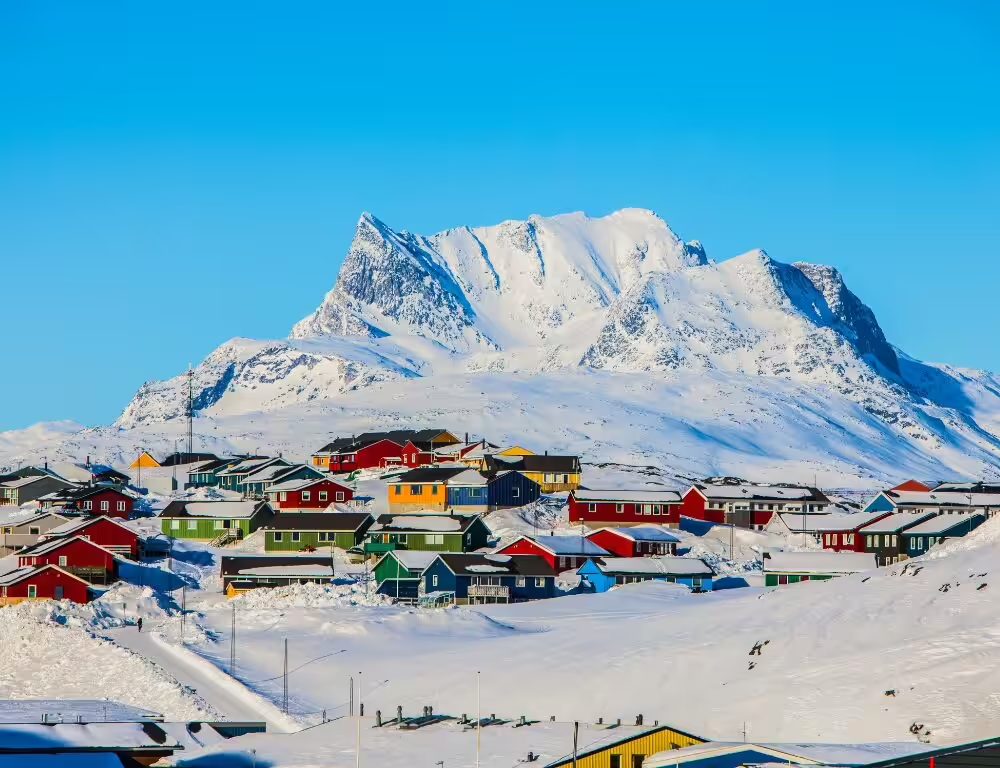
Hiring in Greenland opens access to a unique talent pool in a strategic Arctic location with stable Nordic labor standards. But the complexity is real: navigating work permits, tax rates that vary by municipality, mandatory pension contributions, and collective bargaining agreements can quickly become overwhelming. That’s where an employer of record comes in. An EOR steps in as your official local employer – handling everything from payroll and tax withholding to compliance documentation and work permit management. You get to focus on your team while the EOR tackles the administrative complexity. Whether you’re exploring Greenland as a new market or building a distributed remote workforce, this guide walks you through how EOR hiring works and what to expect.
How an Employer of Record Works in Greenland
An EOR works by becoming your official legal employer in Greenland. Instead of months spent setting up a subsidiary or wrestling with Greenlandic employment law, the EOR handles the whole relationship – hiring, payroll, compliance, the works. Greenland’s regulatory environment blends Nordic standards with some unique local twists, so having a local partner who knows the system saves enormous headaches. You keep day-to-day control and direction of the employee. The EOR absorbs all the legal, tax, and compliance obligations.

If you’d like to learn more about how Employer of Record (EOR) services work, read our What Is an Employer of Record (EOR)? guide for a complete overview of the model, its benefits, and when to use it.
If you’re comparing providers, our Best Employer of Record (EOR) Providers guide reviews the leading platforms to help you choose the right solution for your business.
Who Uses an EOR in Greenland?
EORs work best for certain types of companies and situations. Here are the main use cases:
- Early-Stage and Scale-Up Companies: Startups and growth-stage companies that need to hire in Greenland quickly without the time and cost of establishing a subsidiary benefit from the EOR’s existing infrastructure and immediate hiring capability.
- Companies Testing New Markets: Organizations exploring Greenland as a hiring market or testing demand for a new product or service can hire employees on a flexible basis without long-term commitments to a legal entity.
- Remote-First Organizations: Global companies building distributed teams across multiple countries use EORs to hire in Greenland while maintaining a simplified employment structure across geographies.
- Companies Without Local Presence: If you don’t have offices, partners, or operations in Greenland, an EOR eliminates the need to establish a physical presence or appoint local directors and registered agents.
Typical Onboarding Timeline
Onboarding through an EOR is dramatically faster than setting up a local subsidiary. You’re looking at 1–2 weeks from initial paperwork to signed contract. You provide the basics: candidate info, salary, title, start date, role details. The EOR drafts the contract in Greenlandic or Danish, registers the employee for pensions, and sets up payroll. If you’re hiring a non-Nordic national, work permit processing happens in parallel – about 3 months from submission to approval. In many cases, the employee can start working while the permit is being processed, though that depends on the EOR’s appetite for risk and what Greenlandic rules allow at the time.
Hire in Greenland
An autonomous Danish territory with its own tax system, social welfare framework, and Greenlandic employment rules distinct from Denmark.
We handle employment contracts, payroll, social contributions, and full Greenlandic compliance.
No local entity needed. Your team can start in days.
Employment Laws and Regulations in Greenland
Greenland’s employment rules follow Nordic labor law principles with local tweaks. The main legal foundation comes from Inatsisartut (Greenlandic Parliament) legislation, with the Employment Contracts Act getting a major overhaul in 2025. The system prioritizes worker protections, solid statutory benefits, and collective bargaining while keeping some room for negotiated flexibility. These are the laws your EOR will manage for you, so it’s useful to understand what applies.
Employment Contracts
As of 2025, employment contracts must be written and delivered within one month of the employment start date. They need to be in Greenlandic or Danish and spell out the key details: job title, start date, work location, salary, hours, notice periods, probation terms, leave rights, whether a collective bargaining agreement applies, and how the job can be terminated. The rule applies to any role exceeding 15 hours per week. The contract is the binding agreement between employer and employee, and it has to be clear about CBA coverage or individual terms. Changes to the contract require written agreement from both sides.
Working Hours and Overtime
The standard week is 40 hours, though CBAs often set anything from 37–40. The legal cap on working time (including overtime) is 48 hours per week averaged over four months. Employees get at least 11 consecutive hours of rest in each 24-hour period, plus a full day off per week, usually Sunday. Overtime pay isn’t fixed by law – it comes down to the CBA. Typical rates are around 1.5x base pay, but night shifts, weekends, and holidays all have their own CBA rules that vary by industry.
Greenland overtime and premium pay rates · Per collective bargaining agreements | |||
Hour Type | Rate Multiplier | Weekly/Daily Cap | Notes |
|---|---|---|---|
Regular hours | 1.0x base rate | 40 hours/week | Standard employment hours per most CBAs |
Overtime hours | 1.5x base rate (typical) | 8 hours/week or per CBA | Set by collective bargaining agreement; varies by industry |
Night shift (22:00–06:00) | 1.25–1.5x base rate | Per CBA | Premium varies depending on CBA and employer; not statutory |
Weekend premium | 1.5–2.0x base rate | Per CBA | Saturday and Sunday work typically compensated at premium rates |
Source: Nordic Tax Portal and Norden.org – Taxation in Greenland | |||
Minimum Wage
There’s no statutory minimum wage in Greenland. Instead, wages come from CBAs negotiated between unions and employers – they vary by industry and union. The national average hovers around DKK 25,014 (USD 3,627) per month, though skilled and specialized roles typically pay more. Most workers are union members, so CBA rates will likely apply to your hire. If not, you still need to offer competitive pay that makes sense for the role.
Probation Period
Probation in Greenland runs for 3 months. During that time, either side can end the job with just two weeks’ notice – much shorter than what applies after probation ends. The probation period has to be stated in the employment contract. Once the 3 months are up, notice periods kick in based on the Salaried Employees Act and how long the employee has been with you.
Leave Entitlements
Leave is a big deal in Greenland. All employees get strong statutory entitlements unless the contract is even more generous. Your EOR needs to track and manage this carefully.
Annual Leave
Employees get 25 days of annual leave, accruing at about 2 days per month. Vacation pay is 12.5% of salary, usually paid as a lump sum or deposited in a vacation fund. Here’s the key: every employee must take at least 3 consecutive weeks off between May 1 and September 30 – the Arctic summer season. It’s legally required and culturally expected. Any leftover days can be taken anytime during the year.
Sick Leave
Employees can take up to 26 weeks of sick leave in a 12-month period. The first week is paid by the employer; after that, state insurance or the employer covers it depending on the CBA. If an employee is out for more than 3 consecutive days, they need a medical certificate.
Maternity Leave
Female employees are entitled to 2 weeks of maternity leave before the expected date of birth and 15 weeks after birth, totaling 17 weeks. For multiple births (twins), the post-birth period extends to 19 weeks. Maternity leave is partially paid by state insurance and partially by the employer, depending on the specific arrangement and CBA.
Paternity Leave
Male employees are entitled to 3 weeks of paternity leave within the first 15 weeks after the child’s birth. This leave is typically paid and must be taken during the specified period. The entitlement is personal to the father and cannot be transferred to the mother.
Other Statutory Leave
Employees may also be entitled to parental leave (21 weeks shared between parents, or 25 weeks for multiple births), which can be taken at different times and alternated between parents during the child’s first years. Bereavement leave and marriage leave are provided per collective bargaining agreement, typically 1–3 days depending on the circumstances and CBA provisions.
Leave Entitlements
Greenland statutory leave entitlements · Per Inatsisartut legislation | ||
Leave Type | Duration | Eligibility & Notes |
|---|---|---|
Annual leave | 25 days/year (2.08 days/month accrual) | All employees; main vacation (3 weeks) must be taken May 1–Sep 30; vacation pay 12.5% of salary |
Sick leave | Up to 26 weeks/12 months | All employees; first week paid by employer; medical certificate required after 3 days |
Maternity leave | 2 weeks before + 15 weeks after birth (17 weeks total; 19 for twins) | Female employees; partially paid by state insurance and employer per CBA |
Paternity leave | 3 weeks within first 15 weeks after birth | Male employees; typically paid; non-transferable |
Parental leave | 21 weeks shared (25 for multiple births) | Can be split between parents; taken during child’s first years; partially paid |
Bereavement and marriage leave | Per CBA (typically 1–3 days) | Close family deaths or marriage; specific terms vary by CBA |
Statutory Employee Benefits
All Greenlandic employees get statutory benefits through contributions and insurance schemes. The main one is a mandatory pension contribution of 11% of taxable income – that’s on employees, not the employer. As of 2025, it went up from 10%. Employees also get state insurance for sickness, maternity, work injuries, and unemployment. Greenland stands out because employers don’t have to contribute to the pension – only employees do – which keeps employer costs lean compared to other Nordic countries. Beyond that, CBAs sometimes add perks like occupational health insurance, disability coverage, or life insurance, depending on the industry.
Recent Regulatory Updates (2026)
Greenland made some big updates to its employment rules in 2025 that affect hiring. The Employment Contracts Act now requires written contracts within one month for any role over 15 hours per week – previously it was looser and more informal. Work and residence permits used to require annual renewal; now they’re good for 2 years, which cuts down on paperwork and costs for foreign workers. The pension contribution bumped from 10% to 11%. Overall, these changes show Greenland is tightening up labor standards while keeping hiring attractive for international companies.
Work Permits and Visas in Greenland
Whether someone needs a work permit in Greenland comes down to citizenship. Nordic nationals – people from Denmark, Finland, Iceland, Norway, and Sweden – can move and work freely without a permit. Everyone else has to get a work and residence permit before they start. SIRI (Danish Agency for International Recruitment and Integration) handles the process on behalf of Greenland, and it typically takes 3 months. The good news: your EOR manages all of it – the paperwork, submissions, renewals – so hiring non-Nordic workers becomes straightforward.
Work Permit Requirements
Who Needs a Work Permit
Anyone who isn’t a Nordic citizen needs a work and residence permit to work legally in Greenland. That applies to skilled professionals, specialists, executives – everyone outside the Nordic five. The permit ties to a specific job, employer (your EOR), and timeframe. The recent move to 2-year validity (instead of annual) gives more breathing room.
Eligibility and Required Documents
For a permit to go through, you need to show there’s a real business need and that the job meets Greenlandic labor law standards – competitive salary based on market/CBA rates, proper hours, benefits included. The paperwork typically includes the employment contract, employer registration proof, passport and CV, a medical certificate, and relevant credentials. You also have to confirm no local or Nordic worker can do the job. Application fees run about DKK 4,000–5,000 (USD 550–700).
Processing Time and Validity
SIRI takes about 3 months to process and approve a work permit application. As of August 2025, permits last 2 years instead of just one year, which cuts down on renewal hassle and keeps operations running smoothly. If employment continues and stays compliant, you can renew before expiration.
Renewal Process
Renewing a permit is pretty straightforward if everything’s still on track and compliant. Your EOR files the renewal 1–2 months before expiration, with updated contract confirmation and proof the job continues. Turnaround is 4–6 weeks, and typically the employee can keep working while it’s being processed, as long as you file on time.
Common Visa Types for Foreign Workers
Greenland work visa types for foreign workers · 2026 | ||||
Visa Type | Duration | Best For | Leads to Residency? | Processing Time |
|---|---|---|---|---|
Work and Residence Permit (Standard) | Up to 2 years | Skilled workers, professionals, executives hired on employment contracts; all non-Nordic nationals | Yes, after extended periods; can lead to residency if renewed | ~3 months |
Posted Worker Permit | Up to 1 year | Service providers and contractors temporarily posted to Greenland for specific projects | No; remains temporary | ~2–4 weeks |
Self-Employed / Entrepreneur Permit | Up to 2 years | Self-employed professionals and business owners establishing operations in Greenland | Yes, if business remains active and profitable | ~2–3 months |
Student Residence Permit | Duration of studies | International students at Greenlandic educational institutions | No; must transition to work permit if seeking employment post-graduation | ~4–6 weeks |
Family Reunification Permit | Duration tied to sponsoring resident | Family members of residents or permanent residents sponsoring dependents | Yes, if sponsoring resident is permanent resident | ~2–3 months |
How an EOR Handles Work Permits
One of the biggest wins with an EOR is having them handle permits and renewals. The EOR acts as sponsor on the application, making sure all paperwork is complete, correctly formatted, and sent to SIRI. They prepare the contract in Greenlandic or Danish, verify salary meets market and CBA standards, and pull together documents like passports and medical certificates. They also track expiration dates and file renewals ahead of time so there’s no lapse. For teams with international staff, that’s a huge headache removed and risk eliminated.
Payroll, Taxes, and Social Security in Greenland
Greenland stands out in the Nordic world for its flat tax rates and simple employer costs. The payroll setup is fairly lean: employers pay only 2.1% AMA (labor market contribution), while employees cover income tax (36–44% depending on where they live) and the mandatory 11% pension. Knowing how these break down helps you budget employment costs accurately.
Employer Contributions
Greenland employer social security contributions · 2026 rates | ||
Contribution | Rate | Notes |
|---|---|---|
AMA (Labor Market Contribution) | 2.1% of payroll | Mandatory employer contribution; funds labor market insurance and active labor market policies; increased from 1.1% in prior years |
Pension (employer portion) | 0% | No statutory employer pension contribution; pension is employee-funded (11% of A-tax basis) |
Social Insurance (employer portion) | 0% | State-funded through income tax; no separate employer social insurance contribution |
Employee Contributions
Greenland employee payroll deductions · 2026 monthly withholdings | ||
Deduction | Rate | Notes |
|---|---|---|
Income Tax (A-tax) | 36%–44% depending on municipality | Withheld by employer monthly; no progressive brackets; varies by Sermersooq (42%), Avannaata (44%), Kujalleq (43%), Qeqqata (42%) |
Mandatory Pension Contribution | 11% of A-tax basis | Mandatory employee contribution to private pension fund; effective 2025, increased from 10%; withheld monthly |
Unemployment Insurance | Variable (per CBA or state insurance) | May be deducted if employee is member of unemployment fund; rates vary by union |
Income Tax Brackets
Greenland income tax brackets · 2026 | |
Municipality | Tax Rate |
|---|---|
Sermersooq (including Nuuk) | 42% |
Avannaata | 44% |
Kujalleq | 43% |
Qeqqata | 42% |
Payroll Cycle
Most payroll runs monthly – salary hits accounts at month-end or early the next month. Some CBAs allow bi-weekly or semi-monthly, but monthly is the standard. The EOR figures gross salary, withholds income tax at the right municipal rate, pulls out the 11% pension contribution, and processes the 2.1% AMA from your side. Net pay goes directly to the employee’s bank account. Tax and pension payments to the government happen quarterly or annually, depending on Greenland’s rules.
13th Month Salary and Bonus Pay
Greenland does not have a mandatory 13th month salary or statutory bonus requirement. Some employers offer holiday bonuses or annual bonuses on a voluntary basis, but these are not legally required. Any bonus or extra payment must be clearly specified in the employment contract or CBA. When offered, bonuses are subject to the same income tax and pension contributions as regular salary.
Cost of Hiring Through an EOR in Greenland
Your total cost of hiring an employee through an EOR breaks down into gross salary, employer contributions (minimal), and the EOR fee. Compared to other models, EOR hiring in Greenland is actually efficient: employer costs are just 2.1% AMA with zero mandatory pension matching. That keeps total costs predictable and clear.
EOR Service Fees
EOR fees typically run $300–$600 per employee per month, but it varies by provider and scope. Some add extras like benefits consulting, multilingual payroll, or remote onboarding support. Some charge a flat monthly fee; others use a percentage of payroll or a mix. Always ask for a detailed breakdown so you know what’s covered: payroll, taxes, benefits, compliance, work permits, onboarding.
Total Employment Cost Breakdown
Greenland employer cost example – $5,000 gross · 2026 | ||
Employer Cost | Amount (USD) | % of Gross |
|---|---|---|
Gross salary | 5,000 | 100.0% |
AMA (Labor Market Contribution, 2.1%) | 105 | 2.1% |
EOR service fee (estimated) | 500 | 10.0% |
Total employer cost | 5,605 | 12.1% |
In this example, a gross salary of $5,000 results in a total employer cost of approximately $5,605 when factoring in the 2.1% AMA contribution and a typical EOR service fee of $500. This represents only 12.1% above the gross salary, which is significantly lower than many other countries with higher employer social security contributions or mandatory pension matching. The employee would receive a net salary after deductions for income tax (42% for Sermersooq municipality in this example) and the mandatory 11% pension contribution, resulting in net take-home pay of approximately DKK 14,700–16,500 (roughly $2,130–$2,390) depending on the specific municipality and any additional deductions. For detailed cost projections tailored to your specific hiring scenario, contact RemotePeople’s team for a customized quote.
Benefits of Using an EOR in Greenland
There are real wins to hiring through an EOR in Greenland, especially if you want to add staff without the headache and cost of setting up a local subsidiary. Speed, simplicity, compliance – the EOR model handles it all so you can focus on growing the business.
- No Local Entity Required: You can hire employees in Greenland without establishing a local company, subsidiary, or registering with Greenlandic authorities. The EOR serves as the official employer, eliminating the need for local directors, registered agents, or ongoing corporate administration.
- Fast Hiring Timeline: With an EOR, hiring timelines compress to 1–2 weeks for contract and payroll setup, versus 3–6 months to establish a legal entity. This speed is invaluable for scaling teams quickly or responding to market opportunities. Non-Nordic workers require separate work permit processing (3 months), but the EOR manages this parallel to employment setup.
- Simplified Compliance: The EOR assumes responsibility for employment law compliance, including written contracts (per the 2025 Employment Contracts Act), statutory leave tracking, work permit sponsorship, and termination procedures. This significantly reduces your compliance risk and legal liability.
- Predictable Costs: Greenland’s employer contribution burden is minimal – only 2.1% AMA with no statutory employer pension contribution. Combined with transparent EOR service fees, total employment costs are highly predictable and lower than many comparable jurisdictions.
- Flexible Scaling: If you hire one employee or ten, the EOR model scales easily. You can add or remove employees without corporate restructuring, making it ideal for testing new markets, seasonal hiring, or managing variable headcount.
- Local Expertise: An EOR provides access to local knowledge of Greenlandic labor law, collective bargaining agreements, tax updates, and regulatory changes. This expertise ensures your hiring practices remain compliant as laws evolve.
- Administrative Relief: Payroll processing, tax withholding, benefits administration, and work permit renewals are all handled by the EOR, freeing your internal team to focus on hiring, onboarding, and employee development rather than compliance paperwork.
Termination and Offboarding in Greenland
Termination in Greenland is handled by clear legal rules that protect both sides. Notice periods and severance are tied to how long the employee has been with you – no wiggle room there. Getting it right prevents penalties and ensures a proper exit. Your EOR takes care of the whole process: calculating notice, preparing final payments, handling paperwork.
Notice Periods
Greenland statutory notice periods by position level · Per Salaried Employees Act | |||
Employment Duration | Notice Period | During Probation | Notes |
|---|---|---|---|
0–5 months | 1 month (both parties) | 14 days | Applies to first 5 months after probation ends |
5 months–2 years 9 months | 1 month employer; 1 month employee | N/A (past probation) | Standard notice for early-tenure employees |
2 years 9 months–5 years 8 months | 3 months employer; 1 month employee | N/A | Employer notice increases; employee notice remains 1 month |
5 years 8 months–8 years 7 months | 4 months employer; 1 month employee | N/A | Longer notice recognizes extended service |
8 years 7 months or more | 5–6 months employer (max 6); 1 month employee | N/A | Maximum notice period; protects long-service employees |
Severance Pay
Greenland severance pay schedule by years of service · Per Salaried Employees Act | |||
Years of Service | Severance Amount | Base Salary | Notes |
|---|---|---|---|
Less than 12 years | None | N/A | No severance obligation for early-tenure employees |
12–14 years 11 months | 1 month’s salary | Gross monthly salary | Minimum threshold is 12 years continuous service |
15–17 years 11 months | 2 months’ salary | Gross monthly salary | Increases after 15 years |
18 years or more | 3 months’ salary (maximum) | Gross monthly salary | Maximum severance; does not increase beyond 3 months regardless of tenure |
Calculation Method
Severance is calculated based on the employee’s gross monthly salary at the time of termination multiplied by the applicable severance factor (1, 2, or 3 months depending on tenure). For example, an employee with 16 years of continuous service terminated due to restructuring would be entitled to 2 months’ severance calculated as 2 × their gross monthly salary. Severance is distinct from notice period pay; both obligations apply if the employee is terminated without cause.
Caps and Exceptions
The maximum severance payment in Greenland is 3 months’ gross salary, regardless of how long the employee has been with the company. Severance is only required after 12 or more years of continuous service; employees with less than 12 years receive no severance obligation. However, severance can be waived or modified if the employee consents in writing, and severance is typically not due if an employee resigns voluntarily (unless the resignation is in response to a material breach by the employer). If an employee is terminated for serious cause (theft, gross misconduct, etc.), severance may be forfeited, though termination for cause is a high bar in Greenlandic law and must be documented thoroughly.
Grounds for Termination
You can terminate for cause (theft, serious misconduct, repeated policy violations after warnings), without cause (with proper notice), or by agreement. Termination for cause requires documented evidence and a written chance for the employee to respond. Without-cause termination follows the notice periods in the Salaried Employees Act and may include severance for long-service employees. Your EOR makes sure every termination is documented properly and legally compliant.
EOR vs. Other Hiring Models in Greenland
Before you commit to an EOR, it helps to see what other options exist: setting up a local subsidiary, hiring independent contractors, or working with a PEO. Each has different costs, compliance burdens, and trade-offs. Knowing the differences helps you pick the model that actually fits your plans.
EOR vs. Setting Up a Local Entity
Greenland EOR vs local entity comparison · Setup time, cost, risk and best-fit | ||
Factor | EOR | Local Entity (Subsidiary) |
|---|---|---|
Setup time | 1–2 weeks | 3–6 months |
Upfront cost | $0 (EOR fee only) | $15,000–$30,000 (legal, registration, compliance) |
Ongoing cost | $300–$600/employee/month (EOR fee) | $8,000–$15,000/year maintenance (accounting, audit, compliance) |
Local partner required | No (EOR is the local entity) | Yes (local director or registered agent) |
Social insurance registration | Handled by EOR | You manage it |
Payroll & tax filing | Handled by EOR | You manage it (or outsource to accountant) |
Best for team size | 1–15 employees | 15+ employees |
Scale down / exit | Easy, no entity to unwind | Costly, legal dissolution required |
Government contracts | Not eligible | Eligible (requires local entity) |
The choice comes down to size, speed, and commitment. An EOR works best if you’re hiring under 15 people or moving fast into a new market. One to two weeks for setup beats the 3–6 months needed for a subsidiary, which demands legal incorporation, government registration, local directors, the whole infrastructure. An EOR eliminates upfront costs – you just pay the monthly fee. That’s gold for startups, pilots, and testing new markets without big capital outlay. On the flip side, if you’re hiring 15+ people or planning permanent Greenlandic operations, a subsidiary might make financial sense long-term and lets you bid on government contracts – which require local registration. You also get full control over HR and payroll, though the admin burden and ongoing costs are much higher.
EOR vs. Hiring Independent Contractors
Greenland EOR vs independent contractors · Compliance, cost, and risk | ||
Factor | EOR (Full-Time Employee) | Independent Contractor |
|---|---|---|
Legal relationship | Employee of the EOR | Self-employed, no employment relationship |
Compliance risk | Low; EOR ensures local labor law compliance | High; misclassification risk if relationship resembles employment |
Payroll & tax | EOR handles withholding, contributions, filings | Contractor invoices you; they handle own taxes |
Benefits & leave | Statutory benefits, paid leave, social security | No entitlement to employee benefits |
IP protection | Stronger; employment contract assigns IP by default | Weaker; requires explicit IP assignment clause |
Termination | Subject to local notice periods and severance | Contract can be ended per agreement terms |
Best for | Long-term, core team roles | Short-term projects, specialized tasks |
Cost structure | Salary + employer contributions + EOR fee | Contractor fee (typically higher gross, lower total cost) |
This one comes down to what the role actually is and how much legal risk you want to take. Contractors fit short-term, project-based work – a website redesign, a consulting project, a specific deliverable. Employees hired through an EOR fit permanent, integrated positions. Here’s the thing: Greenlandic law has strict tests for what makes an employee. If someone works regularly, takes direction from you, and is woven into your operations, they’re an employee legally – period – even if you call them a contractor. Misclassifying creates huge liability: penalties, back taxes, social security bills. An EOR cuts that risk by creating a formal employment relationship with proper contracts and statutory protections. For ongoing roles and core team members, an EOR is safer and better for employee retention. For true project work, contractors through RemotePeople can offer flexibility, but you need solid contract language to avoid crossing into employee territory.
EOR vs. PEO
Greenland EOR vs PEO comparison · Legal employer, liability, and setup | ||
Factor | EOR | PEO |
|---|---|---|
Legal employer | EOR is the legal employer | You remain the legal employer (co-employment) |
Local entity required | No; the EOR is the local entity | Yes; you must have your own entity in Greenland |
Best for | Companies without a local entity | Companies that already have a local entity |
Compliance liability | EOR assumes compliance responsibility | Shared liability between you and the PEO |
Setup time | 1–2 weeks | Depends on your entity setup (weeks to months) |
Control over HR policies | EOR manages within local law framework | More direct control; PEO advises |
Typical use case | Market entry, small remote teams, testing new markets | Established local operations needing HR outsourcing |
These two are often confused but work very differently. A PEO handles your HR functions but doesn’t become the legal employer – you stay as official employer in a “co-employment” setup. That works if you already have a Greenlandic company and want to hand off payroll and benefits to someone else while keeping control. The downside: shared liability for compliance, so if something goes wrong, you both shoulder the blame. An EOR is the legal employer – they own all the liability and responsibility. That’s the right move if you have no Greenlandic entity and want to hire without building one. In Greenland, there’s no formal PEO framework in law, and co-employment isn’t really recognized the way it is in other countries. That makes EOR the legally cleaner path and what authorities prefer. If you already run a Greenlandic subsidiary, you might explore a PEO with an international provider, but an EOR is simpler and legally more straightforward for new market entry.
Public Holidays in Greenland
Greenland public holidays · 2026 calendar year | ||
Date | Holiday | Type |
|---|---|---|
January 1 | New Year’s Day (Ukiortaami Ullut Kusanaat) | Statutory |
January 6 | Epiphany (Kunngillat) | Statutory |
April 2 | Maundy Thursday (Sisamanngorneq Illernartoq) | Statutory |
April 3 | Good Friday (Tallimanngorneq Illernartoq) | Statutory |
April 5 | Easter Sunday (Poorskip Ulluata Akunnerani) | Statutory |
April 6 | Easter Monday (Poorskip Ataasinngorneq) | Statutory |
May 1 | Great Prayer Day (Tuksiarnermik Ullut Qungujut) | Statutory |
May 14 | Ascension Day (Qilaliarfik) | Statutory |
June 21 | Greenland National Day (Ullortuneq) | Statutory |
December 25 | Christmas Day (Juullimi Ullorsiutigiit) | Statutory |
December 26 | Second Christmas Day (Juullip Aappaanni) | Statutory |
Greenland has 11 statutory holidays in 2026. Employees get paid time off, no matter if they normally work weekends or shifts. Some unofficial days like Whit Monday (May 25) and Christmas Eve (December 24) are also widely observed as half or full days under CBAs – not required by law but standard practice. Work on public holidays usually gets premium pay (1.5x to 2x base) per CBA. Your EOR tracks all of this and makes sure employees are paid correctly.
How to Get Started with an EOR in Greenland
Starting an EOR hire in Greenland is straightforward and fast – usually 1–2 weeks from first contact to signed contract. Even if you’ve never hired in Greenland before, the process is designed to be accessible. Here’s what to expect.
- Define Your Hiring Needs: Clearly specify the role, title, job responsibilities, required qualifications, expected salary, and start date. Provide the candidate’s full name, contact information, and passport details (for non-Nordic nationals). This information enables the EOR to draft a compliant employment contract and initiate any necessary work permit applications in parallel.
- Request a Customized Quote: Contact an EOR provider with your hiring details to receive a detailed proposal including gross salary, AMA contributions, EOR service fees, and any additional charges. Compare quotes from multiple providers to ensure competitive pricing and full service coverage. RemotePeople’s transparent pricing provides upfront cost estimates for Greenland hiring.
- Review and Sign the EOR Agreement: Once you have selected an EOR provider, review the service agreement outlining the EOR’s responsibilities, fee structure, dispute resolution, and termination terms. Ensure you understand the scope of services included (payroll, tax filing, benefits, work permits, compliance reporting) and any exclusions or additional costs.
- Prepare Employment Contract and Documentation: The EOR will draft the employment contract in Greenlandic or Danish, incorporating the role details, salary, benefits, leave entitlements, notice periods, and any CBA references. You review and approve the contract, ensuring it reflects your agreed terms. For non-Nordic employees, gather passport scans, medical certificates, and educational credentials for the work permit application.
- Finalize and Sign with Employee: The employment contract is signed by both the EOR (as official employer) and the employee. The employee receives a copy for their records. Work permit applications for non-Nordic nationals are submitted to SIRI at this stage, with processing taking approximately 3 months. Payroll processing begins on the employment start date.
Ready to hire in Greenland? Contact RemotePeople today to discuss your hiring goals, receive a customized quote, and begin your EOR onboarding process. Our team provides end-to-end support from contract drafting through ongoing compliance, so you get smooth hiring and management of your Greenlandic team.
Where companies hiring in Greenland expand next
Companies building a Nordic presence frequently expand across the region, drawing on Nordic Council mobility and shared labor frameworks. Teams frequently add Denmark for seamless compliance continuity with the parent country; hiring in Iceland often follows for aligned Nordic benefits and compensation standards; an EOR partner in Norway is a common next step, offering Nordic Council mobility and aligned labor norms; and Sweden rounds out the regional footprint with shared Nordic labor frameworks.
Frequently Asked Questions
EOR services in Greenland typically cost between $300 and $600 per employee per month, plus the mandatory 2.1% AMA (labor market contribution) on payroll. For example, on a $5,000 gross salary, the AMA adds $105 and a typical EOR fee of $500 brings the total employer cost to approximately $5,605 (12.1% above gross salary). The employee receives their net salary after income tax (42% in Sermersooq/Nuuk) and the mandatory 11% pension contribution. Request a detailed quote from your EOR provider for your specific salary and hiring scenario.
Hiring through an EOR is fast – contract and payroll setup takes 1–2 weeks. For non-Nordic foreign nationals, a work permit application must be submitted in parallel and typically takes 3 months to process. You can often initiate the employee's work before the permit is formally issued if the application is in progress. Nordic nationals (Danish, Finnish, Icelandic, Norwegian, Swedish citizens) do not require work permits, so they can start immediately after contract signing.
Yes, the EOR assumes full responsibility for employment law compliance. This includes maintaining written employment contracts per the 2025 Employment Contracts Act, tracking and managing statutory leave entitlements (annual, sick, maternity, paternity), withholding and remitting income tax and pension contributions, processing 2.1% AMA employer contributions, registering employees with mandatory pension schemes, renewing work permits, and managing termination procedures including notice periods and severance calculations. This compliance responsibility is a key advantage of the EOR model – you are protected from regulatory violations and penalties.
Intellectual property ownership depends on the employment contract terms. Greenlandic law typically vests IP created during the course of employment with the client company (you), provided the contract explicitly assigns this right. The EOR will draft the contract to include standard IP assignment clauses protecting your ownership of any patents, trademarks, trade secrets, software, or other creative works developed by the employee. You should specify any IP-related requirements when providing role details to the EOR.
Yes, all employees hired through an EOR in Greenland receive full statutory benefits including a mandatory 11% pension contribution (employee-funded), state-provided sickness and maternity insurance, paid annual leave (25 days plus 12.5% vacation pay), sick leave (up to 26 weeks per year), and parental leave benefits. The EOR registers employees with the mandatory pension scheme and ensures all benefits are properly administered and compliant with Greenlandic law and applicable collective bargaining agreements.
You can hire contractors in Greenland for short-term projects and specialized work through RemotePeople's contractor solutions. However, be aware that Greenlandic labor law strictly defines the employment relationship – if a person works regularly, receives ongoing direction from you, and is integrated into your operations, they are likely considered an employee even if labeled a contractor. Misclassifying an employee as a contractor risks significant penalties and back-tax liability. For ongoing, core team roles, hiring through an EOR provides superior legal protection and regulatory compliance.
Yes, an EOR is ideal for remote and distributed hiring. The EOR can hire and manage employees working remotely from any location, provided work permit requirements are met for foreign nationals. The employee can work from home, from a shared workspace, or from your office – the EOR's compliance and payroll services remain the same. This flexibility is especially valuable for global companies building distributed teams without establishing physical offices in Greenland.
If you terminate the EOR relationship, the EOR will manage the employee termination process according to Greenlandic law, including calculating notice periods and any severance obligations. The process is straightforward – you simply notify the EOR of your intent to exit, and they handle offboarding, final payments, and legal documentation. No corporate dissolution is required (since the EOR is the legal entity), making exit from Greenland much simpler than unwinding a local subsidiary. However, you are still obligated to provide statutory notice periods and severance pay (if applicable) to employees.
Employer of Record in
Employer of Record in
Employer of Record in
Employer of Record in
Employer of Record in
Employer of Record in
Employer of Record in
Employer of Record in