
 Recruit
Employer of Record (EOR) in Denmark
-
 Drew Donnelly
- Published
- September 21, 2026
RemotePeople’s employer of record in Denmark lets you hire employees in Denmark with ATP pension coverage. We handle mandatory ATP contributions of approximately $339 annually for full-time employees, labor market contributions, and registered accident and illness insurance.

Hiring in Denmark at a glance
Danish Krone (DKK)
Danish
No statutory minimum
Monthly
0%
25 days
3 months
1-6 months
Not mandatory
37 hrs/wk








- Denmark Services
- Start hiring in Denmark
- How to Hire Employees in Denmark
- How an Employer of Record Works in Denmark
- Employment Laws and Regulations in Denmark
- Work Permits and Visas in Denmark
- Payroll, Taxes, and Social Security in Denmark
- Cost of Hiring Through an EOR in Denmark
- Benefits of Using an EOR in Denmark
- Termination and Offboarding in Denmark
- EOR vs. Other Hiring Models in Denmark
- Public Holidays in Denmark
- How to Get Started with an EOR in Denmark
- Where companies hiring in Denmark expand next
- Frequently Asked Questions
- Related EOR Destinations
Start hiring in Denmark
Let RemotePeople handle payroll, compliance, and HR admin worldwide so you can focus on building your team.
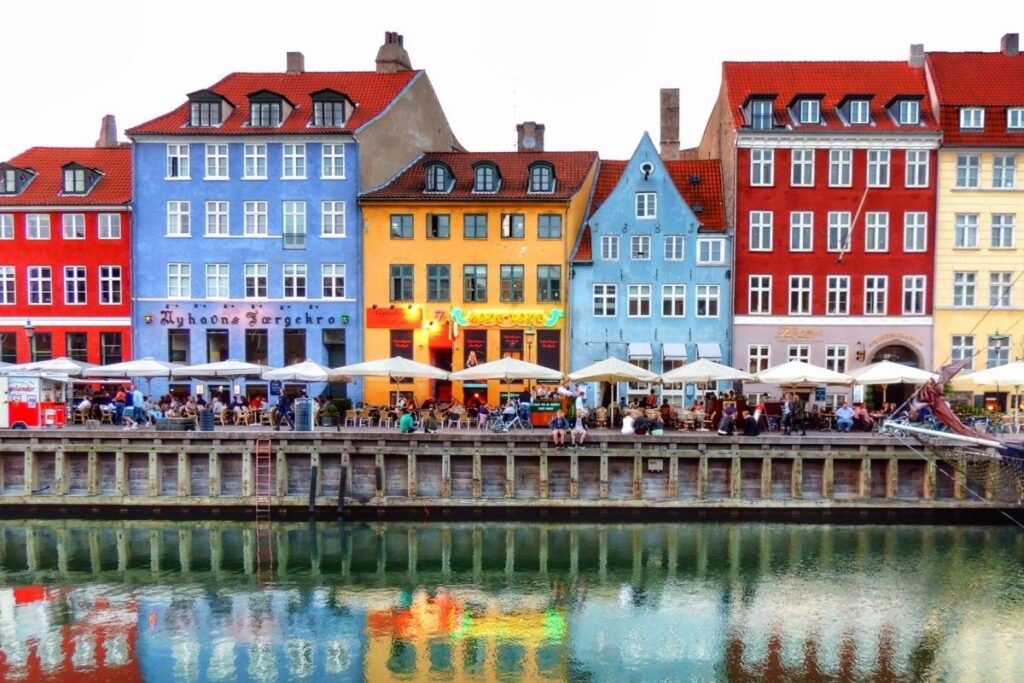
How to Hire Employees in Denmark
An employer of record (EOR) in Denmark lets you hire Danish employees in as little as one week, without setting up a local entity, for $300–$600 per employee per month. Whether you are expanding into Denmark for the first time or relocating a team member, this guide covers employment contracts, payroll taxes, termination rules, and everything else you need to hire compliantly.
Setting Up a Local Entity
Setting up a local business lets you hire workers directly and follow Danish laws. However, it costs a lot and takes time, so it’s not advisable if you’re looking to hire quickly.
Working with an Employer of Record (EOR)
An EOR, like RemotePeople, is a service that hires workers for you. It handles pay, taxes, and legal rules. This is an easy way to hire people in Denmark without using your own company.
Hiring Independent Contractors
Contractors are a cheap and quick option for hiring workers in Denmark. However, you must follow Denmark’s rules carefully to avoid mistakes with misclassification.
Hire in Denmark
Built on the flexicurity model where collective agreements drive most employment terms, plus ATP pension, AM-bidrag, and Danish holiday act compliance.
We handle employment contracts, payroll, social contributions, and full Danish compliance.
No local entity needed. Your team can start in days.
Denmark offers one of Europe’s most productive and English-fluent workforces, backed by a flexible labor market and a collective-bargaining tradition that keeps employment rules predictable. For companies looking to hire employees in Denmark, the challenges are the country’s unique absence of a statutory minimum wage, detailed salaried-employee protections, and the 2026 tax reform that introduced new “top” and “top-top” brackets. An employer of record in Denmark lets you onboard talent in 1-2 weeks without incorporating a Danish entity, while a local EOR handles payroll, tax withholding, holiday pay, parental leave, and full compliance with the Salaried Employees Act (Funktionærloven) and the Holiday Act (Ferieloven).
This guide walks through how an employer of record works in Denmark, the employment laws you need to know, work permit options for non-EU hires, payroll and tax mechanics, total hiring cost, termination rules, and how an EOR compares with setting up a Danish ApS, using contractors, or partnering with a PEO.
How an Employer of Record Works in Denmark
What Is an EOR?
An employer of record is a third-party company that becomes the legal employer of your workers in Denmark, even though the employee reports day-to-day to your business. The EOR holds the Danish employment contract, runs payroll through the Danish tax authority Skat, and assumes legal responsibility for compliance with Funktionærloven, Ferieloven, and the Working Environment Act. You keep control of what the employee does; the EOR handles the legal plumbing that would otherwise require a registered Danish entity.
What Does an EOR Handle?
A Danish EOR drafts compliant written employment contracts that satisfy the 2023 Act on Employment Statements (which requires disclosure of probation terms, working hours, notice periods, and parental-leave rights within seven days of hire). It runs monthly payroll through the Danish eIncome system, withholds AM-bidrag at 8%, withholds municipal and state income tax at the employee’s personal tax-card rate, and files all reports with Skat.
Beyond payroll, the EOR enrolls the employee in ATP (the Labour Market Supplementary Pension), registers with the Danish Working Environment Authority, pays quarterly Samlet Betaling contributions to funds like AUB, Barsel.dk, and AES, and tracks holiday pay at 12.5% of earnings under the concurrent holiday year introduced by the 2020 Holiday Act reform. The EOR also manages sick leave through the first 30 employer-paid days, processes parental leave reimbursements from Barsel.dk, and administers the 0.45% Store Bededag compensation introduced after Great Prayer Day was abolished in 2024.
When an employee leaves, the EOR handles notice-period compliance, statutory severance under Funktionærloven §2a, final-pay calculations including untaken holiday, and the mandatory termination documentation. For non-EU hires, a Danish EOR can sponsor work and residence permits through schemes like the Pay Limit Scheme or the Fast-Track Scheme once it holds SIRI certification.
Who Uses an EOR in Denmark?
Companies use a Danish EOR when they want to hire in Denmark without going through the 2-4 month process of incorporating a Danish ApS (private limited company), registering with the Danish Business Authority, and opening a local bank account. The EOR model is built for small teams, fast market entry, and cross-border arrangements where setting up a Danish entity would cost more than the hires would generate.
- Testing the Danish market with one or two hires before committing to an entity
- Hiring 1 to 15 employees where incorporation economics do not work
- Onboarding quickly, typically within 1-2 weeks instead of months
- Sponsoring work permits for non-EU engineers or researchers without running a Danish HR function
- Reducing exposure to Funktionærloven’s complex notice and severance rules
Typical Onboarding Timeline
Most EOR providers can onboard an employee in Denmark within 1-2 weeks, assuming the worker already has the right to work in Denmark. The timeline extends to 6-10 weeks if a Fast-Track work permit is required, and 2-3 months for a standard Pay Limit Scheme application.
- First, sign the EOR service agreement and share the employee’s personal details, salary, start date, and role description (1-2 days).
- Second, the EOR drafts a Danish-compliant employment contract covering probation, notice, working hours, and parental-leave rights, then sends it for signature (2-3 days).
- Third, the EOR registers the employee with Skat, ATP, and the relevant industry-injury insurer, and requests the personal tax card (3-5 days).
- Fourth, payroll is configured, holiday accrual is set up, and the employee is enrolled in any supplementary pension required by a collective agreement (2-3 days).
- Fifth, the employee starts work on the agreed date, and the EOR runs the first monthly payroll with full tax, ATP, and holiday-pay calculations.
Ready to Hire in Denmark?
Employment Laws and Regulations in Denmark
Employment Contracts
Denmark’s employment framework sits on three statutes: the Salaried Employees Act (Funktionærloven) for white-collar workers, the Holiday Act (Ferieloven), and the Act on Employment Statements (Ansættelsesbevisloven) which was modernized on 1 July 2023 to implement EU Directive 2019/1152. Employers must issue a written statement of employment terms to every employee whose working time exceeds 3 hours per week over a 4-week reference period, within 7 calendar days of the start date.
The statement must include the probation period, working hours, salary, notice period, paid-leave entitlements, the identity of the employer and employee, the workplace, and the employer’s contributions to social security funds. Employment contracts are typically indefinite; fixed-term contracts are allowed under the Act on Fixed-Term Employment but cannot be renewed repeatedly without objective justification. Danish is the standard contract language, but English-language contracts are enforceable and common for international hires.
Working Hours and Overtime
The standard workweek in Denmark is 37 hours, typically arranged as 7.4 hours per day Monday through Friday. There is no standalone statute on weekly hours beyond the Working Environment Act, which implements the EU Working Time Directive. Average weekly working time, including overtime, cannot exceed 48 hours over a rolling 4-month reference period, and employees are entitled to 11 consecutive hours of daily rest plus one full day off every 7 days.
Overtime rules are set almost entirely by collective agreements rather than statute. Under the Industry Agreement between CO-industri and DI, which sets the benchmark for most private-sector CBAs, overtime is typically paid at 150% of the regular hourly rate for the first 3 hours and 200% for additional hours, Sundays, and public holidays. Senior managers and employees with wide discretion over their own hours are usually exempt from overtime pay entirely.
Minimum Wage
Denmark has no statutory minimum wage. Wage floors are set entirely through collective bargaining agreements between trade unions and employer associations, and they vary by sector. The Eurofound country profile confirms that collective agreements cover roughly 80% of Danish workers and that the effective floor in most private-sector CBAs sits around $19-20 per hour for unskilled work at April 2026 rates. For role-by-role benchmarks, see our average salary in Denmark guide.
For employers hiring outside a CBA, wages must still reflect “Danish standards” within the sector, particularly when sponsoring a work permit. The Pay Limit Scheme requires a minimum annual gross salary of $78,857 in 2026, which is the standard benchmark SIRI uses to confirm that foreign hires are not undercutting local wage levels. Denmark has continued to oppose the EU Minimum Wage Directive, and as of April 2026 the country’s wage-setting model remains fully collective-bargaining based while a final ruling from the European Court of Justice is awaited.
Probation Period
The probation period in Denmark is capped at 3 months for salaried employees under Funktionærloven §2, and the probation clause must be set out in writing in the employment contract. If probation is not agreed in writing, there is no probation period and the full statutory notice regime applies from day one. During probation, either party may terminate with 14 days’ notice, and the last day of notice must fall no later than the final day of the probation period.
Leave Entitlements
Denmark’s statutory leave framework is anchored in the Holiday Act (Ferieloven), Funktionærloven, and the Parental Leave Act (Barselsloven), and it is among the most generous in Europe. All employees accrue 25 days of paid annual leave regardless of tenure, and parents share up to 52 weeks of benefit-supported parental leave after a major 2022 reform.
Annual Leave
Every employee in Denmark earns 25 days (5 weeks) of paid annual leave under the Holiday Act, accruing at 2.08 days per month of employment. The 2020 Holiday Act reform introduced a “concurrent” holiday year, meaning employees can take holiday as they earn it rather than waiting a full year. The holiday year runs from 1 September to 31 August, with an extended 16-month window for use. Salaried employees receive their normal monthly salary while on leave plus a mandatory holiday supplement (ferietillæg) of at least 1% of the previous year’s gross pay, typically paid in May and August.
Sick Leave
Employers in Denmark must pay sickness benefits for the first 30 calendar days of any illness, provided the employee has worked for the employer for at least 8 weeks and 74 hours before the absence. The employer period pays up to $650 per week in 2026. After 30 days, the municipality takes over through the sygedagpenge scheme, paying benefits for up to 22 weeks within any 9-month period. Many collective agreements and individual contracts provide full salary during sickness instead of the statutory minimum, with the employer then recovering the sygedagpenge amount from the municipality via NemRefusion.
Maternity Leave
Mothers in Denmark are entitled to 4 weeks of maternity leave before the expected date of birth and 10 weeks of maternity leave immediately after birth, all paid through the Barselsloven framework. The 2 weeks immediately following birth are earmarked and cannot be transferred to the other parent. Parental benefits (barselsdagpenge) are paid by the municipality and capped at the same $650 per week ceiling as sickness benefits, though many collective agreements top this up to full salary for part or all of the leave.
Paternity Leave
Fathers and co-parents receive 2 weeks of earmarked paternity leave that must be taken within the first 10 weeks after birth, plus 9 additional earmarked weeks under the parental leave reform that took effect on 2 August 2022. The 9 earmarked weeks cannot be transferred to the other parent and are lost if not used, a change designed to increase paternal take-up that has already raised male parental-benefit uptake by almost 60% compared with 2022 baseline figures.
Other Statutory Leave
Beyond annual leave, sickness, and parental leave, Danish employees are entitled to several smaller statutory entitlements that vary by collective agreement but are generally treated as minimum standards:
- Care leave for seriously ill children under 18, with benefits paid by the municipality
- Up to 5 days of paid leave per year to care for a dying close relative (plejeorlov)
- Bereavement leave of up to 26 weeks with benefits for parents who lose a child under 18
- Jury-duty and civic-duty leave covered by the State Administration
- Special holiday days (feriefridage), typically 5 extra days per year granted by most white-collar CBAs beyond the statutory 25
Denmark statutory leave entitlements · Per the Holiday Act and Parental Leave Act | ||
Leave Type | Duration | Eligibility & Notes |
|---|---|---|
Annual leave | 25 days (5 weeks) | Accrues 2.08 days per month; holiday year runs 1 September to 31 August; 1% ferietillæg paid on top for salaried staff |
Sick leave (employer period) | First 30 calendar days | Capped at $650/week; requires 8 weeks & 74 hours of prior employment |
Sick leave (municipal sygedagpenge) | Up to 22 weeks in a 9-month period | Paid by the municipality; extendable in defined medical cases |
Maternity leave | 4 weeks before + 10 weeks after birth | First 2 weeks after birth are earmarked for the mother; paid via barselsdagpenge |
Paternity / co-parent leave | 2 weeks within first 10 weeks | Earmarked; cannot be transferred to the mother |
Shared parental leave | 9 earmarked + up to 13 transferable weeks per parent | Under the 2022 Barselsloven reform; unused earmarked weeks are lost |
Care leave for dying relative | Up to 5 paid days per year | Plejeorlov; covers close family members in palliative care |
Special holiday days (feriefridage) | Typically 5 extra days | Not statutory; granted by most white-collar collective agreements |
Source: WIPO Lex Denmark and lifeindenmark.borger.dk | ||
Statutory Employee Benefits
Denmark’s welfare state is funded primarily through income tax rather than employer contributions, so the list of mandatory employee benefits in Denmark is unusually short compared with most of Europe. What is mandatory centers on the Labour Market Supplementary Pension (ATP), industrial-injury insurance, and the 12.5% holiday allowance under the Holiday Act. Healthcare is free at point of use through the tax-funded public system, so there is no mandatory employer health-insurance contribution.
ATP enrolls every wage-earner automatically, with the employer paying two-thirds of the $42 monthly full-rate contribution and the employee paying the remaining third. Employers also pay into Samlet Betaling, which bundles the AUB training-fund contribution, the Barsel.dk parental-leave fund, the Financing Contribution (FIB), and the Labour Market Fund for Posted Workers. Industrial-injury insurance under the Arbejdsskadesikringsloven is mandatory and is purchased either through the public AES scheme or a private insurer. Many employers voluntarily offer supplementary pension contributions of 8-12% of salary and private health insurance under a collective agreement, but neither is required by statute for most hires. See the contribution tables in the next section for exact 2026 rates.
Recent Regulatory Updates (2026)
Denmark’s biggest 2026 change is the new three-layer state income tax that replaced the old top-bracket structure, introducing a middle tax at 7.5%, a top tax at 7.5%, and a new top-top tax at 5% on very high personal incomes. The reform was passed as part of the Spring Package tax agreement and applies from 1 January 2026, with the top marginal rate on labor income capped at 60.5% once AM-bidrag is included.
Employers should also note the ongoing effects of two earlier reforms. Great Prayer Day (Store Bededag) was abolished as a public holiday on 28 February 2023 and the change took effect from 2024, with employers now paying salaried workers a 0.45% annual supplement as compensation for the lost day off. The parental leave reform from 2 August 2022 continues to reshape workforce planning, with 9 weeks now earmarked for each parent and a measurable rise in fathers’ uptake of benefit-supported leave.
The Act on Employment Statements (Ansættelsesbevisloven), updated on 1 July 2023, continues to require detailed written disclosure of probation, notice, working-hours patterns, and parental rights. Employment contracts drafted before mid-2023 should be reviewed to make sure they meet the extended information requirements, which extend liability for non-compliance to up to 20 weeks’ salary in egregious cases.
Work Permits and Visas in Denmark
Work Permit Requirements
Who Needs a Work Permit
EU, EEA, and Swiss citizens do not need a Danish work permit under the principle of free movement, and they can start work immediately after arrival. They must register with the International Citizen Service for an EU residence certificate within 3 months of taking up employment. Nordic citizens (Sweden, Norway, Finland, Iceland) can live and work in Denmark without any registration at all under the Nordic Convention. All other nationals, including UK citizens post-Brexit, need a Danish residence and work permit before they can legally take up a job.
Eligibility and Required Documents
Non-EU applicants must submit a signed employment contract, a valid passport, proof of qualifications relevant to the role, and proof that the offered salary meets Danish standards for the occupation. The employer must also provide documentation of the job offer and, for the Pay Limit Scheme, confirmation that the gross salary meets the $78,857 annual threshold for 2026. Applications go through the Danish Agency for International Recruitment and Integration (SIRI), and biometrics must be recorded within 14 days of submission.
Processing Time and Validity
Processing time depends on the scheme. Fast-Track permits are issued within 1 month for employers certified by SIRI, while Pay Limit Scheme and Positive List applications typically take 2-3 months. Permits are initially granted for up to 4 years or the length of the employment contract, whichever is shorter. Many permits are also valid for family members, letting the employee’s spouse and children live and work in Denmark for the same duration.
Renewal Process
Renewals should be filed no earlier than 3 months before the current permit expires. SIRI reviews the application against the same eligibility criteria that applied at first issuance, so a continuing Pay Limit Scheme hire must still earn at least $78,857 annually. The employee may continue working under the current permit while the renewal is pending, provided the application is submitted before expiry. Processing typically takes 1-3 months depending on the scheme.
Visa Types for Foreign Workers
Non-EU nationals can work in Denmark under one of six visa schemes, each with its own salary floor and eligibility criteria. The most common is the Pay Limit Scheme, which requires a minimum annual salary of DKK 552,000 ($78,857) in 2026. EU/EEA and Swiss citizens are exempt from work-permit requirements and only need to register for an EU residence document at SIRI after 3 months. The Danish Agency for International Recruitment and Integration (SIRI) administers all schemes under the Aliens Act, and the employer must confirm the salary floor, certification status, and documentation for each track.
Denmark work visa types for foreign workers · 2026 | ||||
Visa Type | Duration | Best For | Leads to Permanent Residency? | Processing Time |
|---|---|---|---|---|
Pay Limit Scheme | Up to 4 years, renewable | Non-EU hires with gross annual salary of DKK 552,000 ($78,857) or more in any role | Yes, after 8 years of continuous lawful residence | 1–3 months (standard SIRI route) |
Supplementary Pay Limit Scheme | Up to 2 years, extendable | Non-EU hires at DKK 446,000 ($63,714) or more in 1 of 71 listed shortage roles | Yes, after 8 years of continuous lawful residence | 1–3 months |
Fast-Track Scheme | Up to 4 years, renewable | Employees of SIRI-certified employers (including certified EORs) across 4 tracks: Pay Limit, Researcher, Educational, Short-Term | Yes, after 8 years of continuous lawful residence | Approx. 10 business days |
Positive List for Skilled Work | Up to 4 years, renewable | Shortage occupations on SIRI’s biannually updated Positive List | Yes, after 8 years of continuous lawful residence | 1–3 months |
Researcher Scheme | Duration of research contract | PhD-level researchers at Danish universities, hospitals, and industrial R&D centers | Yes, after 8 years of continuous lawful residence | Approx. 1 month (10 days via Fast-Track) |
Start-Up Denmark | 2 years, renewable for 3 more years | Foreign entrepreneurs with a scalable business idea pre-approved by an expert panel | Yes, after 8 years of continuous lawful residence | 2–3 months |
How an EOR Handles Work Permits
A SIRI-certified Danish EOR can sponsor Pay Limit Scheme, Positive List, and Fast-Track permits as the legal employer of record, which removes the need for you to incorporate in Denmark just to sponsor a visa. The EOR files the application through SIRI, provides the signed contract and salary evidence, and tracks the application through to permit issuance. The employee handles their own biometrics, health insurance registration, and CPR-number enrollment once they arrive in Denmark. Work-permit sponsorship typically extends onboarding by 1-3 months on top of the standard 1-2 week EOR setup described earlier.
Payroll, Taxes, and Social Security in Denmark
Employer Contributions
Employer social security contributions in Denmark total roughly 3.78% of gross salary, one of the lowest rates in Europe. The main items are ATP (approximately $339 per year per full-time employee), the quarterly Samlet Betaling bundle (AUB, Barsel.dk, FIB, and Labour Market Fund for Posted Workers), industrial-injury insurance, and two holiday-related costs: the 1% ferietillæg supplement for salaried staff and the 0.45% Great Prayer Day compensation. The rate is low because Denmark funds its welfare state primarily through income tax rather than employer payroll charges.
Denmark employer social security contributions · 2026 rates | ||
Contribution | Rate | Notes |
|---|---|---|
ATP (Labour Market Supplementary Pension) | ~$28/month flat | $28 per month (two-thirds of the $42 full-rate monthly contribution) |
AUB (employer training fund) | ~$34/month flat | $101 per quarter in 2026 per full-time employee, reimburses apprenticeships |
Barsel.dk (parental leave fund) | ~$26/month flat | $79 per quarter; reimburses employers for parental leave payments |
FIB (Financing Contribution) | ~$4/month flat | $12 per quarter; funds state ATP payments for benefit recipients |
AES (industrial-injury insurance) | ~$24/month average | Risk-rated, ranges $15-60/month depending on industry |
Holiday supplement (ferietillæg) | 1.00% of gross | Paid on top of normal salary during vacation for salaried employees |
Great Prayer Day compensation | 0.45% of gross | Annual supplement paid since 2024 after Store Bededag was abolished |
Total employer burden (example at $5,000 gross) | ~3.78% + $116 flat | ~$189/month in mandatory contributions |
Source: Samlet Betaling rates and PwC Denmark Corporate Taxes | ||
Employee Contributions
Employee-side payroll deductions in Denmark are dominated by the 8% AM-bidrag (labour market contribution) and progressive income tax, which is split between state tax, the average 25.05% municipal tax, and an optional church tax for members of the Danish Evangelical Lutheran Church.
Denmark employee payroll deductions · 2026 monthly withholdings | ||
Deduction | Rate | Notes |
|---|---|---|
AM-bidrag (Labour Market Contribution) | 8.00% | Flat on gross salary, withheld before any other tax |
ATP (employee share) | ~$14/month flat | $14 per month; one-third of the $42 full-rate total |
Bottom state income tax | 12.01% | Applied on personal income above the personal allowance (~$7,371 in 2026) |
Municipal income tax (average) | ~25.05% | Municipality-set, ranges 23.39% to 26.30% in 2026 |
Church tax (optional) | ~0.64% | Only paid by members of the Danish Evangelical Lutheran Church |
Middle-bracket tax | 7.50% | On personal income above $99,565 in 2026 |
Top-bracket tax | 7.50% | On personal income above $120,792 in 2026 |
Top-top bracket tax | 5.00% | On personal income above $402,593 in 2026 |
Marginal rate cap | 60.5% | Legal maximum on labor income in 2026, including AM-bidrag |
Source: PwC Denmark Individual Taxes and Skat tax brackets | ||
Income Tax
Denmark’s income tax combines an 8% AM-bidrag, progressive state tax, and a municipal tax averaging 25.05%. The 2026 reform introduced three state brackets (middle, top, and new top-top) on top of the 12.01% bottom bracket. The marginal rate is capped at 60.5% including AM-bidrag, so the effective maximum on labour income is slightly below the nominal sum of all components.
Denmark income tax brackets · 2026 | |
Annual Taxable Income (USD) | Tax Calculation |
|---|---|
Up to ~$7,371 | Personal allowance (no state tax); municipal tax still applies to earned income |
~$7,371 – $99,565 | 8% AM-bidrag + 12.01% bottom state tax + ~25.05% municipal tax (on net income) |
$99,565 – $120,792 | All of the above + additional 7.5% middle-bracket tax |
$120,792 – $402,593 | All of the above + additional 7.5% top-bracket tax (effectively 15% combined above $120,792) |
Above $402,593 | All of the above + additional 5% top-top tax; marginal rate cap at 60.5% including AM-bidrag |
Source: PwC Denmark Individual Taxes and Schjødt top-top tax 2026 | |
Payroll Cycle
Denmark operates a monthly Danish payroll tax cycle, with salaries paid by bank transfer on the last working day of the month. Cash payment is legal but almost never used. Companies without a Danish entity often use payroll outsourcing in Denmark or an EOR to manage these obligations. Employers report every payroll run to Skat through the eIncome (eIndkomst) system by the 10th of the following month for small employers and the last business day of the current month for large employers. Holiday pay is tracked separately in FerieKonto for hourly workers and paid directly by the employer for salaried staff. ATP is reported and paid quarterly through Samlet Betaling.
13th Month Salary and Bonus Pay
Denmark does not require a 13th month salary by statute. The closest functional equivalent is the mandatory holiday pay regime, which gives hourly workers 12.5% of gross earnings accrued into FerieKonto and salaried employees their normal salary during the 5 weeks of leave plus a 1% ferietillæg supplement. Many collective agreements and individual contracts layer additional bonuses on top, including annual performance bonuses, profit-sharing, or special payments under the industry-specific CBAs. The 0.45% Store Bededag compensation is paid monthly with regular salary rather than as a lump sum.
Cost of Hiring Through an EOR in Denmark
EOR Service Fees
Employer of record service fees in Denmark typically run $300–$600 per employee per month, depending on the provider, contract complexity, and whether work-permit sponsorship is included. The fee covers employment contract drafting, monthly payroll through Skat, ATP and Samlet Betaling reporting, holiday-pay administration, sick-leave processing, and compliance with Funktionærloven and the 2023 employment-statement rules.
Total Employment Cost Breakdown
The all-in cost of employing someone in Denmark goes well beyond gross salary. The table below walks through a realistic cost build-up for a typical hire, layering mandatory employer social contributions, statutory benefits, and payroll taxes on top of base pay so finance teams can budget accurately before an offer goes out.
Denmark employer cost example · $5,000/month gross · 2026 | ||
Employer Cost | Amount (USD) | % of Gross |
|---|---|---|
Gross monthly salary | $5,000 | 100.00% |
ATP employer contribution | $28 | 0.56% |
AUB training fund | $34 | 0.68% |
Barsel.dk parental leave fund | $26 | 0.52% |
FIB financing contribution | $4 | 0.08% |
AES industrial injury insurance | $24 | 0.48% |
Holiday supplement (ferietillæg 1%) | $50 | 1.00% |
Great Prayer Day compensation (0.45%) | $23 | 0.46% |
EOR service fee (estimate) | $400 | 8.00% |
Total monthly employer cost | $5,589 | 111.78% |
Source: Samlet Betaling rates and PwC Denmark Corporate Taxes | ||
All USD amounts are approximate conversions at $1 = 7 DKK (April 2026 rate). At a $5,000 monthly gross salary, total mandatory employer burden adds about 3.78% on top of gross, which is one of the lowest rates in Europe because Denmark funds most social protection through income tax rather than payroll. The $589 difference between gross and total cost above represents the 3.78% mandatory contributions plus the $400 EOR service fee, for an all-in markup of 11.78% above gross.
Ready to hire in Denmark? Contact our team to get started with RemotePeople. We handle employment contracts, payroll, ATP, holiday pay, and full Danish compliance so you can onboard your first hire in 1-2 weeks without setting up a Danish entity.
Benefits of Using an EOR in Denmark
The clearest benefit of using EOR services in Denmark is speed. Instead of spending 2-4 months setting up an ApS, registering with the Danish Business Authority, and opening a local bank account, you can sign an EOR agreement on Monday and hire employees in Denmark by the following week. For a market where talent is competitive and hiring cycles move fast, that time-to-hire advantage often decides whether a candidate accepts your offer or takes a position with a competitor who already has Danish payroll running.
The second benefit is compliance assurance. Denmark’s employment framework is notoriously detailed: Funktionærloven has escalating notice periods tied to tenure, the Holiday Act has concurrent-year accrual rules, Barselsloven changed in 2022, and the employment-statement rules were overhauled in 2023. An EOR absorbs all of that complexity, runs payroll through Skat with the correct AM-bidrag and municipal-tax withholding, and keeps the contract aligned with current collective-agreement standards. If a dispute arises, the EOR is the legal employer and carries the primary compliance exposure.
Cost efficiency follows from both. Building a Danish entity means ongoing corporate tax compliance, accounting, VAT reporting, statutory audits for larger ApS companies, and a minimum $5,714 share capital. For teams of 1-15, the annual maintenance cost of a local entity usually exceeds the EOR service fees several times over. An EOR also gives you scale-down flexibility: if the Danish experiment does not work, you end the contract and walk away. Winding up an ApS takes months of legal work and carries dissolution costs. For market entry, small remote teams, or hires that support a broader Nordic strategy, these advantages typically outweigh the 8-10% cost premium that EOR fees represent against running payroll yourself.
Termination and Offboarding in Denmark
Notice Periods
Employer notice periods for salaried employees are set by Funktionærloven §2 and scale with tenure, while employees may resign with 1 month’s notice regardless of length of service. During a written probation period, either side can end the employment with 14 days’ notice.
Employer notice periods under Funktionærloven §2 | |
Length of service | Employer notice required |
|---|---|
Less than 6 months | 1 month |
6 months to 3 years | 3 months |
3 to 6 years | 4 months |
6 to 9 years | 5 months |
More than 9 years | 6 months |
For non-salaried workers and those outside Funktionærloven, notice periods are set by the applicable collective agreement or individual contract. Notice must be given in writing and takes effect from the end of the calendar month in which it is served, so a notice served on the 15th of March with a 3-month notice period runs until the end of June.
Severance Pay
Statutory severance in Denmark is set by Funktionærloven §2a, which applies only to salaried employees (funktionærer) and only when the employer dismisses them. Since the February 2015 reform that aligned §2a with the EU equal-treatment ruling in the Ole Andersen case, the schedule has just two tiers: 1 month’s salary after 12 years of continuous service and 3 months’ salary after 17 years. Employees with shorter tenure receive only their ordinary notice-period salary under §2, although collective agreements and individual contracts frequently layer on additional severance in the white-collar and finance sectors.
Denmark severance pay schedule by years of service · Per Funktionærloven §2a | |||
Years of Service | Severance Amount | Base Salary | Notes |
|---|---|---|---|
Less than 12 years | None under §2a | Not applicable | Employee receives only the notice-period salary under Funktionærloven §2 when dismissed |
12 years | 1 month salary | Average monthly gross including fixed allowances and regular bonuses | §2a tier 1, triggered only by employer-initiated dismissal |
13 to 16 years | 1 month salary | Same calculation basis as the 12-year tier | The former 2 month tier at 15 years was abolished by the February 2015 reform |
17 or more years | 3 months salary | Average monthly gross including fixed allowances and regular bonuses | §2a tier 2, statutory maximum under Funktionærloven |
Calculation Method
Statutory severance under Funktionærloven §2a is paid only to salaried employees with at least 12 years of continuous service, and only when the employer terminates the employment. The amount is 1 month’s salary after 12 years of service and 3 months’ salary after 17 years of service; the intermediate 2 month tier at 15 years was abolished by the February 2015 reform that brought §2a into line with EU equal-treatment law. Base salary for the severance calculation includes fixed bonuses and regular allowances but excludes one-off performance bonuses or commission payments.
Caps and Exceptions
Severance is capped at the 3 months’ salary threshold, so employees with 25 years of service receive the same statutory amount as those with 17 years. Severance is not payable if the termination is by mutual agreement, if the employee resigns, or if the employee is summarily dismissed for just cause. Collective agreements may provide more generous severance, particularly in the white-collar and finance sectors, and these override the statutory minimum. Unfair-dismissal compensation under Funktionærloven §2b can apply on top of statutory severance for employees with at least 1 year of service, up to 6 months’ salary.
Grounds for Termination
Denmark does not require “just cause” for dismissal, but employers must show that the termination is “reasonably justified” (saglig begrundelse) either in the employee’s conduct or the employer’s operational needs. Protected categories include pregnancy, parental leave, union membership, and discrimination on grounds covered by the Equal Treatment Act. Summary dismissal without notice is allowed only for gross misconduct such as theft, violence, or serious breach of contract, and the employer bears the burden of proof. The EOR handles the termination letter, final-pay calculation, holiday-pay settlement, and severance reporting to Skat.
EOR vs. Other Hiring Models in Denmark
EOR vs. Setting Up a Local Entity
Choosing between an Employer of Record and setting up your own legal entity in Denmark comes down to timeline, upfront cost, ongoing administrative burden, and how quickly you can scale up or wind down. The table below lays out both paths side by side across setup time, cost, compliance risk, and flexibility so you can match the right model to the size and duration of your Denmark hiring plan.
Denmark EOR vs local entity comparison · Setup time, cost, risk and best-fit | ||
Comparison | Employer of Record | Own Entity (ApS) |
|---|---|---|
Setup time | 1-2 weeks | 2-4 months |
Upfront cost | $0 | $7,000-$15,000 plus $5,714 share capital |
Ongoing cost | $300-$600/employee/month | $15,000-$30,000/year accounting, audit, tax filings |
Local partner required | No (EOR is the local entity) | No, but board and registered address required |
Social insurance registration | Handled by EOR | You manage registration with ATP, Samlet Betaling, AES |
Payroll & tax filing | Handled by EOR | You manage Skat eIncome, VAT, corporate tax |
Best for team size | 1-15 employees | 15+ employees |
Scale down / exit | Easy, no entity to unwind | Costly, formal dissolution through the Business Authority |
Government contracts | Not eligible | Eligible with a Danish entity |
Source: Business in Denmark and PwC Denmark Corporate Residence | ||
For most companies entering Denmark with fewer than 15 employees, the math favors an EOR decisively. A Danish ApS requires $5,714 in paid-in share capital, plus 2-4 months of setup work, ongoing accounting, VAT filings, and an annual audit once the company exceeds the size thresholds. The EOR model avoids all of that while still giving the employee a fully compliant Danish contract, ATP enrollment, and access to the public health system.
The case for your own Danish entity becomes stronger at 15+ employees, or when you need to sign public-sector contracts that require a Danish CVR number. At that scale, the fixed costs of a local entity are spread across enough salaries that the per-head cost drops below the EOR fee. Many companies start with an EOR for the first hires, then transition to their own ApS once the Danish team justifies the infrastructure investment, with the EOR helping to transfer employees onto the new entity.
The third factor is speed of exit. If the Danish market does not work out or a business unit is restructured, ending an EOR relationship takes a week. Winding up an ApS requires a formal liquidation procedure through the Danish Business Authority, final audits, tax clearance, and notification to creditors, often running 6-12 months and $5,000-$10,000 in legal and accounting fees.
EOR vs. Hiring Independent Contractors
Classifying a Denmark-based worker as an independent contractor rather than an employee can expose you to back-taxes, unpaid social contributions, and reclassification penalties if the working relationship looks like employment in practice. The table below contrasts EOR employment with contractor engagement across legal relationship, tax and benefits treatment, IP ownership, and misclassification risk so you can pick the right model role by role.
Denmark EOR vs independent contractors · Compliance, cost, and risk | ||
Comparison | EOR (Full-Time Employee) | Independent Contractor |
|---|---|---|
Legal relationship | Employee of the EOR under Funktionærloven | Self-employed, no employment relationship |
Compliance risk | Low, EOR ensures Danish labor law compliance | Misclassification risk if relationship resembles employment |
Payroll & tax | EOR handles withholding, ATP, holiday pay, filings | Contractor invoices you; they handle their own Skat and VAT |
Benefits & leave | Full Holiday Act, Barselsloven, and sick-pay entitlements | No statutory leave or benefits |
IP protection | Stronger, employment contract assigns IP by default | Requires explicit IP assignment clause in the service agreement |
Termination | Subject to Funktionærloven notice periods and §2a severance | Contract can be ended per agreement terms |
Best for | Long-term core roles inside your team | Short-term projects and specialized consulting tasks |
Cost structure | Salary + ~3.78% employer contributions + EOR fee | Contractor fee (typically higher gross, lower total cost) |
Source: WIPO Lex Denmark and Skat Denmark | ||
Denmark uses a multi-factor test to distinguish employees from contractors, looking at who controls the work, who supplies the tools, whether the worker takes on real financial risk, and whether they serve multiple clients. Skat and the labour courts have grown more active in reclassifying misrepresented contractors over the last few years, so the misclassification risk is real for roles that sit inside a team, use company equipment, and follow a fixed schedule. The consequences include back-payment of AM-bidrag, employee income tax, ATP, holiday pay, and possible administrative fines, and in some cases the worker can claim retroactive entitlement to Funktionærloven protections.
Independent contractors still make sense for specific engagements: short-term project work with a clear deliverable, specialized consulting where the worker has multiple clients, interim leadership roles, and creative commissions. For those cases, RemotePeople offers a Danish contractor management solution that handles compliant invoicing, written service agreements, IP assignment language, and classification checks. See our guide on hiring contractors in Denmark for the practical steps.
For core full-time roles, particularly those lasting more than 6 months or requiring the worker to integrate with your permanent team, the EOR model is almost always the safer choice. The cost difference is modest (the EOR fee is $300-$600 per month versus a contractor who typically bills 20-30% above equivalent employee cost), and the compliance peace of mind, benefits delivery, and IP protection usually justify it.
EOR vs. PEO (Professional Employer Organization)
EORs and PEOs both simplify international hiring, but only an EOR becomes the legal employer of record in Denmark — a critical distinction when you don’t have a local entity of your own. The table below maps the practical differences across legal employer status, entity requirement, liability allocation, and scope of coverage.
Denmark EOR vs PEO comparison · Legal employer, liability, and setup | ||
Comparison | Employer of Record (EOR) | PEO |
|---|---|---|
Legal employer | EOR is the legal employer | You remain the legal employer (co-employment) |
Local entity required | No, the EOR is the local entity | Yes, you must have your own Danish entity |
Best for | Companies without a Danish ApS | Companies that already have a Danish entity |
Compliance liability | EOR assumes compliance responsibility | Shared liability between you and the PEO |
Setup time | 1-2 weeks | Depends on your entity setup (weeks to months) |
Control over HR policies | EOR manages within Danish law framework | More direct control, PEO advises |
Typical use case | Market entry, small Danish teams, testing new markets | Established Danish operations needing HR outsourcing |
Source: Business in Denmark and PwC Denmark Corporate Taxes | ||
Denmark does not have a formal “PEO” regulatory category the way the United States does. What sometimes gets called a Danish PEO is really an HR outsourcing arrangement where the provider handles payroll, benefits administration, and compliance advisory, but your own Danish ApS remains the legal employer. That means you still need a local entity, you still carry the primary compliance liability, and you still manage ATP, Samlet Betaling, and VAT registrations yourself.
The EOR model is the opposite: the provider becomes the legal employer, enrolls the worker in Danish social protection funds under its own CVR number, and assumes the primary compliance exposure. For companies without a Danish entity, this is the only way to hire compliantly without incorporating. For companies that already run a Danish ApS, an HR outsourcing arrangement may be more cost-efficient at scale because it avoids paying an EOR markup on every payslip.
The practical rule is simple. No Danish entity and fewer than 15 hires: use an EOR. Danish entity already exists and the team is growing beyond 15: an HR outsourcing or payroll bureau arrangement is usually cheaper. RemotePeople can support both models and advise on the transition point.
Public Holidays in Denmark
Denmark observes a defined set of official public holidays on which most private-sector employers must give staff a paid day off (lifeindenmark.borger.dk). The table below lists the statutory holidays employers need to build into payroll calendars and leave planning for the year, along with the date rule for each.
Denmark public holidays · 2026 calendar year | ||
Date | Holiday | Type |
|---|---|---|
1 January 2026 (Thu) | New Year’s Day (Nytårsdag) | National |
2 April 2026 (Thu) | Maundy Thursday (Skærtorsdag) | Religious |
3 April 2026 (Fri) | Good Friday (Langfredag) | Religious |
5 April 2026 (Sun) | Easter Sunday (Påskedag) | Religious |
6 April 2026 (Mon) | Easter Monday (2. Påskedag) | Religious |
14 May 2026 (Thu) | Ascension Day (Kristi Himmelfartsdag) | Religious |
24 May 2026 (Sun) | Whit Sunday (Pinsedag) | Religious |
25 May 2026 (Mon) | Whit Monday (2. Pinsedag) | Religious |
5 June 2026 (Fri) | Constitution Day (Grundlovsdag) | Observed, half-day in many CBAs |
24 December 2026 (Thu) | Christmas Eve (Juleaftensdag) | Observed, half-day in many CBAs |
25 December 2026 (Fri) | Christmas Day (Juledag) | National |
26 December 2026 (Sat) | 2nd Christmas Day (2. Juledag) | National |
Source: lifeindenmark.borger.dk and timeanddate.com Denmark 2026 | ||
Denmark recognizes 10 official public holidays in 2026 after Store Bededag (Great Prayer Day) was abolished effective 2024. Constitution Day on 5 June and Christmas Eve on 24 December are not statutory holidays, but most collective agreements treat them as paid half-days or full days off. Employees are paid their normal salary for public holidays that fall on a working day, and the 0.45% Great Prayer Day compensation is added to monthly salary to offset the loss of that specific holiday.
How to Get Started with an EOR in Denmark
- First, identify the role, salary, and start date for your Danish hire, and confirm whether the candidate is an EU citizen or will need work-permit sponsorship under the Pay Limit Scheme or Fast-Track Scheme.
- Second, request an EOR quote that covers employment contract drafting, Skat payroll, ATP and Samlet Betaling reporting, holiday-pay administration, and work-permit sponsorship if needed.
- Third, sign the EOR service agreement and provide employee details so the EOR can draft a Funktionærloven-compliant contract with probation, notice, working hours, and parental-leave disclosures.
- Fourth, the EOR registers the employee with Skat, ATP, and the industry-injury insurer, and runs the first monthly payroll through eIncome.
- Fifth, scale your Danish team as needed, knowing the EOR handles ongoing compliance, payroll, benefits, and eventual offboarding.
Ready to hire in Denmark? Contact our team to get started. RemotePeople will have your first Danish employee onboarded in 1-2 weeks with full Funktionærloven, Holiday Act, and Barselsloven compliance baked in from day one.
Where companies hiring in Denmark expand next
Companies building a Nordic presence frequently expand across the region, drawing on Nordic Council mobility and shared labor frameworks. After building a team in Denmark, employers often look to an EOR partner in Sweden for Nordic Council mobility and aligned labor norms, then Norway for shared Nordic labor frameworks. A team in Finland follows with seamless cross-border Nordic workforce flows, and operations in Iceland typically closes the regional footprint via aligned Nordic benefits and compensation standards.
Frequently Asked Questions
Beyond the gross salary, Danish employer social security contributions add roughly 3.78% of gross (ATP, AUB, Barsel.dk, FIB, AES, plus the 1% ferietillæg and 0.45% Store Bededag compensation). On top of that, you pay a flat EOR service fee of $300 to $600 per employee per month. For a $5,000 monthly gross salary, total monthly cost lands around $5,589, or about 11.78% above gross.
Most EOR providers can onboard an employee in Denmark within 1-2 weeks, assuming the worker already has the right to live and work in Denmark. EU, EEA, Swiss, and Nordic citizens can start immediately. Non-EU hires needing a Fast-Track work permit add 4-6 weeks, while Pay Limit Scheme applications typically take 2-3 months.
Denmark has no statutory minimum wage. Wage floors are set entirely through collective bargaining agreements, and they vary by sector and CBA. The effective floor in most private-sector CBAs sits around $19-20 per hour for unskilled work at April 2026 rates, and the Pay Limit Scheme for non-EU work permits requires an annual gross salary of at least $78,857 in 2026.
Yes, but misclassification risk is real. Denmark uses a multi-factor test to distinguish employees from contractors, and Skat has been more active in reclassifying roles that look like disguised employment. Contractors make sense for short-term project work, specialized consulting, and roles with genuine autonomy. For longer-term core roles, RemotePeople offers a compliant contractor management solution that handles invoicing, IP assignment, and classification checks, or a full EOR arrangement for full-time employees.
The employment contract assigns IP to the client company (you), not the EOR. RemotePeople drafts Danish employment contracts with explicit IP-assignment clauses that meet the standards of Danish copyright and employee-invention law, so all intellectual property flows directly to your business. The EOR is the legal employer for compliance purposes only, and has no claim on work product.
Denmark does not require a statutory 13th month salary. The closest functional equivalent is the 12.5% holiday pay regime for hourly workers and the 1% ferietillæg supplement plus full salary during leave for salaried employees under the Holiday Act. Many collective agreements and individual contracts add performance bonuses, profit-sharing, or sector-specific annual payments on top.
Danish salaried employees are covered by Funktionærloven, which sets notice periods of 1 to 6 months depending on tenure, plus statutory severance of 1-3 months' salary for employees with 12+ years of service. The termination must be "reasonably justified," and the EOR handles the notice letter, final-pay calculation, holiday settlement, and severance reporting to Skat. During a written probation period, either side can end the employment with 14 days' notice.
Yes, provided the EOR is certified by SIRI (the Danish Agency for International Recruitment and Integration). A SIRI-certified EOR can sponsor applications under the Pay Limit Scheme, Fast-Track Scheme, Positive List, and Researcher Scheme, which removes the need for you to incorporate a Danish entity just to sponsor a visa. Fast-Track processing takes about 10 business days; Pay Limit Scheme applications take 2-3 months.
No. An employer of record (EOR) legally employs workers on your behalf through its own Danish entity, so you can hire in Denmark without registering an ApS or branch office. The EOR handles employment contracts, payroll through Skat, ATP contributions, and compliance with Funktionærloven. Setting up your own ApS typically takes 2–4 months and costs $15,000–$25,000 in the first year, which makes an EOR the faster and more cost-effective option for teams of fewer than 10 employees.
Danish employer social security contributions total roughly 3.78% of gross salary. The main components are ATP (approximately $339 per year for full-time employees), AUB ($403 per year), Barsel.dk ($180 per year), and several smaller funds (FIB, AES, Store Bededag compensation). Denmark also requires the 8% AM-bidrag (labor market contribution) which is technically an employee tax but is withheld and remitted by the employer through payroll.
Employer of Record in
Employer of Record in
Employer of Record in
Employer of Record in
Employer of Record in
Employer of Record in
Employer of Record in
Employer of Record in