South Korea

Recruit, Hire and Pay Talent in South Korea

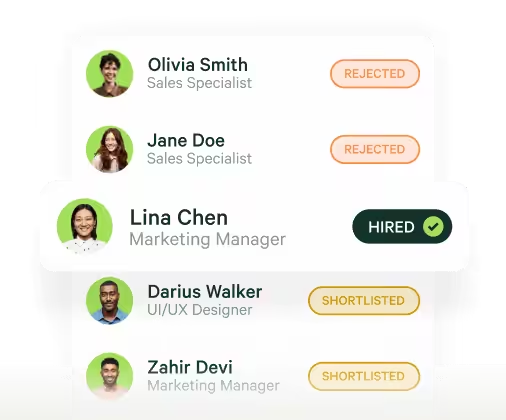
Looking to find top talent in South Korea and hire them quickly and compliantly? Remote People offers a full suite of services to help you recruit, hire, and manage employees and contractors with ease.

Finding top talent in South Korea can be challenging without local expertise. At Remote People, we simplify recruitment by leveraging our deep understanding of the local market, language, and business culture.

From sourcing candidates on the right platforms to structuring competitive, compliant compensation packages, we help you attract and hire the best talent—efficiently and cost-effectively.

A South Korea Employer of Record makes hiring easy by managing payroll, taxes, contracts, and compliance—without the need for a local entity. While you focus on running your business, the EOR ensures your employees are legally hired, fully compliant, and receive the benefits they’re entitled to.

A South Korean PEO streamlines HR, payroll, and compliance for businesses, allowing smooth employee management without needing a local legal entity. From handling employment contracts and tax compliance to managing benefits and payroll processing, a PEO ensures that your workforce operates seamlessly while staying fully compliant with local regulations.

With a PEO in South Korea, you can focus on business growth while leaving the administrative complexities to experts—ensuring efficiency, compliance, and hassle-free expansion.

Payroll outsourcing in South Korea simplifies salary processing, tax compliance, and benefits management by handing off payroll administration to experts—reducing errors, saving time, and ensuring compliance.

This includes payroll management, tax handling, contractor payroll, and HR system integration—ensuring accurate payments, regulatory compliance, and seamless workforce management.

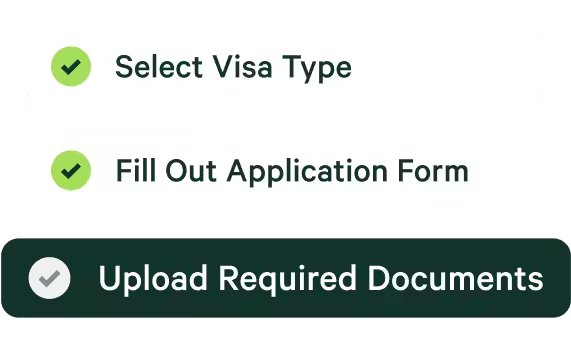
Foreign nationals working in South Korea typically need a combined work and residence permit, with few exceptions for EU, EEA, or Swiss citizens who can work freely under freedom of movement rules. The South Korea Ministry of Inclusion, Social Security and Migration—along with regional immigration offices—oversees work permit compliance and approvals.

Many companies partner with a South Korea Employer of Record (EOR) or South Korea PEO to streamline visa processing, manage work and residence permits, and ensure legal compliance for hassle-free hiring.

Essential Guides & Insights

Doing Business in South Korea

Doing business in South Korea requires understanding its economy, tax system, and regulations. This guide covers key insights, benefits, expansion options, and business opportunities to help you navigate the market successfully.

Hire Employees in South Korea

Hiring employees in South Korea comes with legal, tax, and compliance requirements — this guide walks you through the process to ensure a smooth and compliant hiring experience.

Average Salary in South Korea

The average salary in South Korea depends on industry, experience, and location — compare wages by profession, global benchmarks, and top outsourced industries.

Minimum Wage in South Korea

Minimum wage policies in South Korea help ensure fair pay, whether set by law, collective agreements, or industry standards. Rates may vary by region, role, or sector. Global employers must understand when and how these rules apply to stay compliant.

Employee Benefits in South Korea

Employee benefits in South Korea follow the National Pension Service (NPS) and Four Major Social Insurance Programs, covering pension, medical, unemployment, work injury, and maternity benefits — understand mandatory contributions and additional benefits to stay compliant and competitive.

Probation Period in South Korea

The probation period in South Korea is a contractually agreed phase at the start of employment, subject to local labor law. Learn how probation terms are applied, what legal considerations exist, and how they affect both employer and employee obligations.

Payroll Tax

Understanding tax obligations is key to compliant hiring — payroll taxes in South Korea cover mandatory employer and employee contributions, including social security, pensions, and other statutory benefits. Learn how tax rates, deductions, and regulations affect your payroll.