
 Recruit


Summary: Asynchronous work (async work) is a more flexible and dynamic approach to teamwork that enhances efficiency and productivity.
The swiftly changing work landscape is moving away from traditional nine-to-five schedules and synchronous work management. Asynchronous work (async work) is a flexible and dynamic approach to teamwork that can enhance efficiency and productivity. This new style of working has redefined how teams collaborate and connect using digital communication technology. It allows employees to work independently of set schedules and geography, helping everyone complete tasks on time while accommodating a variety of time zones and paces.
Even before the global pandemic that transformed traditional working conditions into other flexible and remote options, the push for better work-life balance was introducing new work options. A study conducted by Future Forum indicated, “80% of all knowledge workers now want flexibility in where they work, while 94% of employees want flexibility in when they work.” For many working people around the world, asynchronous work has enabled them to adapt to changes, improve professional efficiency, and take better control of their schedules. In this article, we will look closely at asynchronous work, its benefits and challenges, and how to manage things to make the most of this way of working.
Asynchronous Work (Async)
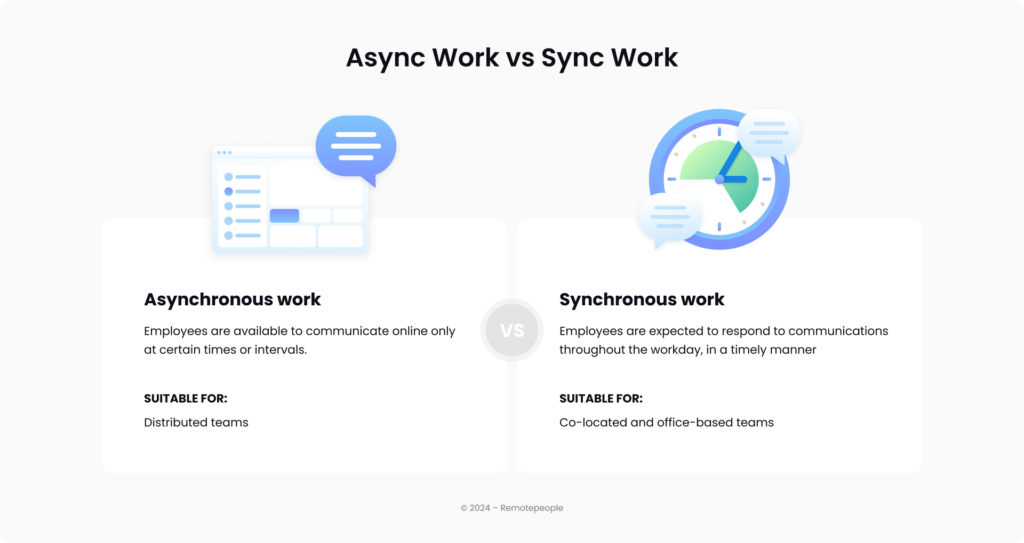
Asynchronous work is best defined by understanding how people work. In this case, asynchronous work allows individuals to manage their tasks and contribute to the workload regardless of their schedules. It is a more flexible work mode than traditional in-office, nine-to-five roles.
Asynchronous work requires efficient time management and accountability. Employees can make the most of their peak work times to become more productive. They can connect with peers using modern communication technology such as email, chat, and virtual team channels. Most often, a centralized project management system keeps everyone up to date. This system ensures that all team members have access to the latest information, can track progress, and collaborate effectively despite different working hours.
The benefits of asynchronous work
Asynchronous work has many benefits. These include empowering employees to handle their own work commitments and schedules. In asynchronous environments, employees are free to choose to work on projects, attend meetings, and respond to requests without the expectation of immediate or simultaneous interaction with their peers. This supports sustainability because employees can adapt and shift gears to incoming projects immediately.
Asynchronous employees often do not require a direct supervisor to monitor how they are using their time, which makes asynchronous work optimal for international organizations. Employees enjoy autonomy and flexible working hours within certain parameters and participate in team activities as needed.
Some studies have suggested that asynchronous work contributes to enhanced creativity, which supports innovation in the workplace. This can help attract talent and increase team effectiveness.
Asynchronous work has been found to foster diversity and inclusiveness, especially in large global organizations. This leads to better collaboration and builds strong team cultures. As a result of asynchronous work, employees also experience greater work-life balance, which has been shown to improve productivity and employee satisfaction. This is also important for reducing stress and the impact of mental illness.
An example of asynchronous work is participating in a virtual meeting, with employees leaving when they have no further reason to participate. They can then reclaim their time and get back to focusing on tasks. Another example is handling team communications using email, allowing employees to answer at their own pace.
To recap, the main benefits of asynchronous work include:
- Empowered and productive employees who self-manage
- Flexible and adaptable teams
- A culture of diversity and inclusion
- Improved employee work-life balance and satisfaction
The challenges of asynchronous work
Asynchronous working can pose a few challenges. It requires coordination and careful scheduling of human resources. Asynchronous work must focus on clear deadlines, carefully designed plans and milestones, and real-time monitoring of resources. If a project derails, it may be because team members are not communicating well or managing their time appropriately.
Building a cohesive culture can also be a challenging factor in terms of asynchronous work. Since employees may not interact with all of their peers, they can feel isolated from the company culture. If they don’t get a response from another employee in a reasonable amount of time, this can break down team trust and cause frustration. Asynchronous work works best when team members can rely on one another. Managers need to be mindful to include everyone in team activities and social sharing and conduct regular check-ins with all employees.
While scheduling is flexible in asynchronous work arrangements, it also depends on having a centralized employee communication and scheduling system. It takes time to coordinate, plan, schedule, and align employees to organizational objectives, so a certain degree of governance is required. If tasks are tied to one another, employees must be willing to take on new assigned roles to accomplish things.
To sum things up, the main challenges of asynchronous work are:
- Reliance on carefully designed objectives and manager oversight
- Employees may feel left out of the corporate culture
- Employees must efficiently communicate and collaborate on a virtual team platform
- Technological issues can create workflow problems
What are some tips for managing asynchronous work?
If your organization is considering implementing asynchronous work, there are some ways to maximize its benefits. First, make sure that asynchronous work is appropriate for your company, depending on your organization’s processes, operations, industry, and employee needs. Asynchronous work can be tested by a small group of employees to ensure it is feasible before rolling it out to the entire organization.
Tip #1 - Establish clear guidelines
Take the time to define your company’s expectations in terms of working hours, employee response times, and communication methods. Include guidelines for meeting deadlines, making priorities, and approving changes and tasks, and clearly state employee roles and responsibilities.
Tip #2 - Obtain the right collaboration tools
Unless you already have this in place, you will want to invest in an adaptable collaboration and project management system to connect all employees. This can be a combination of several communication and workflow management systems. It should be accessible 24/7, with a backup if technology breaks down due to internet or utility outages.
Tip #3 - Encourage open communication
Now is the time to start demonstrating open communication about work processes. All projects will need to be broken down and tasks assigned. Encourage all employees to communicate in multiple formats and check in regularly with each other and management. Set an example by recording a daily standup meeting and addressing wins, progress, and challenges. Share the recording with all team members to watch according to their schedules.
Tip #4 - Document everything
When switching to asynchronous work, it’s vital that all team members have access to all the information they need to perform their jobs. Make it a habit to document everything carefully and link systems together so this happens simultaneously. Store documentation on a secure platform with permissions set for team members.
Tip #5 - Ask for and provide feedback
Take the time to give all employees the feedback they need to be successful. Also, be willing to ask for feedback so management can learn from this experience and make improvements when needed.
Tip #6 - Respect employees
Asynchronous work allows people to demonstrate their skills and abilities. Create a positive experience for them by respecting their work and commitment. To avoid excessive micro-management, you might even consider the benefits of a horizontal organizational layout. But also remember to support boundaries and a healthy work-life balance. Respect them as professionals and individuals and for the diverse talent they bring to your organization.
Tip #7 - Maintain employee engagement
When employees work remotely or asynchronously, they can often feel disengaged from the organization. Some may never meet or interact directly with their colleagues. Communicating only through email or a chat platform can be impersonal. Waiting long periods of time to get a response can be frustrating. Make sure you are checking in with employees on a daily basis to keep them engaged in the work at hand.
FAQ
Asynchronous work allows employees to work at their own pace and on their own schedules. They don't need to be online or work the same hours as others to complete tasks. Each employee receives specific tasks to complete, which are carefully documented. Employees who work asynchronously stay connected and collaborate using virtual communication and work management systems.
It’s simple. Synchronous work occurs at the same time, while asynchronous work is just the opposite. Synchronous work refers to a group of employees working together on a set of tasks during the same schedule or in a meeting. Asynchronous work refers to employees working on assigned tasks separate from each other without the need to be physically present at the same time.
Andrew (Drew) joined the Remote People team in 2020 and is currently Director, Regulatory Affairs. For the past 13 years, he has been a trusted advisor to C-Suite executives and government ministers on international compliance and regulatory issues. Drew holds a law degree from the University of Otago, a PhD from the University of Sydney, and is an enrolled Barrister and Solicitor of the High Court of New Zealand.





