Recruit


Let RemotePeople handle payroll, compliance, and HR admin worldwide so you can focus on building your team.
In the evolving landscape of international business, effective management of a global workforce has become a critical factor for success. As organizations expand across borders, they face complex challenges in HR administration, payroll processing, and compliance with diverse legal frameworks. Two platforms that have emerged as significant players in addressing these challenges are Deel and Multiplier. This review aims to provide a thorough comparison of these solutions, offering insights to help businesses make informed decisions about their global HR management strategies.
Central to the offerings of both Deel and Multiplier is the concept of Employer of Record (EOR) services.
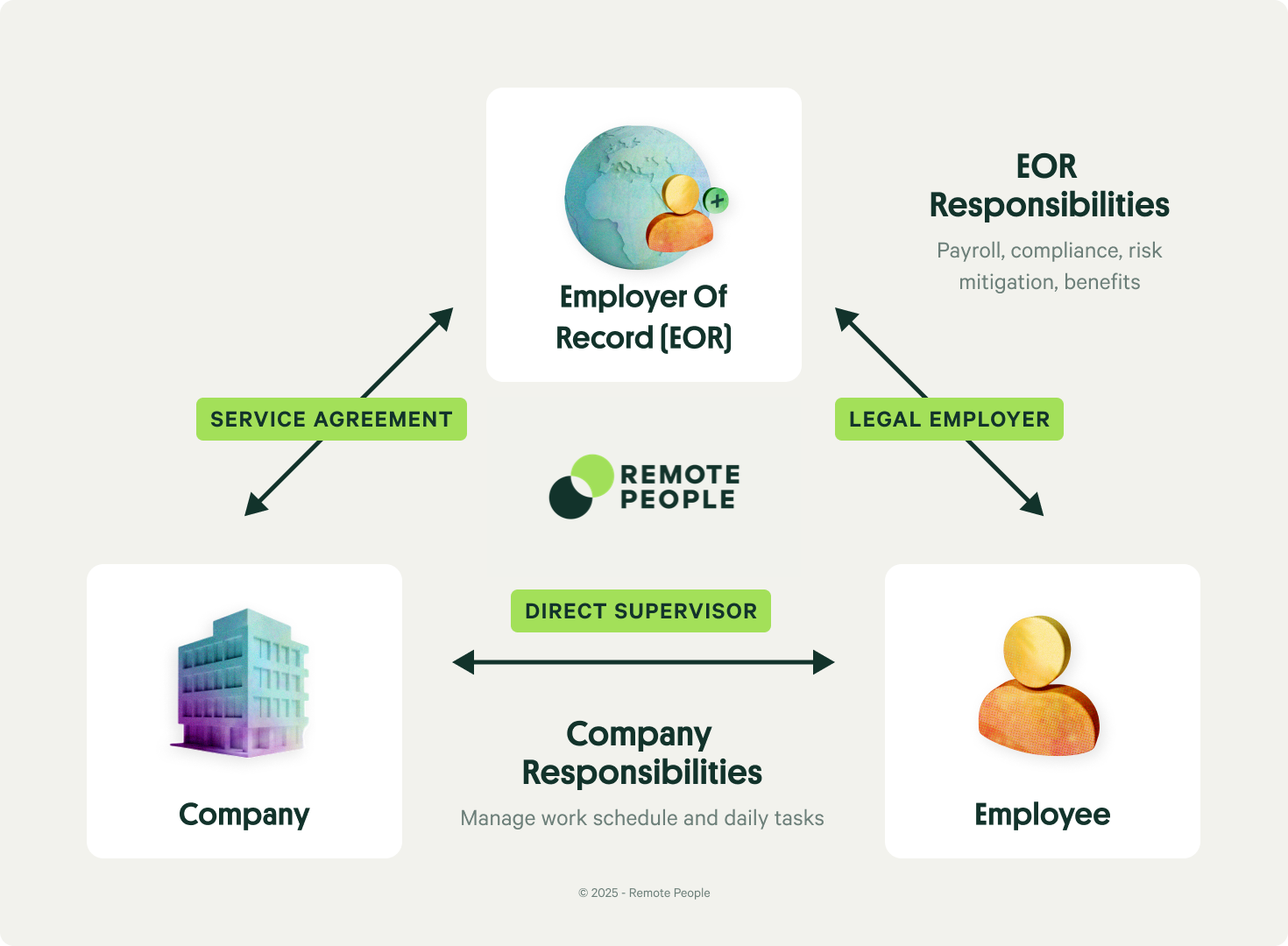
An EOR acts as the legal employer for workers in countries where a company does not have an established legal entity. This service manages critical functions such as payroll, benefits administration, and compliance with local labor laws. EOR services are particularly valuable for businesses expanding into new international markets or embracing remote work on a global scale.
Deel has established itself as a leader in international EOR services, supporting businesses across numerous countries, while Multiplier has carved out a niche by providing scalable EOR services with a focus on emerging markets and seamless compliance solutions.
What You’ll Discover:
- In-Depth Feature Analysis: A thorough breakdown of the features and usability of both platforms.
- Pricing Comparison: A detailed look at the costs associated with each service to assist with effective budgeting.
- Pros and Cons: Unbiased assessments of the strengths and limitations of Deel and Rippling.
This review will delve into the specific offerings of Deel and Multiplier, examining how each platform addresses the key challenges in global workforce management. We will assess their capabilities in areas such as international payroll processing, employee onboarding, benefits administration, and compliance management. Additionally, we will explore the user experience, integration capabilities, and scalability of each solution.
Our objective is to provide a comprehensive overview that enables businesses, from startups to established multinational corporations, to evaluate which platform aligns best with their global HR management needs. As we proceed, we will consider factors such as ease of use, breadth of features, geographic coverage, and cost-effectiveness, ensuring a balanced and informative comparison of Deel and Multiplier.
Deel vs Multiplier Overview
| Feature | Deel | Multiplier | Explanation |
|---|---|---|---|
| User Reviews | G2: 4.8/5 Trustpilot: 4.9/5 |
G2: 4.7/5 Trustpilot: 4.9/5 |
Both providers have excellent user reviews. |
| Pricing | $599/employee per month; $49/contractor per month |
$400/employee per month; $40/contractor per month |
Both service providers post their basic fees online. Multiplier’s fees are more affordable. |
| User-friendliness | Very good | Very good | Both companies feature easy-to-use platforms. |
| Customer Support | 24/7 live chat support | 24/5 live chat and phone support | Deel offers live support at all times, while Multiplier takes time to respond over weekends. |
| Integrations | Very good | Good | Deel has an API and integration with major HR and accounting software like Ashby, QuickBooks, and Xero. Multiplier also has an API and can integrate with fewer apps, including Salesforce, Slack, and HubSpot. |
| Data Security | Excellent | Excellent | Deel is GDPR and SOC 1, 2, and 3 compliant and ISO 27001 certified. Multiplier is compliant with GDPR, PCI-DSS, and SOC 1, 2, and 3 standards and holds ISO 27001, 27017, and 27018 certifications. |
| International Hiring (EOR) | Excellent | Excellent | Both of these providers offer EOR and contractor services in 150+ countries. |
| Recruitment | Not offered | Not offered | Neither Deel nor Multiplier offers recruitment services or assistance. |
| Benefits Administration | Good | Very good | Deel manages standard benefits like PTO, bonuses, and social security. Multiplier offers insurance and pensions as optional benefits. |
| Payroll | Excellent | Very good | Both providers offer global payroll services for employees and contractors. Deel offers more payment options to clients than Multiplier. |
Comparison of Deel vs Multiplier
These two service providers, Deel vs Multiplier, and quite well matched. Both of them are global employment platforms (GEPs), and they offer many of the same services.
As EOR providers, each uses its network of subsidiaries and partners around the world to hire employees on behalf of its clients. This allows the clients to save time and money because they don’t need to register their own business entities in other countries.
Both work in 150+ countries. The two providers offer contractor management and global payroll services.
Deel
Deel is a global employment platform that provides comprehensive EOR services, allowing clients to hire employees internationally without needing to establish local entities.
Services offered by Deel
- Employer of Record (EOR): Facilitates global hiring through its network of subsidiaries and partners in over 150 countries.
- Professional Employer Organization (PEO): Provides HR, tax, benefits, and payroll management for US employees.
- Contractor Management: Supports the management of contractors worldwide.
- Global Payroll: Manages payroll for international employees.
Multiplier
Multiplier is a global employment platform that, like Deel, offers EOR services and operates in over 150 countries. It also provides contractor management and global payroll services.
Services offered by Multiplier
- Employer of Record (EOR): Uses a network of subsidiaries and partners to hire employees globally in over 150 countries.
- Contractor Management: Manages contractors across the globe.
- Global Payroll: Handles payroll for international employees.
- Additional Benefits Packages: Includes health and life insurance, pensions, and compliance with local laws.
Deel Pricing
| Plan | Price per employee/contractor per month |
|---|---|
| Deel EOR Services | $499 per employee per month and up |
| Deel PEO Services | $79 per employee per month and up |
| Deel Contractor Management | $49 per contractor per month and up |
| Deel Payroll | $29 per person per month and up for global payroll or $19 per person per month and up for US payroll |
Multiplier Pricing
| Plan | Price per employee/contractor per month |
|---|---|
| Multiplier EOR Services | Starting at $400 per month |
| Multiplier Contractor | $40 per month |
| Multiplier Global Payroll and Immigration | Not publicly available; requires a quote |
Key Differences
Service Expansion
- Deel: Offers core services in global payroll, EOR, and contractor management. Does not provide additional benefits packages.
- Multiplier: Offers core services including global payroll, EOR, and contractor management; plus additional benefits packages like insurance and pensions.
Global Reach
- Both platforms operate in over 150 countries.
Pricing Transparency
- Deel: Basic starting prices online; quotes required for additional services and add-ons.
- Multiplier: Generally more affordable; quotes are required for additional services and add-ons.
While both platforms have similar core offerings, Multiplier differentiates itself with additional benefits packages, a mobile app, and more affordable pricing. Deel stands out for its 24/7 support and specific PEO services in the US.
Deel Pros and Cons
As a service provider, Deel’s focus is on contractor, EOR, and global payroll services. The advantages and disadvantages of using this platform include:
- Pros
Data security
Deel is SOC 1, 2, and 3 compliant, GDPR compliant, and ISO 27001 certified. It provides additional security for users’ data by using encryption protocols and 2FA (two-factor authentication).
Easy payments
Payments are very flexible with Deel. Employees can be paid in their local salary as is usually mandatory (120 currencies). Contractors can be paid in these 120 currencies and have the option of receiving their payments through direct deposit or through online services like Payoneer, Wise, and Revolut. Clients can be billed in one of 24 currencies.
Convenient onboarding
Deel’s platform can automatically generate legally compliant contracts for all the countries in which it works. This automation, combined with a convenient self-service portal, allows employees and contractors to be onboarded quickly and efficiently.
Free HR offering
Small and medium enterprises (SMEs) with fewer than 200 employees are able to use Deel HR, its basic human resources information system (HRIS), for free. This can also be used as a free trial for smaller businesses.
Stateside benefits
Deel provides PEO services that allow companies to manage HR, payroll, taxes, and benefits for US workers. Deel provides opportunities for health, vision, dental, critical illness, life, and hospital indemnity insurance, as well as 401(k) retirement plans for its clients’ employees.
- Cons
Lacks features
As a basic HRIS, Deel doesn’t include recruitment management, applicant tracking, analytics, workflow, and headcount features. Deel also doesn’t have a mobile app to help users access the platform on the go.
Complex pricing
Deel shows its basic starting prices online in contrast with many GEPs. However, additional fees and add-on services can’t be determined independently and require a quote from Deel’s sales team.
Learning curve
Deel offers a user-friendly platform that is intuitive and convenient. At the same time, it includes a lot of functionality, which can make it complex, confusing, and difficult for new users to learn.
Contractor management price
The price for managing a contractor with Deel starts at $49/person per month and can be higher in some countries. This is higher than many of its competitors.
Multiplier Pros and Cons

Multiplier, too, is a global employment platform focused on EOR, contractor, and payroll services. The particular advantages and disadvantages of using this platform include:
- Pros
Mobile app
Multiplier offers a mobile app (Multiplier ESS – employee self-service) for both iOS and Android users. This app gives employees direct access to their personal information, leave management, and payroll information so they don’t need to go through HR for many requests and concerns.
Data security
Multiplier is compliant with GDPR, PCS-DSS, and SOC 1,2 and 3 standards and holds ISO 27001, 27017, and 27018 certifications.
Benefits packages
Multiplier offers an extensive array of benefits for employees and contractors, including health, vision, dental, and life insurance, as well as pensions. These packages are compliant with the laws of each country in which they’re used.
Price
Multiplier offers a good amount of service for clients wanting to hire employees and contractors around the world, but its prices are lower than those of many of its competitors.
- Cons
Limited integration
While the multiplier platform has an API that allows for the development of custom integration, its standard, out-of-the-box integrations are limited. While it works with some big names like Workday, Bamboo HR, HiBob, and Personio, it may not allow enough integration for most clients’ tech stacks.
Complexity
The Multiplier platform is comprehensive and its user interface is fairly intuitive. However, it has extensive features that can make it complicated and slow to learn. It’s also difficult to implement according to user reviews.
Lacks features
Like Deel, Multiplier is missing recruitment management, applicant tracking, analytics, workflow, and headcount features which must be found through other software solutions or service providers.
Head-to-Head Comparison: Deel vs Multiplier Features
We’ve seen the distinct advantages and disadvantages of each service provider individually. It should be clear by now that these companies are quite similar and, in many cases, almost impossible to tell apart. That’s why we’re going to look at Deel vs Multiplier head-to-head to see the specific areas in which each one excels. Our goal is not to identify an overall winner but to show which provider would be a better choice for different organizations with different needs.
User-friendly platform: It’s a tie
While both platforms have quite intuitive user interfaces (UIs) that new users will find easy to start out with, they both also offer a level of complexity that can be daunting. This gives both platforms a somewhat steep learning curve. Neither really stands out as being more difficult or easier than the other.
Resources: Deel wins
In terms of resources, Deel has an extensive and useful blog, a glossary of HR terms, educational webinars, a global employment comparison tool, and a global benefits tool to help calculate the costs of employees in different countries. While not extensive, these are more resources than the blog and job description templates that Multiplier offers.
Integration with other software: Deel Wins
Deel integrates with over 80 software solutions, including Ashby, Asana, BambooHR, Greenhouse, HiBob, Lever, Quickbooks, Slack, Workable, Workday, and Zapier. It also has an API that lets developers build new integrations. While Multiplier also has an API, it includes fewer than 20 integrations, including Bamboo HR, HiBob, HubSpot, Personio, Salesforce, Slack, and Workday. This limits how useful Multiplier can be for larger organizations with established tech stacks.

International hiring (EOR): Multiplier Wins
Both of these service providers act as employers of record to hire employees on behalf of their clients in over 120 countries worldwide. They both offer contract management, hiring, onboarding, payroll, benefits administration, and tax and social security deduction management services, but neither offers recruitment services. Since it seems to come down to price, Multiplier simply wins because it’s cheaper.

Contractor Solution: Deel Wins
Multiplier is also slightly cheaper for contractor management than Deel. Both of these service providers can help client companies hire contractors in 120+ countries. However, Deel’s onboarding process is faster and easier. It also enables contractors to be paid using the online transfer programs they prefer, such as Payoneer, Wise, and Revolut, and this flexibility makes up for Deel’s higher fees.
Employee Benefits: Multiplier Wins
Like all EORs, Deel manages employee benefits like paid time off and social security contributions that are mandatory in the countries where it hires employees. However, it doesn’t offer additional benefits. Multiplier does. It allows employers to add on locally compliant pensions, health, and other insurance packages so they can provide more for their employees.

Payroll Management: Deel Wins
Both providers make paying wages, taxes, and social security deductions quick and easy. Contractor invoices are also convenient and simple to manage on both platforms. Deel excels in offering alternative methods to contractors and a wider range of billing currencies than Multiplier. Deel lets clients choose to be billed in any of 24 currencies, while Multiplier only enables billing in one of five major currencies.

Our Verdict: Deel vs Multiplier
We’ve examined the specific advantages and disadvantages of each service provider individual as well as compared them in a head-to-head competition based on different features and functions. We’re aiming not to choose an overall winner but to point out when each of these providers would be a better choice for organizations with different needs.
When to choose Deel
If you want to use a provider with more attentive service and more integration possibilities with your existing tech stack, Deel is a great choice. While more expensive than Multiplier, it may also offer more convenience for businesses around the world that want to be billed in a greater range of currencies and offer more payment methods to their international contractors.
When to choose Multiplier
Multiplier provides less flexibility with payments but also charges significantly lower fees, especially for EOR services. It’s also the provider to choose if you’re looking for a simple way to provide additional benefits for your employers and contractors around the world.