
 Recruit
Hire Anywhere: EOR explained
What an Employer of Record really does, and how it lets companies hire top talent anywhere — without setting up local entities. Recorded for HR.com’s Totally Talent podcast, episode 61.

We handle global payroll, compliance, and HR while you build your team.
Channel
HR.com
Format
Podcast · Ep. 61
Duration
8 min 26 sec
Published
May 2026
About This Episode
The world went remote — and the Employer of Record (EOR) model quietly became one of the hottest areas in HR technology. In this episode of HR.com’s Totally Talent podcast, host Mike Wood sits down with RemotePeople to unpack what an EOR actually is, how it works behind the scenes, and why thousands of companies now use one to build international teams.
In under nine minutes, you’ll get a clear, jargon-free explanation of the legal and operational mechanics that let a company employ someone in a country where it has no legal entity of its own.
What You'll Learn
- What an Employer of Record really does — and what it doesn’t do.
- How an EOR employs your workers compliantly in countries where you have no entity.
- When EOR beats entity setup on speed, cost, and risk — and when it doesn’t.
- How payroll, benefits, and employment contracts work under the EOR model.
Why EOR Became One of the Hottest Areas in HR Tech
Employment law is local: contracts, payroll taxes, statutory benefits and termination procedures vary by country. An Employer of Record manages the agreed local employment responsibilities while you direct daily work. This can make onboarding faster than creating a new employing entity, although the timetable depends on the country, documents and right-to-work requirements.
RemotePeople supports EOR hiring in 150+ countries and also offers recruitment and employee support. Confirm the employing entity, service scope and local requirements for the proposed hire.
Who Should Watch
This episode is ideal for HR leaders, talent acquisition teams, founders, and finance leaders who are weighing international hiring for the first time — or who want a crisp explanation of the EOR model to share internally before choosing a provider.
Hire top remote talent
We handle global payroll, compliance, and HR while you build your team in 150+ countries.
More Videos
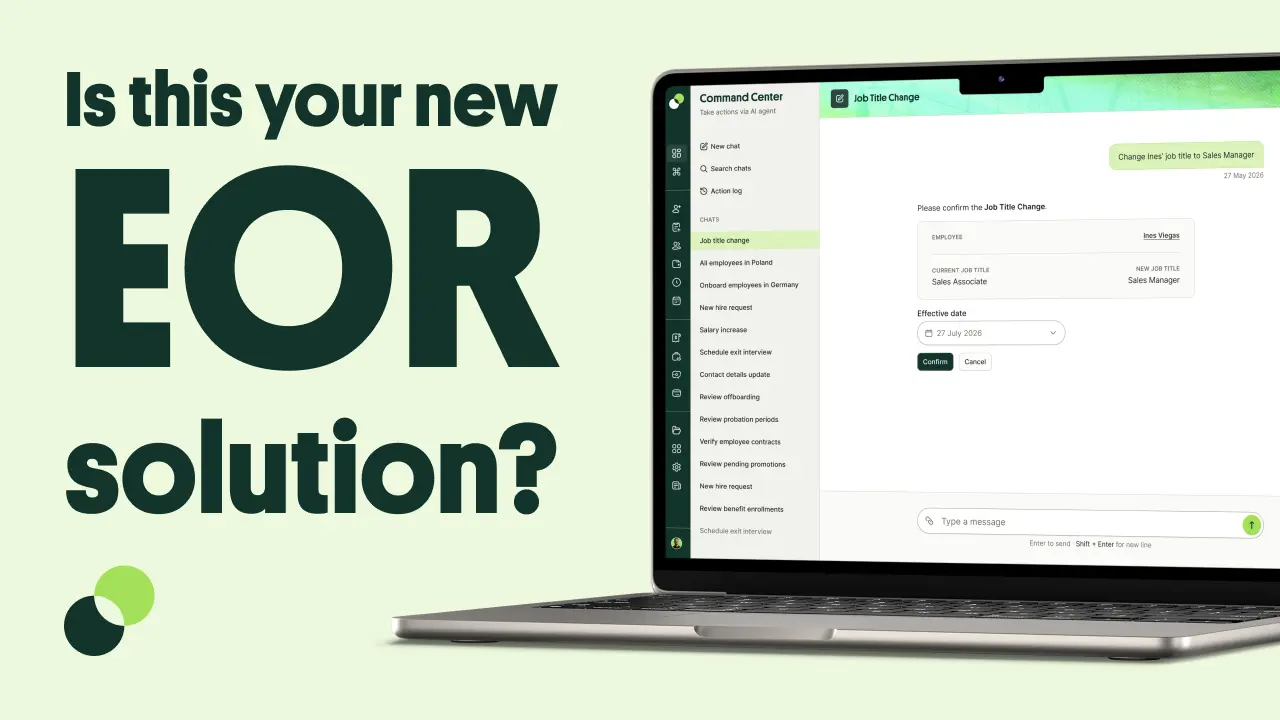
RemotePeople Product demo The AI that gets HR done
See how the Command Center automates global hiring workflows end to end — from onboarding to payroll — inside one platform.

HR.com Webcast Hire anywhere
Global hiring is no longer optional — it’s a competitive necessity.
Frequently asked questions
Key questions from RemotePeople’s HR.com discussion of the EOR model.
In many countries, an Employer of Record can employ a worker for your business through a local employing entity. Your company directs daily work while the EOR handles the employment contract and agreed administration. RemotePeople confirms whether the arrangement is suitable for the country and role. Commercial activities, immigration and corporate tax obligations may still need separate review.
An EOR can often onboard faster than setting up a new employing entity, but there is no universal start date. Timing depends on the country, required documents, contract review, payroll deadlines and any right-to-work checks. RemotePeople confirms the onboarding timetable for the proposed hire; a visa or additional registration can extend the process.
The EOR entity named in the employment contract is the contractual employer. It handles the agreed employment administration, while the client manages the employee’s work and performance. When hiring through RemotePeople, confirm the named employing entity and responsibilities in the service and employment agreements before onboarding.