
 Recruit
Best 8 Performance Management Software


Let RemotePeople handle payroll, compliance, and HR admin worldwide so you can focus on building your team.
Performance management is an essential part of HR but is also one that often fills teams with a sense of dread. Not only can it make employees anxious, but it can also cause HR teams to get bogged down in time-consuming review processes and to be buried under mountains of data. But it doesn’t have to be this way.
Performance management software has come a long way, and modern platforms are easy-to-use, customizable, and efficient time-saving tools that can take all the hard work out of this function. If your organization isn’t already using performance management software, this review will explain why it should be.
Even if you’re already using one, we’ll also show you why you might want to reassess and look for a better tool from our list of the best eight performance management software companies in 2026.
Why You Need Performance Management Software
Most companies in the past 50 years have adopted a typical pattern. Once a year, managers and supervisors would undertake performance reviews and then give feedback to each of their employees. HR teams would be given the data to record and process to hopefully provide some insight into how to improve overall areas of weakness for the entire staff. This process was slow and lumbering, generally producing data that was skewed by managers’ personal opinions and insights that arrived too late to make much of a difference.
In the modern world, however, something much more is needed. Organizations need current information to help them make hiring and staff development decisions based on accurate data. Agile companies need to be able to help their staff change and improve quickly to keep them adaptable. Performance management software allows for all of this while making the job a lot easier and more time-effective. Rather than waiting until the end of each year, this software helps to make performance management a continuous process. It also collects a lot more data, which helps leaders make more accurate decisions. Finally, this software adds employee input into the equation which helps improve working conditions and prevent burnout while simultaneously producing better results for their employers.
Ultimately, performance management software makes life easier for HR, makes employees happier, and creates more value for organizations. What’s not to like?
Benefits of using performance management software:
- Improved engagement: Collecting more and more accurate data helps managers find more ways to keep their subordinates engaged so they can have more satisfaction at work while also producing more value.
- More employee input: Employees can give managers their feedback so their supervisors can adjust their management styles and techniques to be more effective.
- Efficient data management: Software automates many processes, links documents and data, and centralizes information for more efficient use.
- Streamlined development: Software packages can provide learning and development tools to help employees build new skills and set strategies for career development.
- Greater efficiency: Most software packages let employees access their own profiles and perform tasks that would otherwise need to be handled by HR. This greatly reduces the administrative burden on HR staff, freeing them up to perform other critical functions.
- Better analysis: With all data centralized in a single location and built-in analytics tools, this software helps leaders learn more and make better decisions.
Important Features of Performance Management Software
Choosing the best performance management software for your company to use long-term is in no way an easy task. There are hundreds of options out there, with providers offering very different pricing structures, features, and services.
While price is always an important factor, the performance management software you choose must enable you to efficiently and effectively perform this function by giving you everything you require. The following features are available in different software packages so review the ones you need and make your selection based on this crucial criterion:
360-Degree Feedback
One of the best ways to get a clear picture of how employees are truly performing is to review them from all directions. This includes traditional reviews from their superiors but also input from coworkers and subordinates in the organization.
These reviews provide more accurate input but can be difficult to manage and a lot of extra work without a tool to help. A 360-degree feedback feature can store the multiple reviews attached to each employee’s profile, help you assign reviews, and sometimes even collect and amalgamate them as well.
Templates and Review Management Features
All platforms should provide you with templates that you can use to create the different reviews you need for employees and managers. These templates should be highly customizable to help you capture the data unique to your organization. Once you receive completed reviews, you should be able to store and manage them in effective ways. They should be easily searchable and correctly linked to all people and relevant departments.
Ongoing Performance Tracking
Effective software will help you assess any employee’s performance in real-time. This includes easily accessing historical data from past reviews and integrating their goal attainment.
Most platforms help you schedule one-on-one meetings between managers and their subordinates to provide actionable advice on how to improve their performance.
Comments and feedback from all of these meetings should be continuously updated to enable administrators and managers to see instantly how any employee in their organization is performing.
Goal Setting/Tracking Tools
While managers have productivity goals to reach, employees are generally encouraged to set achievable performance and development goals of their own. Many platforms offer employee goal-setting features and tools to help their supervisors track their goal attainment. This data should also be linked to their overall performance.
Employee Recognition Features
Employees are more productive and have better job satisfaction when they receive recognition and rewards in the workplace. Performance management software with built-in recognition systems can help to improve company culture and employee engagement.
Many systems use gamification to provide employees with rewards and public platforms enabling peer-to-peer recognition. They may also automate recognition of important work milestones and include integrated notifications to share success stories on team communication networks.
Succession Planning Tools
Succession planning is crucial both for the health of organizations and to promote employee satisfaction and retention. Using the data collected from reviews and other means, many software packages can help you to identify top performers. They can also manage diversity metrics to help you find a range of people who can strengthen your organization. From there, they can help you to create development tracks to lead them into new roles and indicate when successors are ready to make their transitions.
People Analytics Tools
All performance management software will have some form of people analytics tools, though their quality and extent will vary. Excellent tools help you build reports and visual representations to help make decisions quickly, thoroughly analyze your HR data, and make accurate predictions for the future. These tools can be used in all areas, including recruitment, learning and development (L&D), succession planning, and project management.
Learning Management Systems
An effective performance management software package will include an embedded LMS to help your employees develop. Some offer pre-made courses, while others only allow you to build your own resources.
However, all LMSs should include assessments and tracking to help both employees and admins understand how far and how well employees have advanced through their learning materials.
Skills Assessments
When you want to get a grasp on the hard skills held by new applicants and established employees, you’ll want to test their abilities, knowledge, and proficiencies.
Your performance management software should provide you with tools to create and apply skills tests, automate grading, and provide appropriate feedback to employees when necessary. In this way, the software helps you assess suitability and qualifications for different roles as well as giving a picture of what people need to learn and develop.
Self-Service Portal
An effective software package will provide an employee portal to allow employees to access parts of its platform. By letting employees manage a lot of their own tasks, like updating their personal information and completing reviews, this feature saves HR teams lots of time.
Effective software lets you set permissions for access to different data and functions so that supervisors and managers can easily access their subordinates’ information and assign them tasks. Many platforms also offer mobile apps that make accessing their systems more convenient.
Best Performance Management Software
With the above tools and features in mind, we’ve put together a list of what we consider the best performance management software packages available today.
| Performance Management Software | Description |
|---|---|
| BambooHR | A comprehensive HR platform with built-in performance management tools, goal tracking, and employee feedback features. |
| Lattice | Designed for continuous performance management, Lattice provides goal setting, feedback, and career development tools. |
| PerformYard | A flexible performance management solution offering customizable reviews, goal tracking, and real-time feedback. |
| Trackstar | Performance tracking software focused on employee reviews, engagement, and real-time performance insights. |
| HiBob | A modern HR and performance management tool with engagement analytics, feedback cycles, and career planning features. |
| Paylocity | Combines payroll and performance management, offering goal tracking, feedback, and workforce analytics. |
| 15Five | A continuous performance and employee engagement platform with tools for weekly check-ins, feedback, and recognition. |
| Paycor | HR software with performance management features, including goal setting, coaching tools, and employee development tracking. |
While many of their features and functions overlap, these platforms also approach performance management from different angles so you should look for the one that shares your organization’s specific areas of focus.
1
Bamboo HR
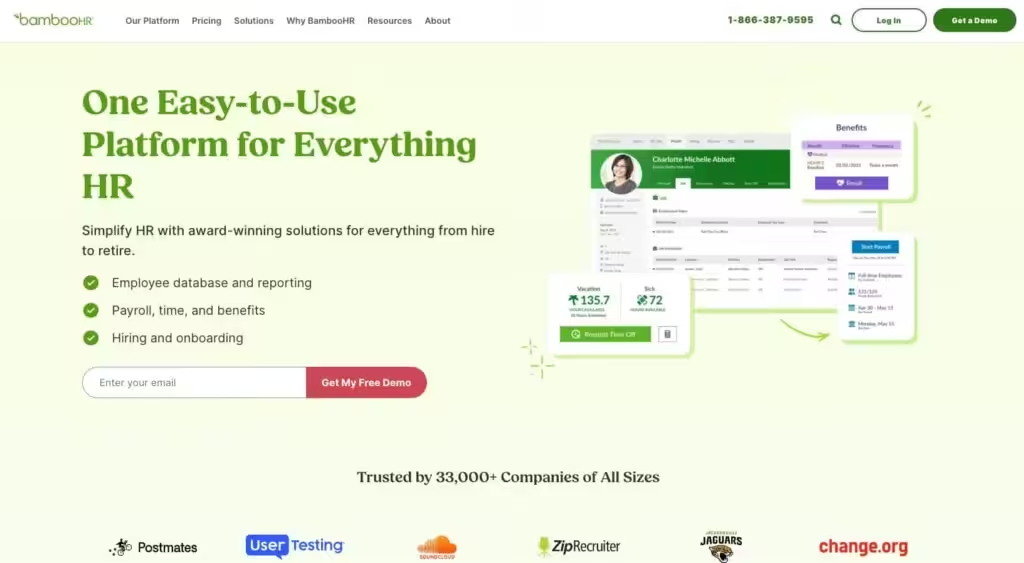
Bamboo HR is one of the best-known HR platforms available today, and this is due in part to the quality of its performance management functions.
These tools make reviews easy by helping you set assessment schedules, collect 360-degree feedback, and customize managerial and self-reviews. You can also schedule 30, 60, and 90-day check-ins for new staff and easily schedule one-to-ones to help managers share feedback.
- Read our in-depth review: Bamboo HR Review
Bamboo HR's Features
- Friendly user interface and easy navigation
- Extensive scheduling and reminder tools
- Employee value visualizations
- Company-wide team analysis tools
- Part of a complete HRIS
2
Lattice

Lattice is a highly rated performance software package that helps admins track employee performance, goals and objectives, and career growth.
It’s largely used by mid-market companies and includes a strong focus on employee engagement and employee development features. It also combines diverse feedback from managers, peers, and employees themselves in real-time to create accurate profiles.
Lattice's Features
- Goal development and achievement management
- AI-powered analysis and insights
- 360-degree reviews
- Highly customizable career growth plans and tracking
3
Performyard

As you can see from its name, Performyard is clearly focused on employee performance management and helps to enhance reviews, goal setting and tracking, and employee feedback. This software helps admins manage feedback from all levels of their organizations and schedule reviews and frequent check-ins to keep an up-to-date picture of how staff are doing.
Performyard's Features
- Continuous feedback
- Extensive customization of reviews
- 360-degree review management, including external reviews
- Cascading goal management
4
Trackstar

Trackstar by Mitratech is an extensive performance management software package that’s largely used by SMBs.
This software combines four modules – performance management, learning management, applicant tracking, and workforce analytics – to create a powerful HR platform. Its appraisal and employee engagement features are well-organized and easy to use for effective management of your team’s goals, reviews, feedback and skills development.
Trackstar's Features
- 360-degree feedback and customizable performance reviews
- Easy-to-create engagement surveys
- SMART goal setting and tracking
- Automated scheduling and reminders for assessments and feedback
5
HiBob
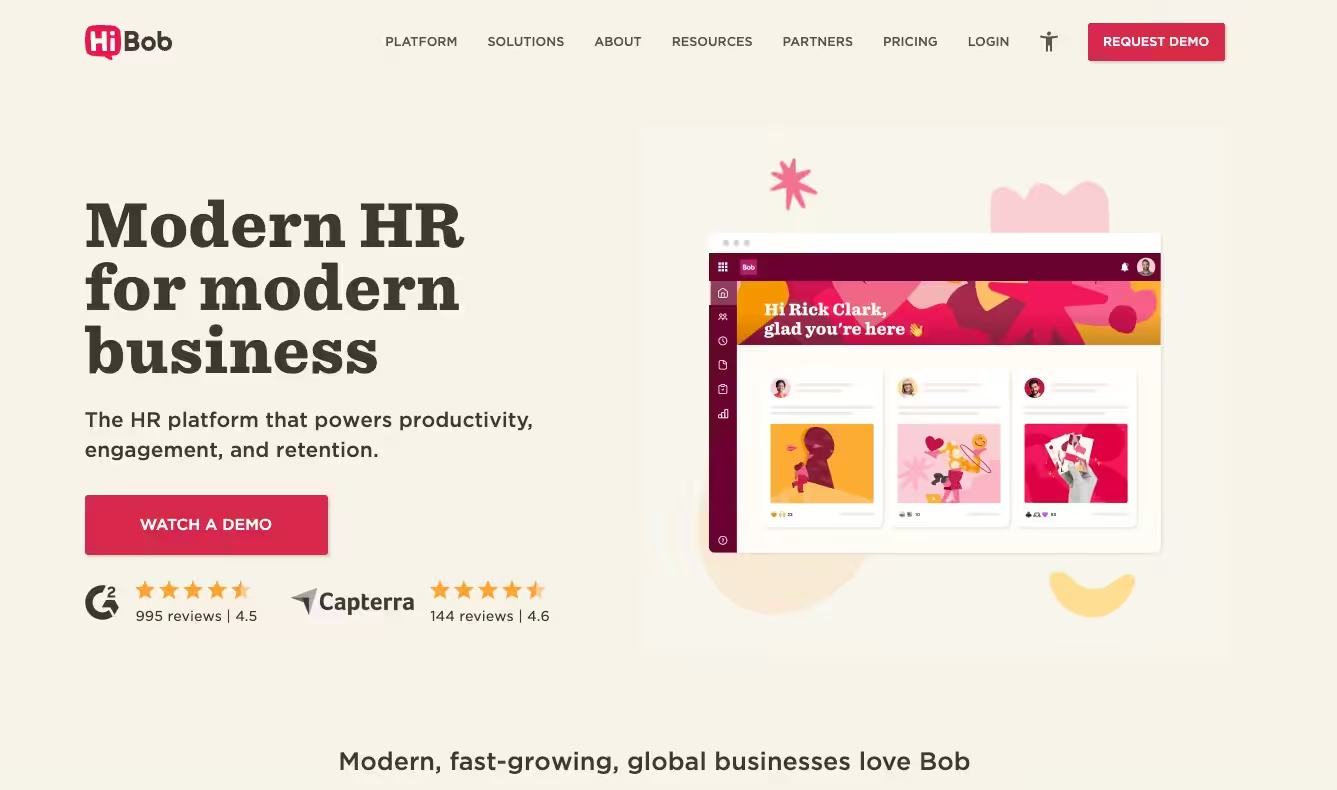
HiBob is a widely used HRIS (human resources information system) that includes an extensive array of tools. Among them are performance, learning, and people analytics tools that together offer the full range of a complete performance management system.
It includes social feeds, customizable workflows, and advanced analytics to give a detailed picture of how your team is producing value and where it can go in the future.
- Read our in-depth review: HiBob Review
HiBob's Features
- Goal-setting features for individuals, teams, and whole departments
- Automatic analysis producing insights and reports
- Employee career timeline planning
- Comprehensive 306-degree reviews, early check-ins, and one-on-one scheduling
6
Paylocity
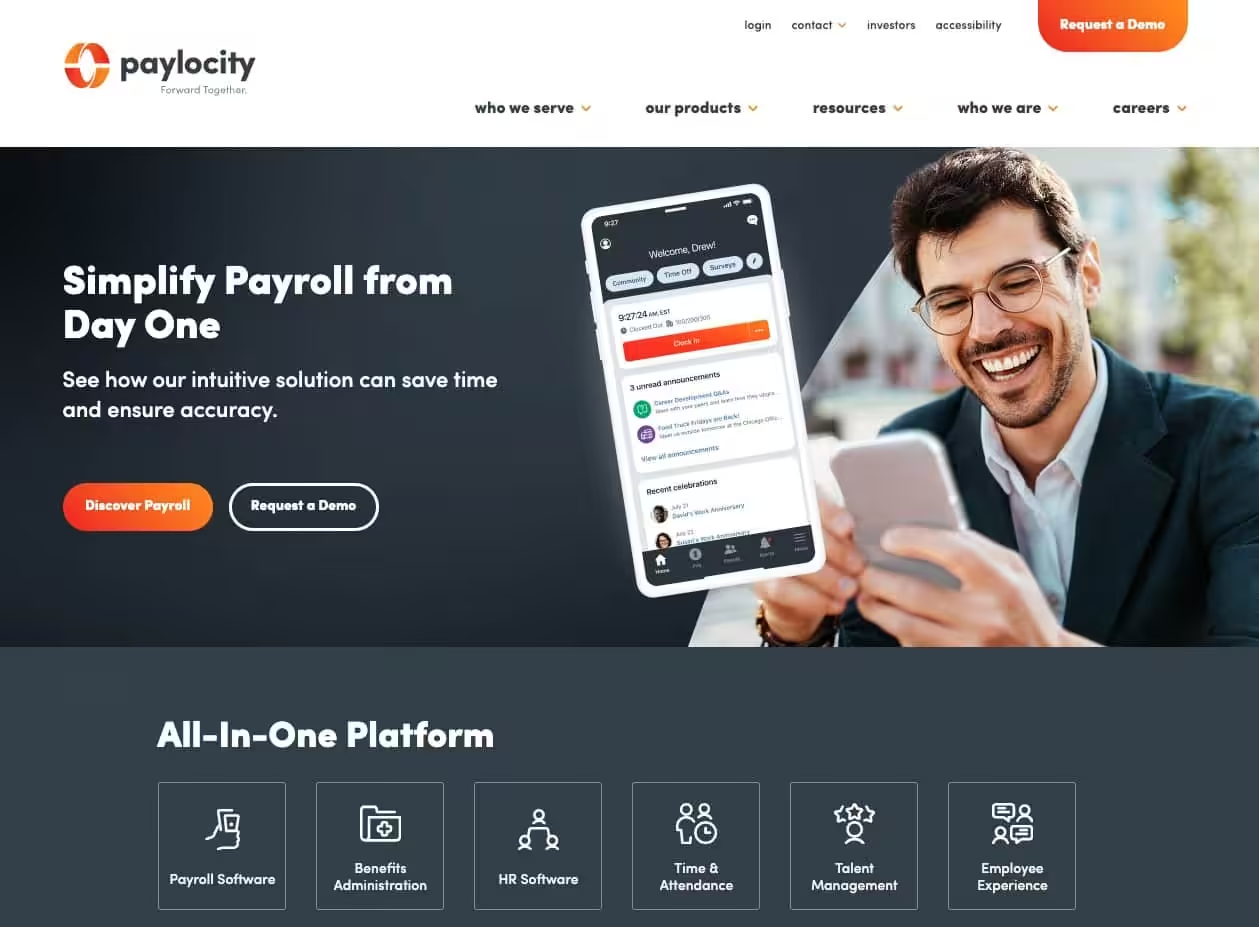
While it’s primarily a payroll provider and HRIS platform, Paylocity also includes extensive performance management and employee engagement features to help you get the most out of your team.
This provider helps you to gather reviews and feedback from managers, coworkers, and, of course, employees themselves. Paylocity also focuses on storing and analyzing employee self-assessments by letting them give their feedback in text and video form and using sentiment analysis to measu,e their subjectivity.
- Read our in-depth review: Paylocity Review
Paylocity's Features
- Gamified recognition features
- Text and video journals for employee goal-setting and self-assessments
- Management of 360-degree feedback from all levels
- Assessment templates for succession planning
7
15Five

The platform 15Five takes its name from the well-known 5:15 reporting structure and similarly works to save its clients time in their performance management functions.
It helps HR teams easily set up review cycles, collect reviews and ratings, and turn this data into visualizations and reports to facilitate data-driven decision-making. It also helps assess how performance is contributing to goal achievement and career growth.
15Five's Features
- 360-degree reviews and customizable engagement surveys
- AI-generated reports and review templates
- Manager coaching and training systems
- Continuous feedback tools like check-ins and one-on-ones
8
Paycor
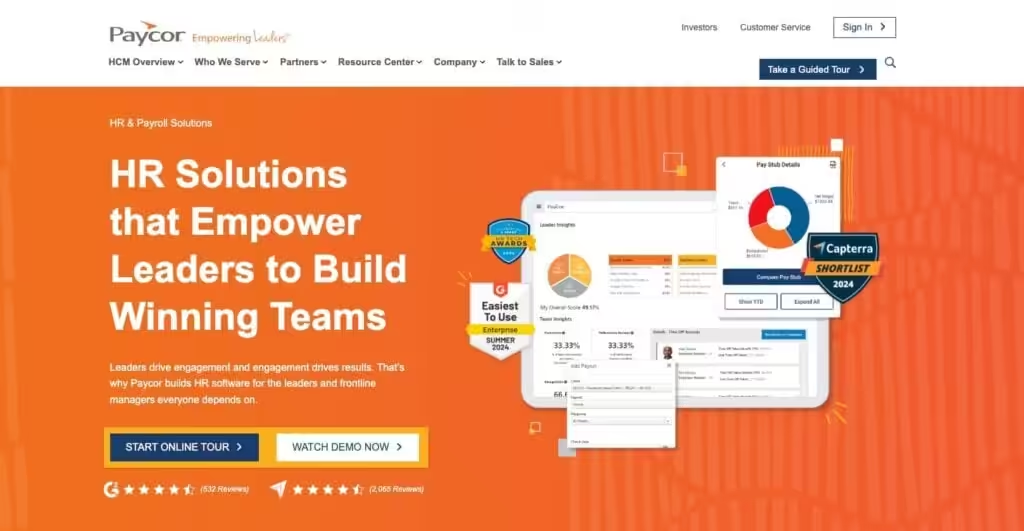
Rounding off our list of the top 8 performance management software packages in 2026 is Paycor, another payroll provider and complete HRIS.
Its performance management features include easy-to-use evaluation management and tracking, goal-setting, and feedback collection. It includes an extensive LMS, career path management tools, compensation management tools, and easy-to-use surveys to get your finger on the pulse of your team’s productivity.
Paycor's Features
- Advanced goal-setting and career path planning
- Employee self- and peer reviews and one-to-one feedback sessions scheduling
- Performance analytics tools
- Advanced course builder for employee development
Best 8 Performance Management Software in 2026
Performance management software is used to help align employees with your company’s goals, enhance employee and team performance, and increase engagement so employees produce more value and achieve their goals.
There is a wide variety of software platforms available, and while they all attempt to achieve these same goals, they offer different tools and features to do so. Our list of the top eight performance management software in 2026 provides the most powerful, fully featured packages available on the market to help your organization get the most from its teams.
Frequently Asked Questions
No, these two terms represent different aspects of HR. Performance management focuses on working with employees through assessments, education, goal-setting, and organizational alignment to help them create a positive working environment and produce the most value possible. Workforce management is more about admin and scheduling – it focuses on managing workers’ time and attendance at work, their paid time off, and their work schedules.
The answer is that some software packages wrap employee engagement into performance management because measuring and managing this metric helps foster a positive work environment and increase productivity. However, other platforms separate engagement as an independent function.
Most platforms offer multiple tools to manage development. These include tools that help employees set goals and measure their attainment of them, learning management systems with courses to develop employees’ skills, and career path planning tools to help them know what they need to do to move up the ladder.