
 Recruit

Pay for Performance in the AI Era: Outputs, Not Hours
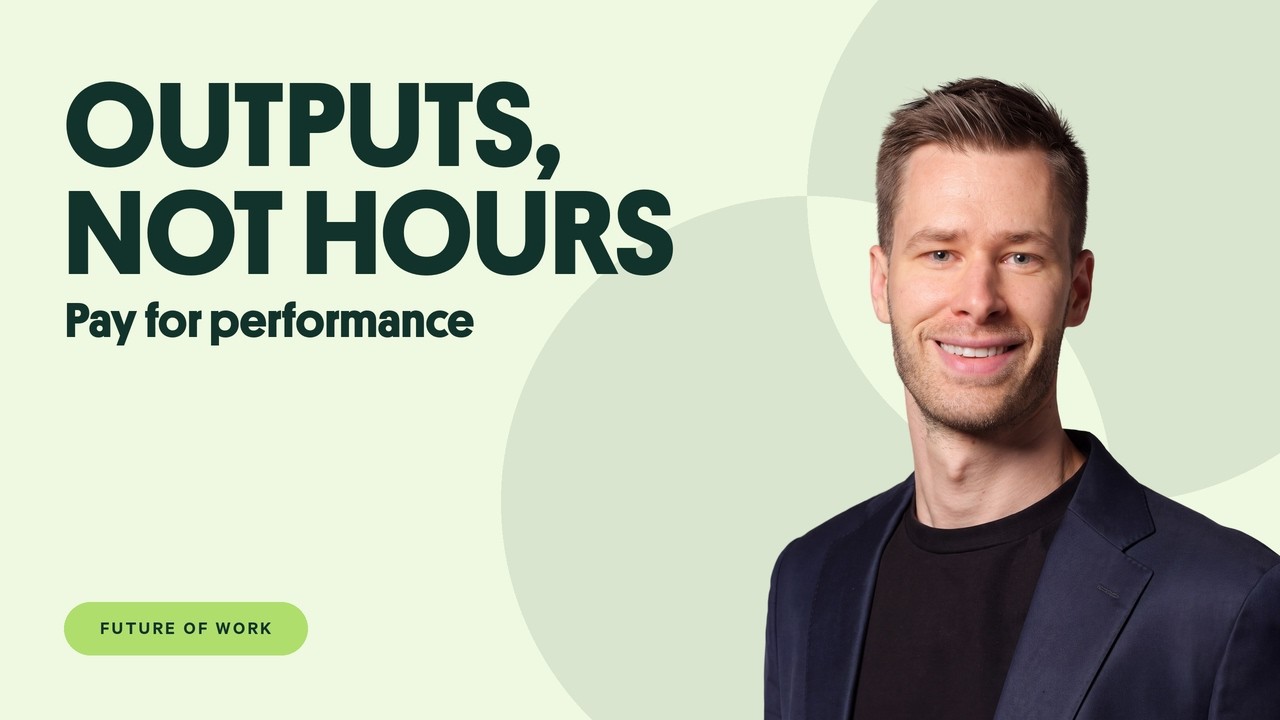
What does pay for performance mean when AI helps people produce more in less time? RemotePeople co-founder and CEO Antoine Boquen discusses why employers may assess contribution through outcomes, how compensation could evolve and what this means for leaner teams.


We handle global payroll, compliance, and HR while you build your team.
Channel
Format
Interview excerpt
Duration
4:10
Published
September 17, 2026
About This Video
In this excerpt from HR.com’s Future of Payroll and Workforce Management podcast, Antoine Boquen joins host Brent Skinner to explore the relationship between working time, productivity and pay. The discussion starts with a familiar management problem: being visible at a desk does not necessarily tell an employer what someone has achieved.
Boquen argues that remote work accelerated the need to assess results. When managers cannot rely on watching people work, they need a clearer understanding of the output a role is meant to deliver. The interview connects that shift to AI tools, which could allow some employees to complete tasks more quickly or take on a broader range of work.
The conversation then turns to compensation. If an employee’s contribution rises, how should the employer recognise that value? Boquen considers the negotiation between workers who want to share in productivity gains and companies that want more efficient teams. His examples illustrate a possible direction for work; they are not forecasts of guaranteed productivity increases or salary outcomes.
What You'll See
- 0:00 — Why outputs can be more informative than hours at a desk.
- 0:20 — How remote work changed the management conversation.
- 1:34 — AI-assisted engineering and the potential to expand individual output.
- 2:36 — Recognising a greater contribution through compensation.
- 2:56 — The possibility of smaller, more productive teams.
- 3:46 — What output-based pay could mean for attracting talent.
Why It Matters for Global Hiring
Pay for performance depends on a shared understanding of what good work looks like. This interview gives business leaders and employees a starting point for discussing meaningful results, the tools that support them and how value is recognised. It also raises a practical question for organisations using AI: whether success should be measured through task volume alone or through the quality and usefulness of the outcome.
For international teams, changing performance expectations still sits alongside the practical work of employing and paying people locally. Explore RemotePeople’s employer of record service and pricing to understand the employment support behind a global team.
Who Should Watch
Watch this clip if you lead a remote team, design compensation, manage people or want to understand how AI may change your role. Founders planning smaller teams and employees preparing a contribution-focused pay conversation can use it to frame the questions they need to discuss.
Continue with the full borderless future-of-work interview or the related video on the solopreneur boom to see how output-based work connects to global talent and small businesses.
Build a global team around great work
Explore local employment and payroll support for the people driving your business forward.
More Videos

RemotePeople Webcast Chapter Payroll
Who signs, who pays, who files: how international payroll actually runs through an EOR.

RemotePeople Podcast Chapter EOR services
Owned entities, local counsel and monitored law changes — how EOR services stay compliant at scale.
Frequently asked questions
RemotePeople’s Antoine Boquen explores contribution, AI-assisted work and compensation.
Examples include a bonus for meeting agreed objectives, sales commission or a salary increase linked to an assessed contribution. In the interview, RemotePeople’s Antoine Boquen discusses recognising useful results as AI changes how work is completed. Any arrangement should define the measures and payment terms clearly and meet local employment requirements.
Start with the outcome the role is responsible for, then assess quality, usefulness and timely delivery. Consider collaboration and the checks needed to make AI-assisted work reliable. Task volume or time saved alone may miss errors and rework. RemotePeople’s video encourages a clearer discussion of contribution between employer and employee.
For the performance-based arrangements discussed by RemotePeople, poorly chosen measures can encourage people to chase a target while neglecting quality, teamwork or longer-term value. Results may also depend on factors outside an employee’s control. Clear, fair measures and regular review help address those risks. Performance incentives still need to sit within the agreed pay structure and applicable employment rules.