Recruit
Best HR SaaS Companies in 2026


Let RemotePeople handle payroll, compliance, and HR admin worldwide so you can focus on building your team.
Taking care of human resources can be difficult if you don’t have experience or any HR staff to help you. Even if you do have HR professionals with your organization, their administrative work can be greatly reduced if they have excellent HR tools to work with. That would leave them free to spend more time working directly with the people they’re meant to be supporting. So, what kinds of tools can help to reduce your administrative burden, save you time and money, and simultaneously make the delivery of HR services more effective?
This is the question that HR software-a-service (SaaS) companies have been trying to answer for decades. The best of them have created software platforms that make HR functions easier, more efficient, and more accurate.
In this review, we’ll look at how they do just that and give you our list of the very best HR SaaS companies in 2026.
What Is a Human Resources Software-as-a-Service Company?
To answer this question, let’s start with what software-as-a-service means. SaaS is a cloud-based service model through which software companies provide their clients access to their software and data storage, usually through a subscription scheme. The operating system, web programs, and mobile apps you use on a daily basis likely fit this definition.
Now, let’s add HR into the mix. HR SaaS companies produce software applications designed to help with the administration and delivery of human resources services. These software packages include full-function human resources information systems (HRISs) as well as other apps with more specific functions. Many people also refer to HCMSs (human capital management systems) and HRMSs (human resources management systems) and while some differentiate between these terms, they essentially all mean fully functional systems for HR management.
These platforms normally provide multiple modules for processes like recruitment, onboarding, payroll, benefits administration, employee engagement, timekeeping, performance management, and more.
How Can HR SaaS Companies Fulfill Your Organization’s Needs?
In the past, HR teams had to move mountains of paperwork to keep track of the needs of all the employees they serviced. When computers replaced paper-based offices, they still had to use multiple programs to manage different processes. They’d have personnel files in one location, payroll running through accounting software, and schedules and paid time off (PTO) managed elsewhere. Then there were timesheets for tracking time and attendance and performance reviews filed away for later use.
With HR SaaS applications, all of this disparate information is collected into one central platform to eliminate data silos and improve access. This software also helps to automate several processes, most notably payroll and benefits administration and also provides employee self-service options. Most software also aids in compliance, includes analytics tools, and streamlines HR tasks to save an incredible amount of labor. These apps make it possible for a much smaller team to run HR effectively and even let small business owners manage HR on their own.
What’s not to like?
Important Features of HR SaaS Platforms
If you’re running a team any larger than a handful of people, your HR function quickly becomes highly complicated. Rather than working with several different software packages for different processes, it’s a lot more efficient to centralize everything with a single SaaS provider.
Depending on your needs, you’ll want that provider’s platform to offer many of the following tools and features:
Analytics and Reporting
With all your data centralized within a single platform, people analytics tools can help you gain insights and make decisions. Reporting functions also help you export and communicate this data, often in the form of automatically generated reports.
Benefits Administration
Your software platform should enable you to manage mandatory benefits like PTO and Social Security contributions for your employees. Many also connect you to providers for supplemental benefits like health insurance and retirement savings plans and can help your employees enroll and help you manage contributions.
Compensation Management
These tools help your organization manage salaries and bonuses for your employees. You can also analyze market rates, set benchmarks, and automate compensation cycles.
Compliance
Many platforms offer compliance advice by providing alerts and updating you on changes to changes in laws and regulations. They might also include tools for contractor classification, audits, and other means of ensuring alignment with regulations.
Employee Access
Most platforms help to decrease your administrative burden and improve employee awareness by providing employee portals through their web applications and mobile apps. These portals allow employees to do things like view and check their pay information, request leave, and even clock in and out of work.
Employee Engagement
Platform tools can help to connect with employees and improve their working experiences. Using surveys, team challenges, social activities, metrics, and more, you can better understand and improve your workplace.
Integrations
Many platforms offer pre-built integrations to help them connect and share data with other software packages, including accounting, finance, communications, scheduling, and other tools. Others provide APIs (application program interfaces) that developers can use to build custom integrations to the software your organization uses.
Learning and Development
To help your staff and managers learn new information and build their skills, many platforms offer L&D modules. Some of these provide access to dozens or hundreds of pre-made courses, while others simply let you build your own courses that employees can then access for self-study.
Payroll
At the heart of most HR SaaS companies’ offerings are payroll modules. These modules help to automate payroll processing making it faster, easier, and more accurate. They help to calculate salaries, tax withholdings, and benefits deductions while storing payroll data for future analysis and reporting use.
Performance Management
Most platforms offer tools that guide performance management processes. These can include templates for performance reviews, scheduling for one-on-ones, 360 feedback collections, and more.
Talent Management
Talent management processes like onboarding, recruiting, and applicant tracking can all be handled by HR platforms. They normally automate the onboarding process so that employees can sign and upload necessary documents through a self-guided, stepwise process. Many include applicant tracking systems (ATSs) that aid the recruiting process by helping you create and post job advertisements, store applicant data, schedule interviews, and even generate and send offer letters to successful candidates.
Time and Attendance
Without time and attendance data, payroll can be processed so this is an essential ingredient in most HR platforms. Many enable time collection through mobile apps, so when employees clock in and out of work, this data is instantly shared with payroll.
Workforce Management
Other workforce management features help you to optimize your workforce for maximum productivity. Different modules help you manage employees’ schedules and collect data for forecasting your labor needs in the future.
Top 8 HR SaaS Companies
There are lots of companies offering HR SaaS solutions. While many offer the same sorts of modules and tools, their user interfaces, functionality, efficiency, support services, prices, and other factors can differ widely.
| HR SaaS company | Description |
|---|---|
| BambooHR | A user-friendly HR software designed for small to mid-sized businesses, offering solutions for employee records, payroll, and performance management. |
| Gusto | A cloud-based HR and payroll platform that simplifies benefits administration, compliance, and employee onboarding for growing businesses. |
| Rippling | Combines HR, payroll, IT, and finance into a single platform, allowing businesses to automate employee management from onboarding to offboarding. |
| UKG | A powerful workforce management and HR solution that integrates AI-driven analytics, payroll, and employee engagement tools. |
| Workday | An enterprise-level HR and financial management platform known for its automation, AI-driven insights, and seamless cloud-based integrations. |
| Dayforce | A comprehensive HCM software that unifies payroll, workforce management, and employee engagement into a single platform. |
| Paylocity | A modern HR and payroll platform with features like time tracking, benefits management, and employee self-service tools. |
| HiBob | An innovative people management platform built for modern workplaces, focusing on employee engagement, performance, and culture. |
We’ve scoured the market and come up with this list of the best HR SaaS companies in 2026:
1
BambooHR
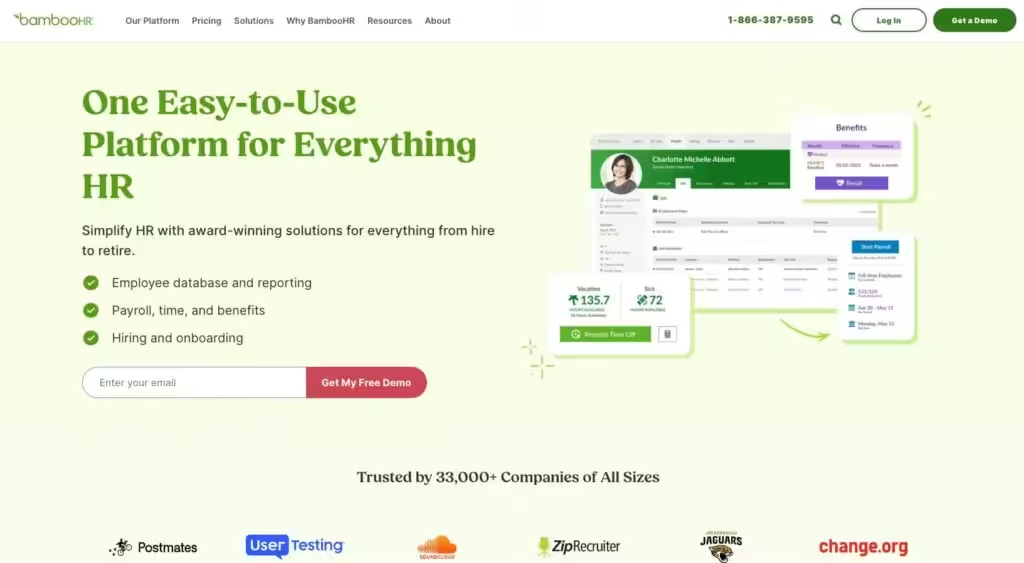
BambooHR offers a platform that represents a full HRIS with all the tools and functions small and medium-sized businesses (SMBs) need to manage their HR functions.
It has an employee self-serve function and a mobile app, strong analytics capabilities, and pre-built integrations with over 120 other applications. Clients can choose from one of three service plans depending on their needs. They can also choose to add on payroll, benefits administration, and time-tracking functions for additional fees.
BambooHR Features:
- Onboarding and hiring
- PTO tracking
- Analytics and Reporting
- Employee experience
- Performance management
- Compensation management
2
Gusto
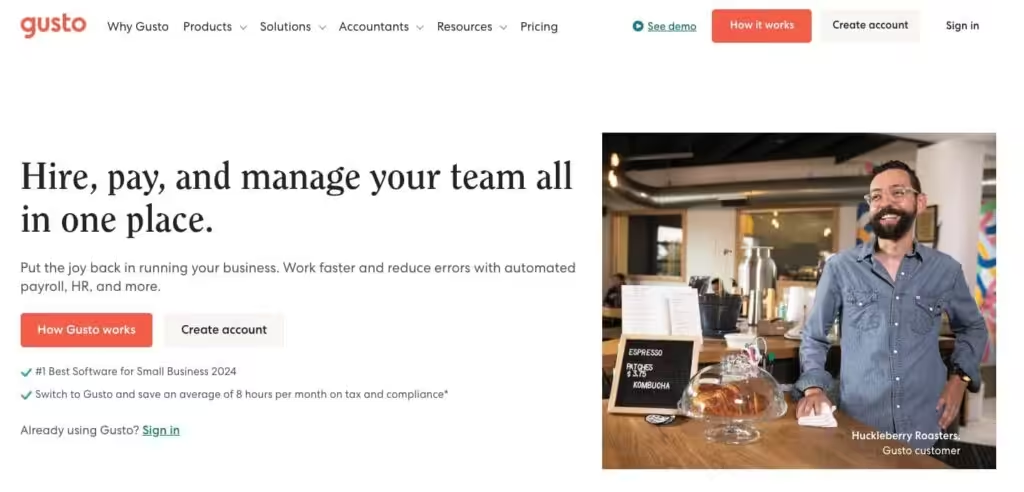
Gusto is a well-known HR SaaS provider that provides HR services and international hiring. It offers three tiers of service plans that focus on payroll and other HR services, all managed through its extensive platform.
Like BambooHR, it allows you to choose multiple add-on services like time and attendance, performance tools, and benefits administration. This platform comes with around 200 out-of-the-box integrations and includes a mobile app that allows employees to view their payslips and request leave, as well as manage their pay.
Gusto Features:
- Payroll
- Hiring and onboarding
- Health insurance administration
- PTO management
- Time tracking
- Scheduling
- Expense management
- Analytics and Reporting
3
Rippling
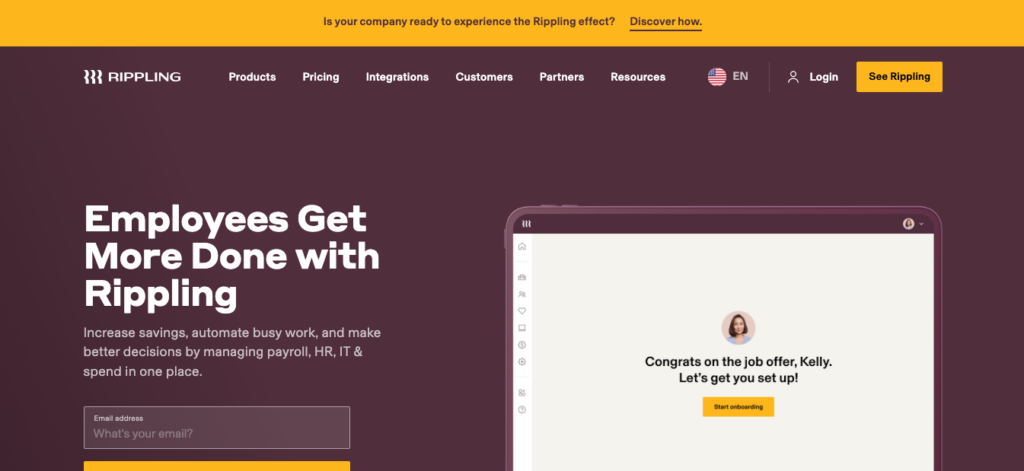
Rippling is a widely used provider that offers a full-featured HRIS platform to its more than 10,000 clients. Rippling integrates with an impressive 600+ other applications to help you smoothly transfer data across your tech stack.
It also includes a useful mobile app that lets employees access benefits, request time off, submit expenses, view payslips, and clock in and out of work. Rippling additionally helps clients hire employees in 32 countries and contractors around the world.
Rippling Features:
- Payroll
- Time and Attendance
- Benefits administration
- Scheduling
- Recruiting
- Learning and development
- Performance management
4
UKG
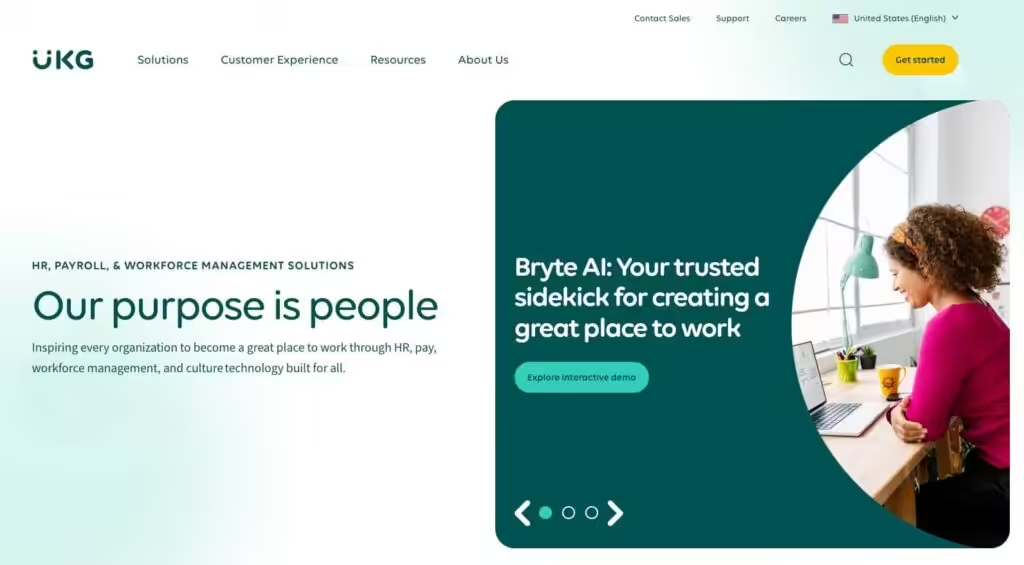
UKG is a large SaaS company based in Florida and employing over 12,000 people. It offers two different platforms, UKG Pro for larger enterprises and UKG Ready for SMBs. While Pro is a comprehensive HRIS, Ready is a reduced version with less functionality.
These platforms include mobile apps that let employees clock their time, manage goals, chat with their teams, and manage time off. They also provide integrations with hundreds of apps and an API for building custom integrations.
UKG Features:
- Payroll
- Talent management
- Time and Attendance
- Scheduling
- Workforce planning
- Compliance
- Reporting and analytics
5
Workday
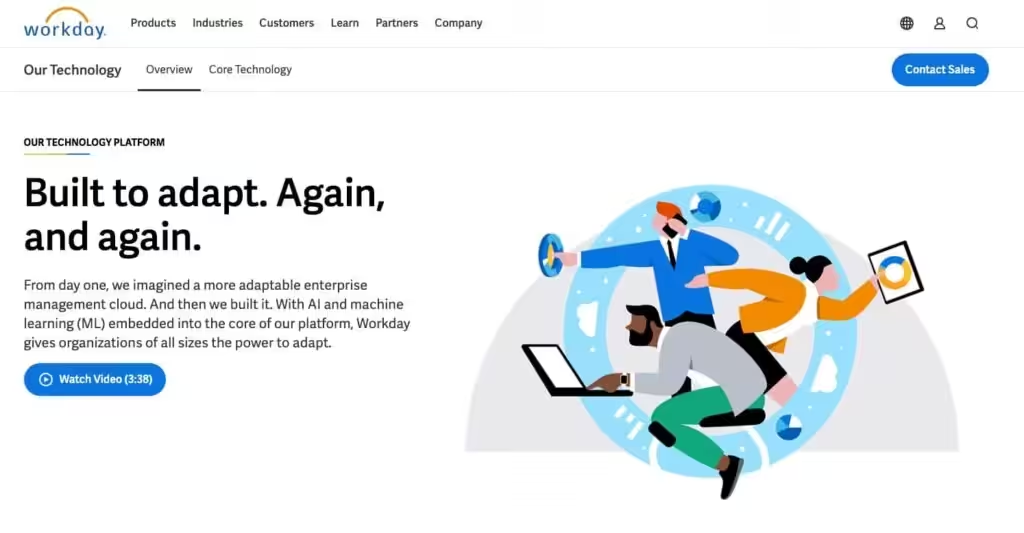
Workday is based in California and has over 18,000 employees. This SaaS company offers a unified finance and HR platform now powered by AI.
Its full-suite HRIS software is known as a highly user-friendly platform that can be learned quickly and easily, even by inexperienced staff. This platform includes a mobile app that allows employees to submit expense reports, submit leave requests, view their payslips, and clock their working hours. It also integrates with over 600 apps right out of the box.
Workday Features:
- Payroll
- Workforce planning
- Analytics and Reporting
- Talent management
- Employee experience and engagement
- Time and Attendance
- AI insights
6
Dayforce
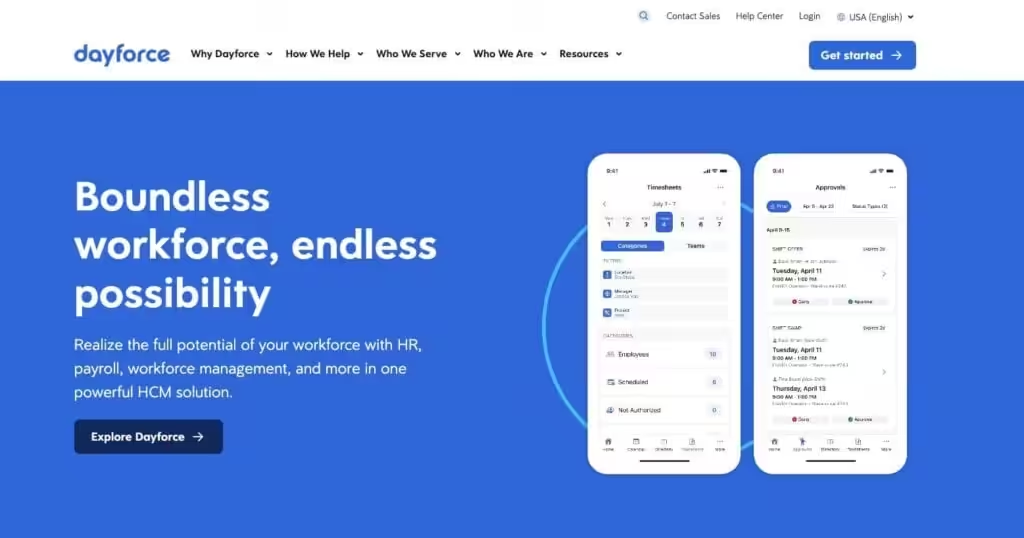
Dayforce is a human resources software and services company based in Minneapolis but provides services around the world. This company provides a comprehensive, AI-powered HRIS with extensive features and a high level of user-friendliness specifically aimed at businesses with 100-12,000+ employees.
In addition to a powerful platform, Dayforce also offers recruiting and global payroll services the world over. Its platform features an API and hundreds of pre-built integrations as well as a mobile app that helps both employees and admins manage their tasks on the platform conveniently.
Dayforce Features:
- Payroll
- Time and Attendance
- Benefits administration
- ATS
- Performance management
- Employee engagement
- Learning and development
- Analytics and Reporting
7
Paylocity
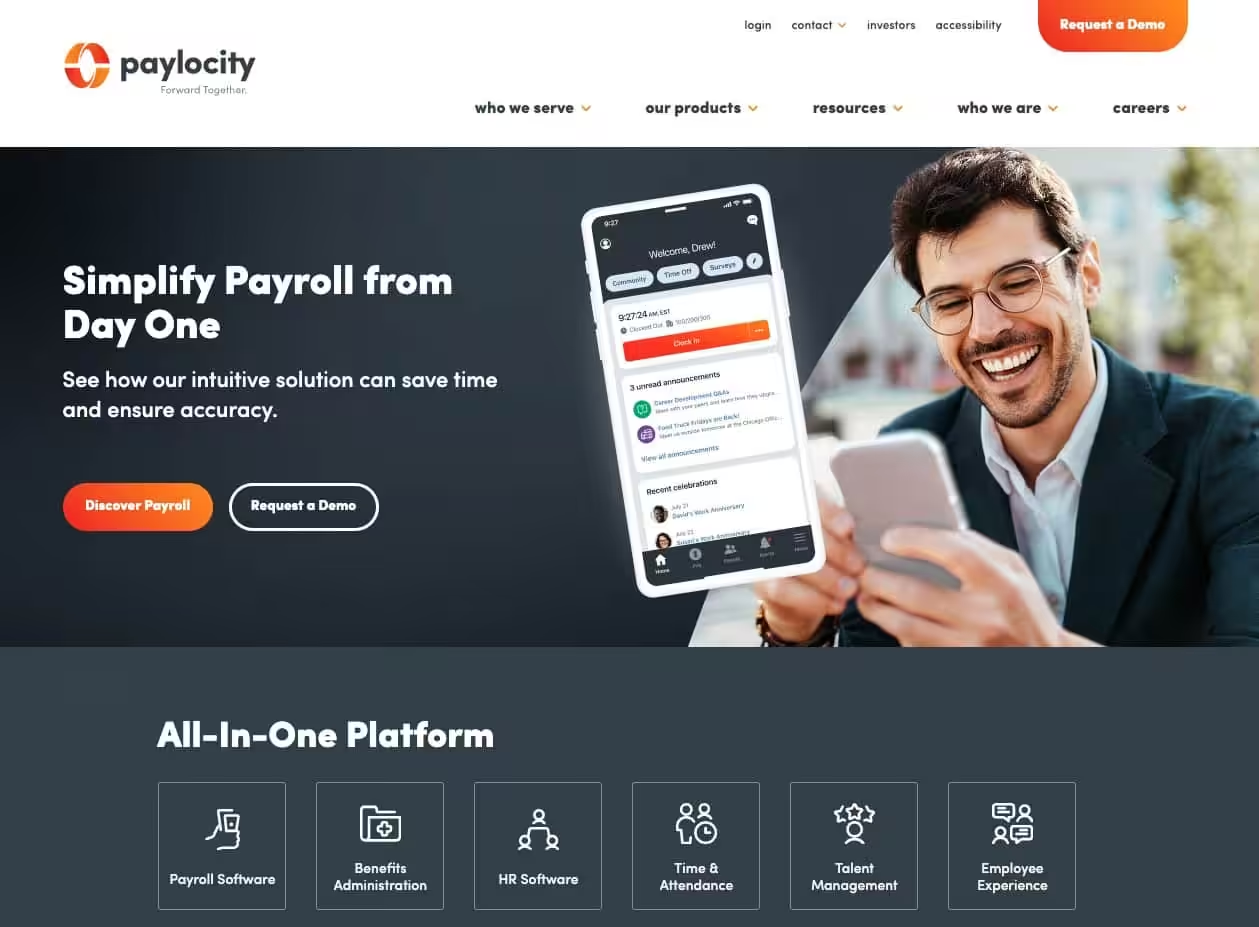
While focused on payroll, Paylocity also provides an extensive HR platform that can be considered a full-function HRIS. This provider aims its solution at SMBs and produces custom pricing and packages to take care of their specific needs.
The Paylocity platform integrates with hundreds of other apps and includes a mobile app that helps employees onboard, view pay information, clock hours, request leave, and give and receive recognition.
Paylocity Features:
- Payroll
- Benefits administration
- Time and Attendance
- Talent management
- Employee experience
- Scheduling
- Performance management
8
HiBob
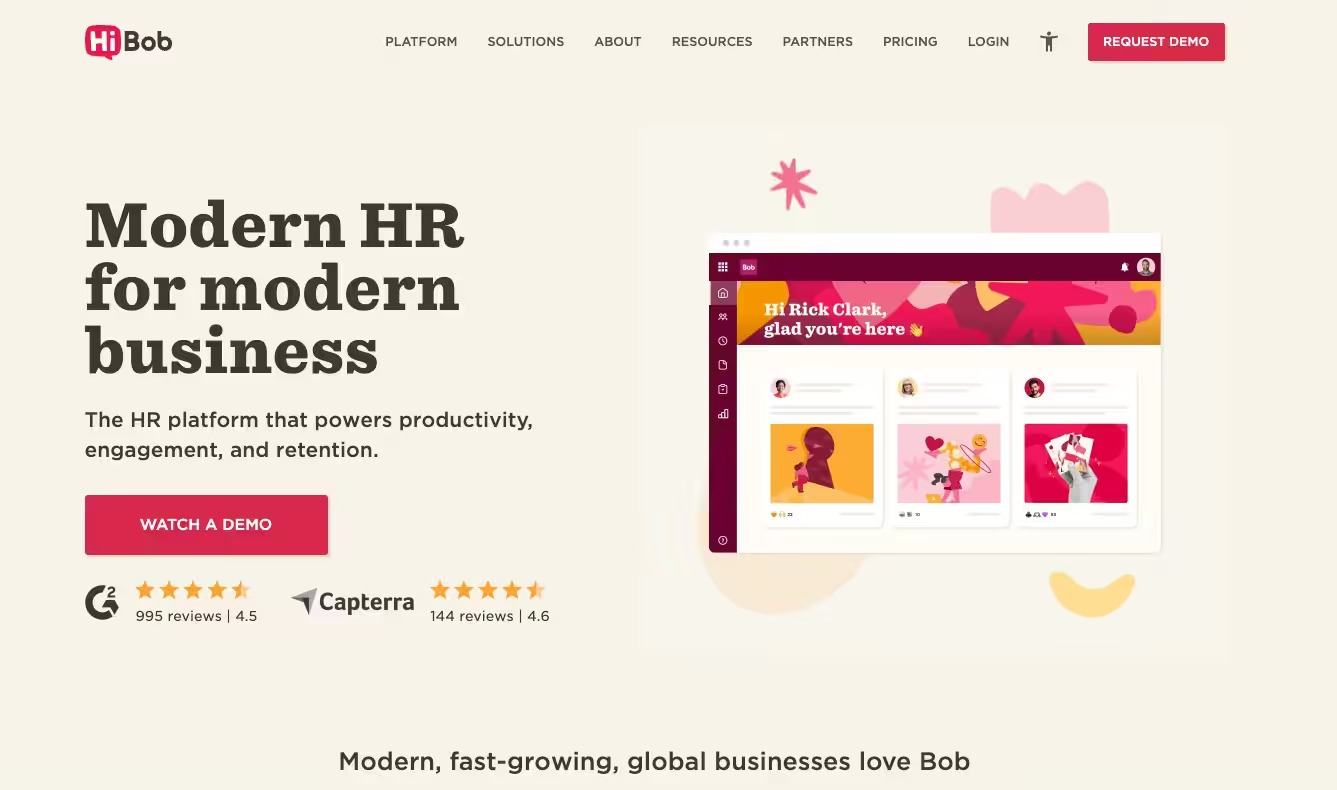
HiBob is an HR SaaS provider that offers tools to help automate processes and store important documents. It has a strong focus on employees with lots of features for managing employee engagement and building communication and culture within organizations.
This platform can integrate with thousands of apps through its connection with Zapier. It also provides a mobile app that helps admins make approvals and manage performance while employees can use it to request leave and sign documents conveniently.
HiBob Features:
- Payroll
- Talent acquisition
- Benefits administration
- Employee engagement
- Time and Attendance
- Compensation management
- Performance management
- People analytics
How to Choose an HR SaaS Company
While we’ve offered you a shortlist to help you reduce the time and effort it will take to choose a provider, you’ll still need to make the final selection yourself.
How can you choose from so many different providers that seem to have very similar platforms and service offerings? We recommend mapping out your needs and then evaluating potential partners based on the following criteria:
Price
The cost of a software service is always going to be one of your biggest considerations. You’ll want to keep your costs down and your return on investment high so look for a provider that offers pricing that matches your budget and service tiers to choose from.
Most platforms either charge a monthly fee for each employee or a flat monthly fee plus lower per-person fees. However, you can often negotiate these fees with the provider.
Platform Usability
Many HR SaaS platforms are similar in functionality, especially if they’re full-featured HRISs. However, the way they arrange their tools, functions, and data differ dramatically. If possible, participate in guided platform tours or take up a free trial so you can test-drive the platforms you’re interested in and get a feel for how they work. Choose a platform you find easy to use and intuitive.
Reputation
Look for recommendations from people that you trust or else read online reviews and ratings. You may be able to uncover information about serious issues with a provider or commendations about features you may not have considered.
Features
Depending on the size of your organization and the tools you already use for HR, you may need a comprehensive suite of features or just some basic, core HR modules in the platform you choose.
These days, most serious contenders include tools for most HR-related processes or will soon add them to stay competitive. Many are now using AI to help with process automation, analytics, and insights, which can increase the value of their offerings.
The Best HR SaaS Companies in 2026
We’ve had a chance to look at what HR SaaS companies do and how they can create added value for your organization. We’ve also provided you with our list of eight of the best HR SaaS companies in 2026 to help you narrow down your selection process.
Now, the last part is up to you. Based on the criteria we’ve suggested and the excellent platforms we’ve recommended, you can now make an informed choice of a company for your organization to partner with successfully. Best of luck!
Frequently Asked Questions
When you’ve looked through your options and selected the partner you want to work with, you can contact its sales department and request a consultation. In this meeting, you’ll explain your needs and ask for a detailed quote for the services you require. You’ll then enter a service agreement with the provider to get the relationship started formally.
Knowing that you’ll need to share sensitive personal and financial data with their platforms, most providers have taken great pains to make their platforms secure. This includes measures such as using encryption, storing data on secure servers, and routinely testing their systems protection measures to adhere to international security protocols.