
 Recruit


Summary: M&A is the process of bringing companies together through targeted financial and operational initiatives. It involves strategic steps, such as asset valuation, due diligence, and structured negotiations, to create a stronger, unified entity.
Every year, thousands of mergers and acquisitions take place across the globe. Whether it is to grow a business or achieve economies of scale, M&A strategies are commonplace in the business world. However, a lot of things happen when companies consolidate their assets and company ownership. There may be different goals, and, as such, different outcomes.
So, achieving successful a successful merger or acquisition starts with understanding the different types, the outcomes, and who and what is affected.
In this guide, the team here at RemotePeople will outline the seven primary types of M&A and how we can help the process be as successful as possible.
Mergers & Acquisitions
Before we get into the different types of M&A, let’s make sure we’re on the same page about what is involved in the process. It’s all about consolidating companies through various forms of financial and operational transactions.
A merger involves the blending of two companies to create a new entity, while an acquisition is when one company purchases another, absorbing its assets and operations. These processes go through multiple stages, including due diligence, asset valuation, negotiations, and integrating employee and operational structures.
Each M&A type is designed with specific goals in mind, whether it’s expanding a product line, gaining a new customer base, or improving market position. And so, without further ado, let’s look at the key types that you should be aware of when thinking of expanding your business on a global scale.
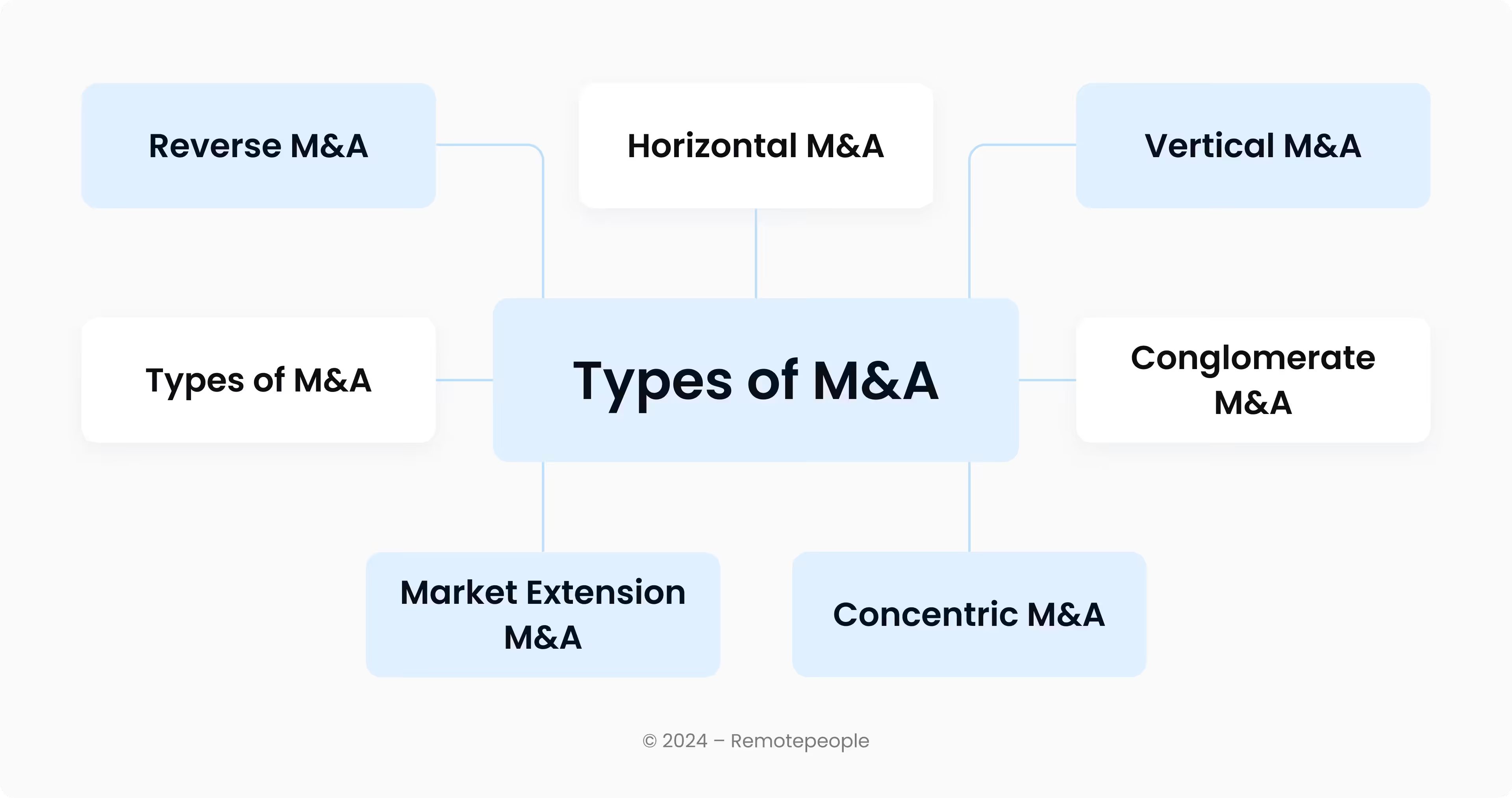
1. Horizontal Mergers
A horizontal merger occurs when two companies operating in the same industry and often as competitors come together to expand their market share. This type of merger aims to reduce competition, increase revenue, and improve economies of scale by consolidating resources.
EXAMPLE
Merger of Disney and 21st Century Fox—in this case Disney acquired 21st Century Fox—bringing together two giants in the entertainment industry.
While horizontal mergers can strengthen a company’s market presence, they also affect financials by potentially increasing profitability through reduced competition and shared resources.
For employees, such mergers can bring both opportunities and challenges, including shifts in roles, department restructuring, and integration of company cultures.
2. Vertical Mergers
A vertical merger brings together companies operating at different stages of the supply chain within the same industry. This type of merger is often pursued to gain better control over production, reduce costs, and increase supply chain efficiency.
EXAMPLE
Amazon’s acquisition of Whole Foods, which allowed Amazon to integrate its retail and distribution processes more directly.
From a legal perspective, vertical mergers must comply with antitrust laws to prevent monopolistic control over markets. Financially, these mergers can reduce overhead costs and improve profit margins by consolidating production and distribution.
For employees, a vertical merger can lead to shifts in operational roles, possible reassignments, and new workflows.
3. Concentric Mergers
A concentric merger, also known as a related merger, occurs when companies with related but not directly competitive products or services merge to expand their offerings.
EXAMPLE
Citigroup’s acquisition of Travelers Group back in the late 1990s. It combined banking services with insurance, allowing the newly formed company to offer a broader range of financial products.
This approach can diversify revenue streams, reduce business risk, and attract new customer segments. Financially, it may increase profitability by tapping into complementary markets.
For employees, this type of merger may introduce new teams and resources, possibly leading to cross-training and new collaboration opportunities.
Businesses choose concentric mergers to grow organically, adding value without competing directly with other market leaders.
4. Conglomerate Mergers
A conglomerate merger occurs when companies from entirely different industries join together, often to diversify business risks and broaden revenue streams.
EXAMPLE
Berkshire Hathaway’s acquisition of companies like Dairy Queen, GEICO, and Duracell—each operating in vastly different markets.
Financially, conglomerate mergers can stabilize overall profits by balancing losses in one industry with gains in another, creating resilience against market fluctuations.
For employees, conglomerate mergers may introduce new career paths, resources, and corporate cultures, though integration may be challenging due to the varied nature of the businesses involved.
Companies choose conglomerate mergers to access entirely new markets and reduce dependency on a single industry.
5. Market-Extension Mergers
A market-extension merger involves companies from different geographical markets merging to access a larger customer base and expand their reach.
EXAMPLE
Merger between Wells Fargo and Norwest Corporation allowed Wells Fargo to extend its banking services into new regions across the United States.
This approach provides several advantages, such as increasing revenue by reaching new markets and spreading operational risks across various locations.
For employees, market-extension mergers may lead to increased job security as the company grows, along with opportunities to transfer or collaborate with teams in different regions.
Businesses pursue market-extension mergers to build a stronger market presence and diversify their geographical impact.
6. Product-Extension Mergers
Innovating with new products and broader offerings is a common mission of any business. Sometimes, the best way to do that is through a merger or acquisition. A product-extension merger occurs when two companies with related products combine to broaden their offerings.
This type of merger lets companies reach existing customers with new products that complement what they already buy, increasing sales potential and market reach.
EXAMPLE
Merger of PepsiCo and Frito-Lay back in the 1960s allowed Pepsi to expand its beverage portfolio by adding snacks, meeting a broader range of consumer needs.
This approach benefits both companies by offering diversified products under one brand, and it provides employees with opportunities to work in new product areas.
7. Reverse Mergers
A reverse merger is when a private company acquires a public company to quickly go public without the lengthy initial public offering (IPO) process. This method benefits private companies seeking fast access to capital markets, as it allows them to raise funds and improve liquidity by becoming publicly traded.
EXAMPLE
Burger King used a reverse merger with Justice Holdings to go public, bypassing traditional IPO steps.
Reverse mergers benefit investors by offering early access to shares in a newly public company and benefit the company itself by minimizing the time and regulatory hurdles typically associated with IPOs.
RemotePeople Facilitates Successful M&A Transactions
Though several players are often involved in negotiating a successful M&A transaction, one key component is the human resources arm. In this case, an organization such as RemotePeople can come on board as your Employer of Record (EOR), assisting with all of the employment-related tasks and challenges that come with M&A transactions.
Having an EOR is a great way to protect employees, focus on contract alignment, onboarding, and compliance management.
Ready to take your team global? Contact us to request a proposal today.
Andrew (Drew) joined the Remote People team in 2020 and is currently Director, Regulatory Affairs. For the past 13 years, he has been a trusted advisor to C-Suite executives and government ministers on international compliance and regulatory issues. Drew holds a law degree from the University of Otago, a PhD from the University of Sydney, and is an enrolled Barrister and Solicitor of the High Court of New Zealand.