
 Recruit


Today’s global, remote workforce creates many challenges and opportunities for employers. The complexity of navigating employment laws, tax regulations, payments, and benefits in multiple countries has led many employers to rely on external tools, software, organizations, and managed services to facilitate the employment and management of their workforces.
The most common solutions are PEOs and EORs, which often come with their own HR and Payroll technology. PEOs and EORs don’t only offer software but also actual human resources to manage the processes. But how do PEOs and EORs differentiate themselves, and how do you know which EOR or PEO to choose? Before we dive into the differences between a PEO and an EOR, it is important to understand what these terms mean.
What is a PEO?
A Professional Employer Organization, or PEO, is a human resources co-employer organization. Generally, PEOs are the employers for managing only payroll and benefits in the US, while the primary employer is responsible for the daily management of their team.
PEOs are also known as employee leasing firms in the United States. To read specifically about the difference between employee leasing firms and EOR companies check out our EOR vs Employee Leasing guide.
1
How to Choose a PEO Provider?
Selecting the right Professional Employer Organization (PEO) is crucial for streamlining your HR processes and ensuring compliance. When evaluating potential PEO providers, consider factors such as their experience, range of services, technology platforms, and customer support. Look for a provider that aligns with your company’s specific needs and growth plans. To help you make an informed decision, we’ve compiled a list of the Best PEOs in our comprehensive article here at RemotePeople.
2
How Much Does a PEO Cost?
The cost of a Professional Employer Organization (PEO) typically depends on various factors such as the number of employees, the range of services required, and the specific needs of the business. Generally, PEOs charge a percentage of the total payroll, often ranging from 2% to 12%, or a flat fee per employee per month. This fee covers services like payroll processing, benefits administration, compliance management, and HR support.
3
Components of PEO
Payroll Administration
A PEO operates in a co-employment working model with the employer because the PEO and employer share the employment responsibility. The PEO is responsible for providing payroll and benefits administration services, while the employer is responsible for providing a safe workplace and ensuring that employees’ civil rights are not violated. This model allows employers to have main control over the management decisions related to their workforce while the PEO manages the HR administrative burden.
A PEO helps its clients by providing payroll administration services, including calculating wages, withholding taxes, and processing payroll. Additionally, a PEO also handles filing annual payroll tax returns, tax forms, and compliance with federal, state, and local tax regulations.
Benefits Administration
One crucial component of a PEO is its benefits administration service. PEOs usually have access to many benefits, including health, retirement, disability, life insurance, etc., and have a wide network of providers that can offer them lower or more competitive costs than what an employer can find directly. A PEO takes care of sending enrollment period communication, managing enrollments, and complying with applicable regulations.
Workers’ Compensation
PEOs have better and more competitive rates for benefits, a wider network with workers’ compensation carriers, and can help employers manage claims and coverage and stay compliant with applicable regulations.
Local Compliance
Whether an employer hires within one state or multiple countries, it must abide by the local laws and regulations to stay compliant and avoid penalties. A PEO ensures employers file for local, state, and federal taxes as applicable. A PEO also assists businesses in staying compliant with wages, overtime rules, leave policies, etc.
General HR Support & System
PEOs help employers streamline their onboarding process and provide HR support throughout. They also have their own systems or portals for employers to easily navigate all the resources provided. Most PEOs have specialized team members to assist their customers with issues related to benefits administration, tax filing, wages, payroll, etc.
PEOs are not only local but also global. As the word suggests, global PEOs are organizations that help employers manage their teams in different parts of the world without the employer establishing a foreign entity. PEOs do not assume the same responsibilities and liabilities as an Employer of Record, but they administer benefits and payroll in conjunction with the employer.
More details and history of the PEO can be found in our blog here.
What is an EOR?
An Employer of Record, or EOR, is an establishment that acts as the legal employer for an organization’s workforce. If an organization wants to hire globally or in different states without worrying about local legal tax and compliance requirements, an EOR is the right choice. An EOR also handles payroll and benefits administration for the organization they’re hiring for.
EOR solutions are the most popular alternative to setting up your own legal entity overseas.
1
How to Choose an EOR Provider?
Choosing the right Employer of Record (EOR) is essential for successfully navigating the complexities of global hiring. When weighing up the pros and cons of EOR providers, consider their global coverage, compliance expertise, technology infrastructure, and customer support. Look for a provider with a proven track record and a deep understanding of local labor laws and regulations in your target markets. To assist you in your search, we’ve created a list of the Best Employer of Record providers in our in-depth article on RemotePeople.
2
How Much Does an EOR Cost?
The cost of an Employer of Record (EOR) typically involves a fixed fee per employee per month, which can vary significantly based on the country of hire and the specific services required. This fee generally covers payroll administration, tax withholding, benefits management, and compliance with local labor laws. The fixed fee model provides predictability and helps businesses manage their international workforce costs effectively.
3
Components of EOR
Payroll Administration
An EOR specializes in handling payroll administration processes for multiple locations involving multiple currencies. The payroll administration process includes accurately calculating wages, overtime, local tax deductions, local benefits, and any other applicable items before processing payroll. Note, EOR and Global Payroll Outsourcing services are distinct, with the latter not being the legal employer of a team.
Tax Withholding
Having employees globally requires careful and accurate calculations of what taxes to withhold for each location. An EOR takes care of withholding and filing local taxes, including social security tax, income tax, and other mandatory taxes based on employee location. The EOR also ensures that any statutory deductions for things like local pension plans are made and contributed to the right agency.
Benefits Administration
An EOR is an expert in the region they operate in, so they know what benefits or leave types are mandatory to offer; they also know how the local businesses operate and what additional benefits to offer to attract the top talent. An EOR, like a PEO, also helps with all of the process of benefits administration, including communication with employees, open enrollment process, follow-ups, and managing local compliance. EOR takes the burden of local compliance away from their client while hiring globally.
Legal Employment Responsibility
The EOR acts as the legal employer for the employees the customer wants to hire in any region. The EOR takes care of all the legal contracts, taxes and compliance, and other legal obligations. The company manages the day-to-day workforce, but the EOR is responsible for ensuring that the employment relationship complies with local laws, minimizing the client’s legal risk.
Global Expansion
An EOR takes away the stress and costs associated with setting up a new entity to hire employees in another country; the clients are able to enter new markets quickly and compliantly. Since the EOR acts as the legal employer, their customer only has to worry about finding the talent, and EOR takes care of setting them up locally and in compliance with local laws and regulations.
Onboarding & Offboarding, including required paperwork
There are many legal onboarding and offboarding documents that are required by law to be sent to the employee. The EOR specializes in knowing which documents are required and takes care of any forms and notices, as well as final wages, including severance.
Local Compliance
All aspects of compliance, including benefits & payroll administration, mandatory benefits to offer, working hours, and tax regulations, are critical items that need to be handled sensitively to ensure compliance and avoid penalties. EORs take care of all of that so the client doesn’t have to.
Employment Contracts
All countries have specific legal requirements for drafting and executing employment contracts. Using an EOR relieves the client of researching location-specific requirements while still executing contracts in different states and countries. This ensures that the employment contracts comply with local labor laws and keep both the employer and employee safe from legal risks.
Risk Management
The EOR helps employers navigate the potential risks associated with hiring employees in other countries. EORs also help to guide the company on employee relations issues like harassment investigations, conflict resolution, wage issues, etc.
General HR Support & System
An EOR helps its customers to streamline their HR processes and management in multiple locations. EORs also offer access to their HR system to have one source of truth and to manage HR tasks, including benefits administration, payroll, and employee records management. They also have a dedicated team to help employers figure out any local compliance issues.
More detailed information about how an EOR operates can be found in our blog here.
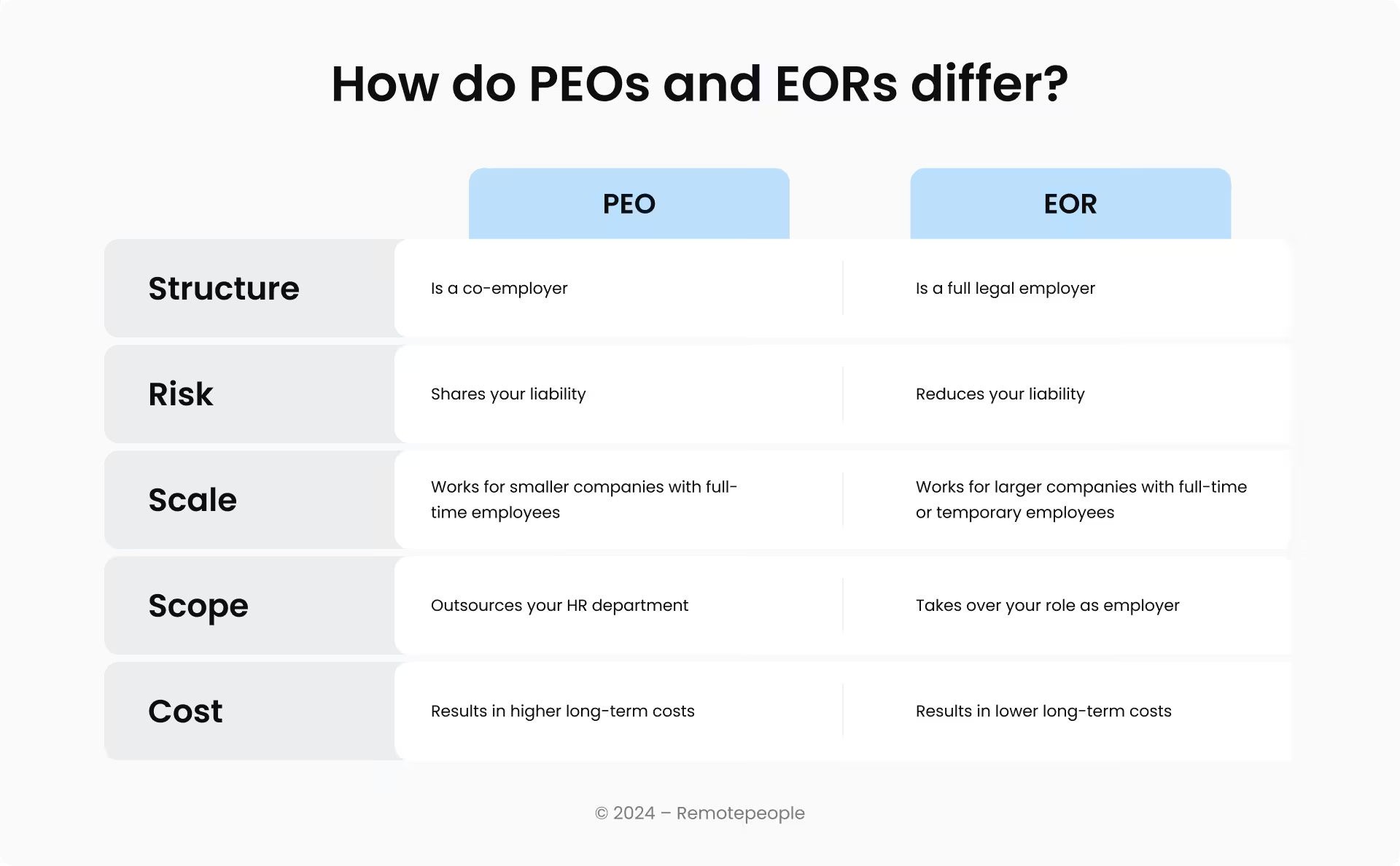
Employer of Record vs PEO
| Functionality | Professional Employer Organization (PEO) | Employer of Record (EOR) |
|---|---|---|
| Working Model | Co-employment working model and shares responsibilities with the employer | Acts as the sole legal employer of the employees in various regions |
| Employer Responsibilities | Employer manages daily operations and makes legal management decisions | Client only directs job duties while an EOR manages all legal employment responsibilities |
| Payroll Administration | PEO assists the employer with payroll administration | Fully administered by the EOR |
| Legal Liability | Shared between the employer and the PEO | EOR takes full legal responsibility |
| Onboarding & Offboarding | Assists the employer with the process, but the employer takes legal responsibility | Manages the process from start to end without any legal responsibility on the client |
| Business Expansion | Usually is limited to the specific country they operate in | Helps in expanding in multiple countries |
| Employment Contracts | Employer takes care of the drafting and executing of the contracts | EOR manages employment contracts based on local labor laws and other legal factors |
PEO vs EOR: Choose Wisely
Both a PEO and an EOR are great choices for streamlining HR processes. It all comes down to what a client needs help with to decide which organization better suits their needs. It is also depends on any legal restrictions that apply to either PEO or EOR services in that country. Both organizations help employers mitigate risks, stay compliant, avoid penalties, and expand their HR operations and efforts.
For more information, get in touch with one of our EOR experts.




