
 Recruit


Let RemotePeople handle payroll, compliance, and HR admin worldwide so you can focus on building your team.
In today’s rapidly evolving work environment, remote work is no longer just a trend—it’s a strategic necessity. As more companies embrace a distributed workforce, they also encounter the complexities of managing employees and contractors across different countries.
This shift has given rise to essential tools like Global Employment Platforms (GEPs), which streamline HR operations such as payroll, compliance, and benefits management, regardless of where employees are located. These platforms have become the backbone for companies looking to tap into global talent while maintaining full compliance with local labor laws.
In this comparison, we’ll focus on two leading GEP providers: Remofirst and Remote. Both platforms offer comprehensive solutions for businesses aiming to scale their operations internationally. But how do they stack up when it comes to features, ease of use, and pricing? We’ll explore their strengths and limitations to help you decide which provider will best support your company’s global growth objectives.
What You’ll Discover:
- In-Depth Feature Analysis: A thorough breakdown of the features and usability of both platforms.
- Pricing Comparison: A detailed look at the costs associated with each service to assist with effective budgeting.
- Pros and Cons: Unbiased assessments of the strengths and limitations of Remofirst and Remote.
Whether your priority is a cost-effective solution or a platform with advanced compliance features, this review will guide you through the key differences between these two GEP providers. Let’s dive deeper into the details to discover which service aligns with your company’s goals and long-term hiring strategy.
Remofirst vs Remote Overview
| Feature | Remofirst | Remote | Explanation |
|---|---|---|---|
| User Reviews | G2: 4.5/5 Trustpilot: 3.7/5 |
G2: 4.6/5 Trustpilot: 4.7/5 |
While Remote has received excellent customer reviews, Remofirst’s are moderately good. |
| Pricing | $199/employee per month; $25/contractor per month |
$599/employee per month; $29/contractor per month |
Both companies post their starting fees online. Remofirst’s fees start a lot lower for EOR service. |
| User-friendliness | Excellent | Excellent | Both platforms have excellent reviews for ease of use. |
| Customer Support | 24/7 live chat support | 24/5 live chat support | Remofirst has live chat support all the time, while Remote has live support just 24/5. |
| Integrations | Good | Very good | Remote offers an API and 17 integrations. Remofirst has an API and can integrate with some HRISs. |
| Data Security | Very good | Excellent | Remote is GDPR and SOC2 compliant and ISO 27001 certified. Remofirst is GDPR compliant. Both use 2FA for added security. |
| International Hiring (EOR) | Excellent | Excellent | Remote supports hiring employees in 180+ countries and contractors in 200. Remofirst helps hire employees in 180+ countries and contractors in 150+. |
| Recruitment | Not offered | Good | Remote has a job board to connect employers with employees and contractors. Remofirst doesn’t offer recruitment services but offers partnerships and discounts with many international recruiters. |
| Benefits Administration | Good | Very good | Both platforms help employers give their workers add-on health insurance. Remote also offers pension plans. |
| Payroll | Very good | Very good | Both providers offer comprehensive global payroll services. Remofirst has somewhat limited payment methods. |
Main Differences: Remofirst vs Remote
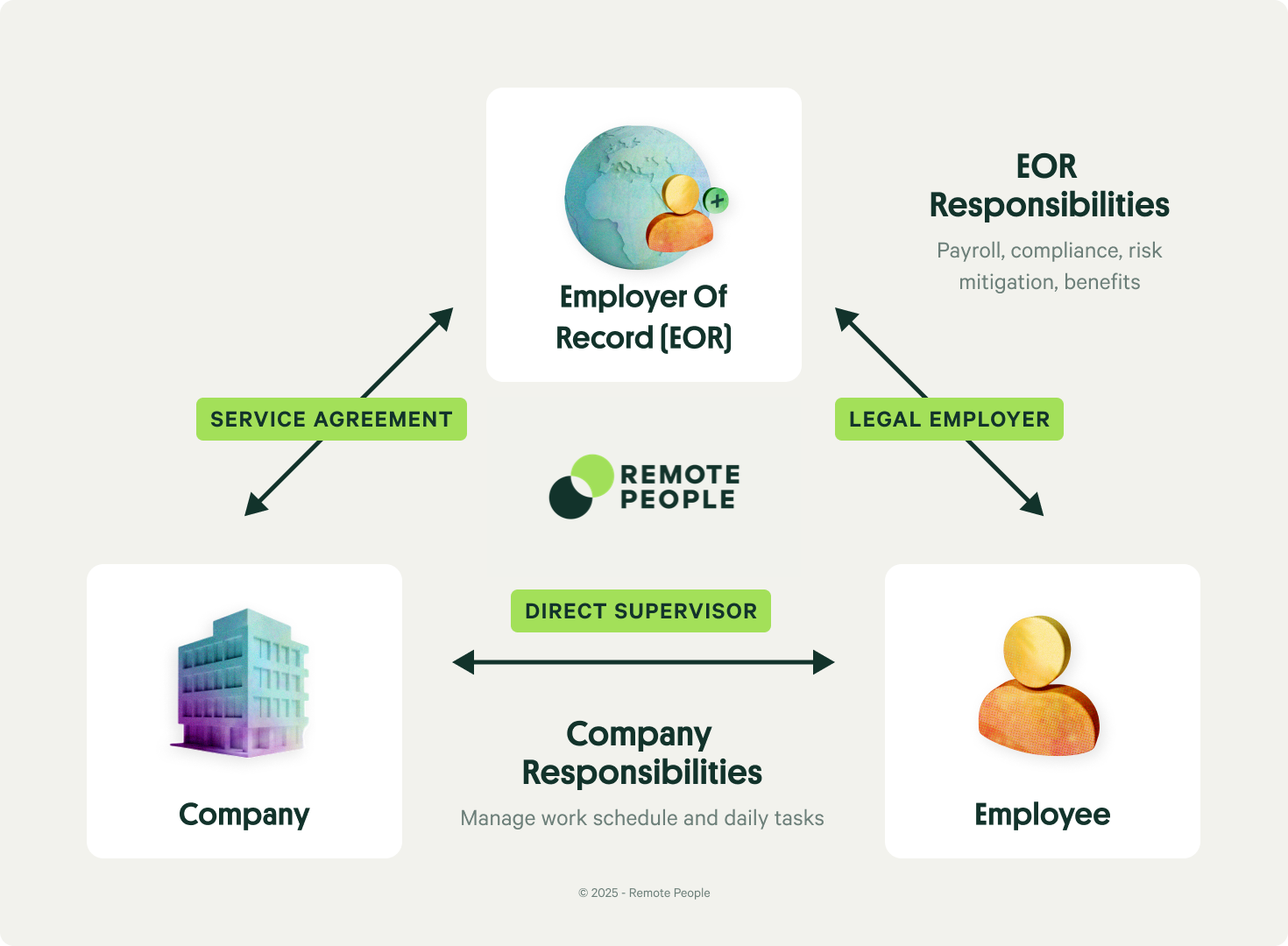
Remofirst and Remote are two providers in the GEP space with similar names and services. Both focus on contractor management, global payroll for companies that own their own entities abroad, and EOR services for companies that don’t. EOR or employer of record services enable organizations to hire employees in countries where they don’t own entities.
Remofirst
Remofirst is an EOR service provider that offers a streamlined solution for businesses looking to hire employees globally. By leveraging a network of partners, Remofirst facilitates the legal employment process in various countries.
Services Offered by Remofirst
- Employer of Record (EOR): Facilitates legal employment in multiple jurisdictions.
- Global Payroll: Integrated payroll processing as part of EOR services.
- Recruitment Services: Recommends recruiters to assist with talent acquisition.
Remote
Remote is a comprehensive EOR and global payroll provider that offers a wide range of services to support businesses expanding internationally. With a focus on efficiency and compliance, Remote provides a robust solution for managing remote workforces.
Services Offered by Remote
- Employer of Record (EOR): Facilitates legal employment in various jurisdictions.
- Global Payroll: Independent payroll processing services.
- Recruitment Services: Offers a job board for talent acquisition.
RemoFirst Pricing
| Plan | Price per employee/contractor per month |
|---|---|
| Remofirst EOR | Starting at $199 per full-time employee/month |
| Remofirst Contractor | $25 per contractor/month |
Remote Pricing
| Plan | Price per employee/contractor per month |
|---|---|
| Remote EOR | Starting at $599 per full-time employee per month |
| Remote Contractor | $29 per contractor per month |
| Remote Payroll | $50 per full-time employee per month |
| Remote HR Management | Free |
| Remote Talent | Starting at $119 per contractor per month |
| Remote Contractor Management Plus | $99 per contractor per month |
Key Differences
Service Expansion
Remofirst: Primarily focused on EOR services with integrated payroll.
Remote: Offers a wider range of services, including independent global payroll and recruitment.
Global Reach
Remofirst: Leverages a network of partners for EOR services in over 150 countries.
Remote: Owns a larger number of entities, providing EOR services in over 180 countries.
Pricing Transparency
Remofirst: Offers more competitive pricing for EOR services in certain countries but may have higher rates in others.
Remote: Has a consistent pricing structure for EOR services but may have a higher starting price.
The choice between Remofirst and Remote depends on your organization’s specific needs and priorities. If you are primarily seeking a cost-effective EOR solution with integrated payroll, Remofirst may be a suitable option. However, if you require a more comprehensive suite of services, including independent global payroll and recruitment, Remote might be the better fit.
Remofirst Pros and Cons

Remofirst is a more affordable and less complicated provider. The specific advantages and disadvantages you can get from working with Remofirst include:
- Pros
Speedy onboarding
With this platform, it’s possible to onboard an employee in just one day, though it normally takes a few days. That’s fast and efficient, and it helps you bring your team together and get operational quickly.
Useful add-ons
Remofirst offers health insurance at different tiers, including vision, dental, and wellness protection. It also allows employers to add visa and immigration services for their employees and can perform background checks on potential hires.
Low fees
Contractor management starts at $25 per contractor, and EOR services start at $199 per employee per month. Remofirst offers some of the cheapest prices in the GEP space. It may provide more simplified services, but this low price can make it very attractive to small and medium-sized businesses.
- Cons
No recruiting services
Unlike other EORs around the world, Remofirst doesn’t provide recruiting services. But it also doesn’t just assume that you already know who you want to hire. It offers connections with ad discounts for recruiters around the world, but it doesn’t have any of its own related services to help you fill your open positions.
Platform limitations
The Remofirst platform offers little functionality. It lacks features like project management, time tracking, applicant tracking, and reporting, so it’s not possible to use it as a standalone human resources management system (HRMS).
Limited integrations
Remofirst has an API for custom integrations and claims to be integratable with many HRIS platforms. However, it doesn’t offer any out-of-the-box integrations that would make it a much more powerful and convenient platform.
No mobile app
While other providers offer mobile apps for iOS and Android devices, Remofirst only has a web-based employee portal. While the portal lets employees access benefits, request leave, submit expenses, and see payslips, it doesn’t give them convenient mobility.
Remote Pros and Cons

Remote is a more expensive but also more comprehensive option. Its unique pros and cons include:
- Pros
Starting contractor price
Remote’s starting contractor management price of $29/contractor per month can be highly affordable, even for small businesses.
Data security
Remote is ISO 27001 certified compliant and SOC 2 and GDPR. It uses advanced encryption and 2FA (two-factor encryption) to further protect user data and privacy.
Mobile app
Remote has a mobile app that works on Android and iOS devices. It’s very convenient for employees and contractors who can access services like viewing their payslips, making time-off requests, and submitting invoices or expense claims.
Extensive functionality
Remote’s platform can function as a standalone HR management system for all an employer’s HR needs. It includes time-tracking, recruitment, invoice and expenses management, and paid time off (PTO) management features.
Benefits packages
Remote helps employers add packages for pensions, mental health support, and health, dental, vision, disability, and life insurance for their employees and contractors. These packages can be customized to make them compliant in countries around the world.
- Cons
Support limitations
Remote receives very good user reviews for client support. However, it only provides 24/5 live chat support. This means that if users have any need for support on weekends, they’ll have to use email or open online support tickets and wait for Remote’s staff to get back to them during opening hours on weekdays.
Complex pricing
Remote shows some of its basic fees online and also has an open price policy. At the same time, it doesn’t show all of its prices, especially for add-on packages. This means that if you want to get a full and accurate price, you’ll need to ask for a tailored quote from sales staff.
Head to Head Comparison: Remofirst vs Remote Features
Despite some major differences between these two global employment platforms, Remofirst and Remote also share many similarities. They work in most of the same service areas and countries around the world. Now, it’s time to compare them to see where each one excels in the important features users are looking for in a great service provider.
User-friendly platform: Remote Wins
Both Remote and Remofirst have platforms with simple user interfaces (UIs) that are easy and intuitive to learn. Remote offers a lot more tools and features as a full HR management system, yet it still receives consistently better reviews for ease of use. Except for a slightly more complicated setup process, Remote is an easier product to use, even with its greater functionality.
Resources: Remote Wins
Regarding tools and resources available to users, Remote has helpful country guides, a misclassification risk tool, a useful employee cost calculator, and webinars to help users use its products. While Remofirst has resources like a blog and a few ebooks, they’re not as extensive as Remote’s.
Integration with other software: Remote Wins
Remote API for custom integrations offers 17 out-of-the-box integrations, including great products like Bamboo, HiBob, Gusto, Personio, and Slack. It also integrates with Zapier, which gives access to over 5,000 other tools. Remofirst has an API as well and claims to integrate with some common HRIS tools. However, it simply lacks the convenient, pre-built integrations that make Remote a more comprehensive product.
International hiring (EOR): It’s a tie
Remote helps employers hire employees in over 180 countries for a monthly starting price of $599/employee. Remofirst helps hire in 180+ countries, and though its prices start at $199 in a handful of countries, $399-499 is closer to its average. This is still significantly cheaper than Remote and may appeal to smaller businesses with limited budgets. At the same time, Remote uses more owned subsidiaries to provide direct support for international hiring and to ensure compliance. We’re calling it a tie.
Contractor Solution: Remote Wins
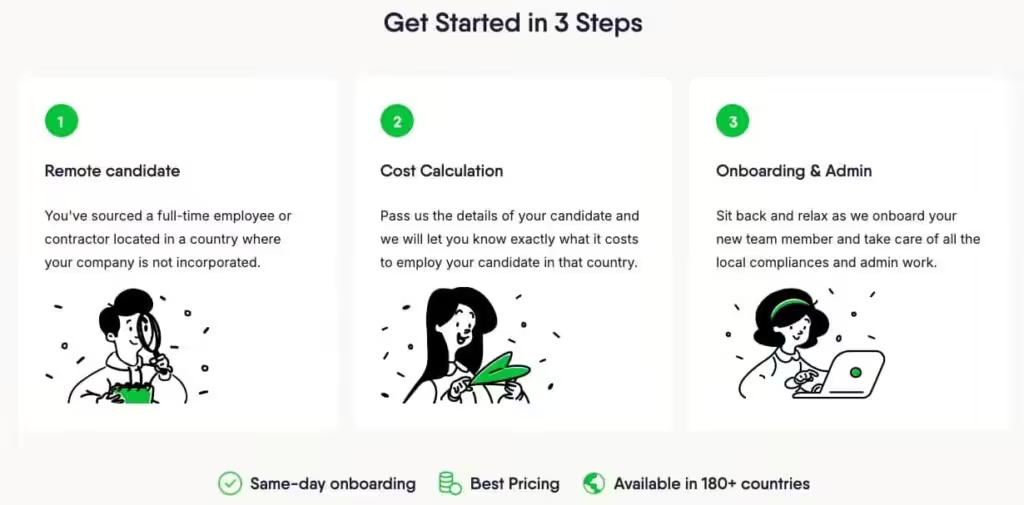
Both Remote and Remofirst can help organizations hire contractors and manage benefits, compliance, and invoices effectively. Remote has a slightly higher price but more effective tools for assessing classification and maintaining compliance. Users rate submitting and paying invoices as easier, and it also offers more payment options for contractors.
Employee Benefits: Remote Wins
Both providers manage mandatory benefits for employees and provide add-on health care benefits that can be tailored to the requirements of any country for full compliance. Remote also offers pension packages and offer a far greater range of benefits for workers in the US.

Payroll Management: Remote Wins
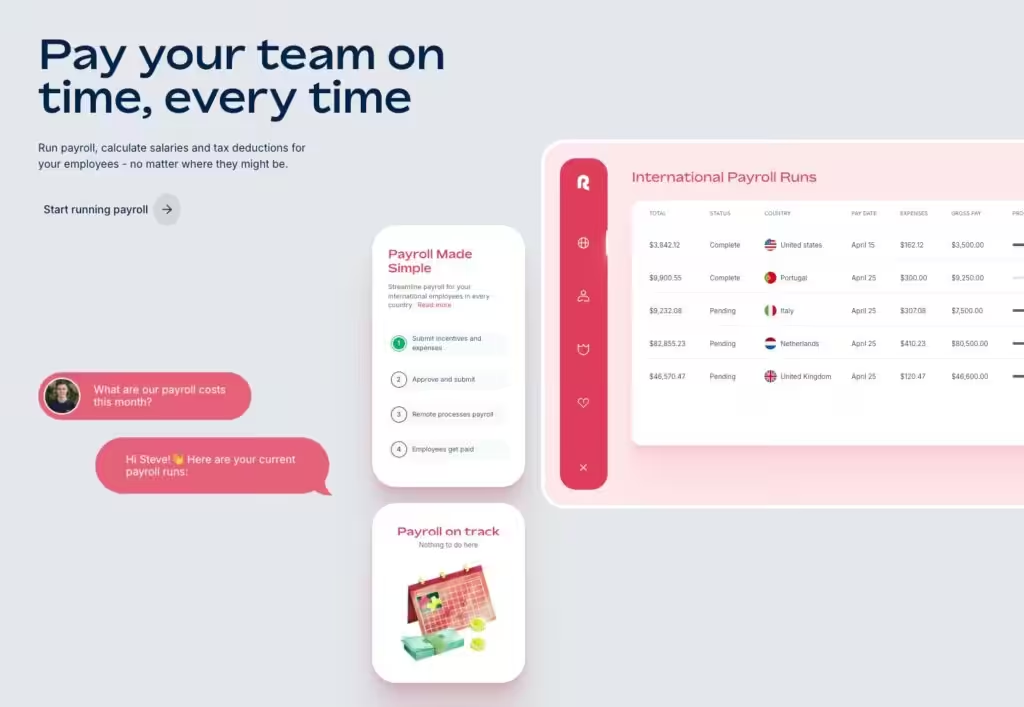
Remote clients can choose to be invoiced in one of 12 international currencies, and the platform allows Wise payments for contractors when employers use one of seven billing currencies. Remofirst limits invoices to just five major currencies and only pays out with transfers. Remofirst also doesn’t offer built-in time tracking, meaning timesheets have to be submitted to the platform before paydays for calculation. Remote’s time tracking is built-in and calculations are done automatically.
Our Verdict: Remofirst vs Remote
We’ve now seen the pros and cons of these two competing platforms and a head-to-head comparison across several key features. We’re not aiming to choose an overall champion here. Instead, our goal is to demonstrate where each of these platforms would be more effective and a better choice for your business.
When to choose Remofirst
Remofirst is a good choice for smaller enterprises as its prices are affordable for any budget. However, to be an effective tool for managing employees and contractors globally, organizations will need to pair it with a comprehensive HRIS, preferably one it can directly export data to.
When to choose Remote
Small and medium-sized organizations that want to scale up will want to choose Remote as its platform is flexible and can accommodate thousands of workers. This is also a great platform for organizations that want to use a single HR management system with full functionality. Organizations looking for excellent service in hiring and managing employees around the world should choose Remote.