
 Recruit
What Is an Iqama Residence Visa and 7 Important Steps to Acquiring It
-
 Drew Donnelly
- Published
- July 11, 2026
Dive into this comprehensive guide to learn what an Iqama is, why it matters, and the steps to acquire one for a successful expatriation in Saudi Arabia.
- 5 ★ on G2








- Saudi Arabia Services
- What is an Iqama and Why Do You Need It?
- What Are the Different Types of Iqama?
-
Steps on How to Obtain an Iqama Residence Visa
- Obtain Sponsorship from an Employer or Authorized Sponsor
- Complete the Mandatory Medical Examination
- Submit All Required Documentation
- Attend the Biometric Screening Appointment
- Submit the Iqama Application to the Ministry of the Interior
- Receive and Activate Your Iqama Card
- Renewal and Maintenance of Your Iqama
- Recent Updates to Iqama Renewal Process (2025)
- How to Check an Employee’s Iqama Status
- Iqama Fees and Costs
- Avoiding Common Mistakes in the Iqama Application Process
- Your Partner in Seamless International Recruitment and Staffing Solutions
- Frequently Asked Questions

Let RemotePeople handle payroll, compliance, and HR admin worldwide so you can focus on building your team.
Saudi Arabia has become an attractive destination for foreign nationals. And the reasons why aren’t all that surprising—tax-free salaries, excellent travel opportunities, and substantial career growth.
Plus, with the country’s employment rate projected to reach 61.47% and a labor force of 16.54 million by the end of 2024, professionals worldwide consider Saudi Arabia an excellent place to live and work.
However, obtaining an Iqama is a must to settle and work legally in the Kingdom.
This residence visa is necessary for day-to-day activities like opening a bank account, applying for a driver’s license, and even starting a business.
This article will provide a step-by-step guide to help you acquire an Iqama and live and work in Saudi Arabia.
What is an Iqama and Why Do You Need It?
The Iqama is a residency permit and official identification issued by the Ministry of Interior for expatriates working and living in Saudi Arabia. In Arabic, “Iqama” means “residence permit,” and it is the primary document proving legal residency status in the country.
This differs from “iqama,” which refers to the prayer call in Islamic practice. For foreigners, having an Iqama is critical to integrating into daily life in Saudi Arabia, as it grants access to numerous services.
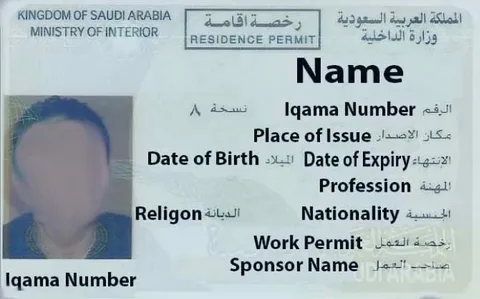
Now that you understand the Iqama meaning, you will know why it is so essential for expatriates to do the following:
- Open a bank account
- Apply for a Saudi driver’s license
- Obtain a mobile SIM card
- Enroll children in school
- Access healthcare services
- Rent or buy property
- Start a business
What Are the Different Types of Iqama?
Work Iqama
Purpose: Issued for foreign nationals employed by Saudi companies.
Who It’s For: Expatriates holding full-time employment with a Saudi-based sponsor, usually under a labor contract.
Key Requirements: Requires a work visa and sponsorship by a Saudi employer who is responsible for the Iqama application, renewal, and any related fees.
Validity: Typically valid for 1-2 years and must be renewed before expiration.
Dependent Iqama
Purpose: Issued to the family members (spouse, children, and sometimes parents) of foreign workers residing in Saudi Arabia.
Who It’s For: Family members of a primary Iqama holder (the sponsored expatriate employee).
Key Requirements: The primary Iqama holder (the sponsor) must maintain a valid work Iqama and provide necessary documentation, such as proof of relationship and accommodation.
Validity: Linked to the work Iqama of the sponsoring expatriate and must be renewed accordingly.
Premium Residency Iqama
Purpose: A special, longer-term residence permit aimed at attracting skilled professionals and investors.
Who It’s For: High-skilled expatriates, investors, and their families, looking for more permanent residency without the need for a Saudi sponsor.
Types
- Permanent Premium Residency: A one-time, indefinite Iqama with a higher fee.
- Renewable Premium Residency: A temporary, annually renewable permit.
Key Benefits: Freedom from sponsorship, ability to work, own property, and engage in business activities without a local sponsor.
Validity: Permanent or renewable based on selected option, with specific fees and application requirements.
Investor Iqama
Purpose: Designed to attract foreign investors to the Kingdom.
Who It’s For: Foreign nationals who have invested in a Saudi business or real estate.
Key Requirements: Requires approval by the Saudi Arabian General Investment Authority (SAGIA) and proof of investment.
Validity: Generally valid for a longer term, depending on the size and type of the investment, with renewal requirements based on continued investment compliance.
Government Employee Iqama
Purpose: This type of Iqama is for foreign nationals working in Saudi government positions, such as healthcare workers, teachers, consultants, and engineers recruited by government ministries and agencies.
Sponsorship: Unlike private sector employees who are sponsored by private companies, government employees are directly sponsored by the relevant government department or ministry.
Key Requirements: A valid government job offer, contract, and completion of medical and security checks.
Validity: Usually valid for 1-2 years, renewable as long as the employee is under contract.
Domestic Worker Iqama
Purpose: Issued to household or domestic workers, such as drivers, housekeepers, and gardeners, employed by Saudi citizens or expatriates.
Who It’s For: Foreign nationals working as domestic helpers in Saudi households.
Key Requirements: The sponsoring household is responsible for the visa application and Iqama processing, renewal, and related fees.
Validity: Typically valid for 1-2 years and requires timely renewal.
And with that, let’s get into the seven important steps involved in obtaining an Iqama.
Steps on How to Obtain an Iqama Residence Visa
1
Obtain Sponsorship from an Employer or Authorized Sponsor
It all starts with obtaining a sponsorship from your employer or an other authorized sponsor. The sponsor’s role includes applying for your initial work visa, which allows you to enter the country legally for employment.
Once you’re in Saudi Arabia, the sponsor takes the lead in handling much of the Iqama application process, submitting necessary documents, and coordinating steps with the Ministry of Interior. This support is invaluable as it simplifies the process, guiding you through official requirements and expediting your entry into the Saudi workforce.
2
Complete the Mandatory Medical Examination
As part of the Iqama application, a mandatory medical examination is required to confirm you are free from contagious diseases. This exam is a standard procedure to help protect public health in Saudi Arabia. During the medical exam, you will undergo several basic health checks, including:
- Physical examination
- Vision check-up
- Hearing check-up
- Blood pressure check-up
- Chest and heart examination
- Abdomen check-up
- Screening for skin and venereal diseases
Additionally, laboratory tests are conducted, which may include a chest X-ray, urine test, stool examination, and blood tests for HIV, hepatitis B and C, and syphilis. Passing this medical exam is non-negotiable for obtaining your Iqama.
3
Submit All Required Documentation
With your sponsorship in place, it’s time to submit all of the necessary documentation. Typically, you will need the following:
- Valid passport with at least six months remaining
- Signed employment contract or a letter from your employer/sponsor, certified by the Chamber of Commerce and the Ministry of Foreign Affairs
- Medical certificate confirming your health status
- Work permit, as issued by the sponsor
- Proof of health insurance, as required by Saudi law
- Sponsor’s letter endorsing your residency application
- Recent passport-sized photos (usually four to six)
For an easier application process, make sure that any documents not in Arabic are translated officially and certified. This includes making sure that the translations are precise and recognized by Saudi authorities.
Your employer or sponsor often assists in preparing these documents, handling submission, and coordinating with the Ministry of Interior, making this step more manageable.
4
Attend the Biometric Screening Appointment
Next up is to attend the Biometric screening appointment where you will go through a process to confirm your identification. During this process, participants must fingerprinting and facial capture to confirm their identity.
Individuals aged 15 and above must register their fingerprints, which are securely stored in the Automated Central System (ACS). This registration is necessary for accessing various government services and renewing an Iqama in Saudi Arabia.
5
Submit the Iqama Application to the Ministry of the Interior
Once you have completed your medical examination, biometric screening, and have submitted all required paperwork, you will go through the final submission process with the Ministry of the Interior.
At this stage, your sponsoring employer will contact the Ministry of Foreign Affairs in Saudi Arabia to obtain a visa authorization number and power of attorney. These documents enable the employer to officially apply for a work visa on your behalf. With these approvals, the application is processed through official channels, allowing the Ministry to review and verify all provided information.
6
Receive and Activate Your Iqama Card
Once the Ministry of the Interior approves your Iqama as mentioned above, you’ll receive your Iqama card through your employer or a designated government service center. This card serves as your official identification in Saudi Arabia.
To activate it, you may use an online government portal or visit a service center, depending on current procedures. After activation, your Iqama card will be fully functional, granting you access to banking, healthcare, and other services. It’s important to keep your Iqama card safe, as it’s needed regularly for identification and various transactions throughout your stay in Saudi Arabia.
7
Renewal and Maintenance of Your Iqama
As with a driver’s license in the U.S., your Iqama status will need to be renewed and maintained periodically. The renewal fee varies based on occupation, typically ranging from SAR 650 to SAR 800 per year.
For those with work permits, an additional fee of SAR 9,600 annually is covered by the employer. If you have dependents under your sponsorship, you’ll also need to pay SAR 400 per month per dependent. It’s important to stay on top of these renewals. An expired Iqama can impact your ability to access necessary services and may lead to penalties.
Recent Updates to Iqama Renewal Process (2025)
In January 2025, Saudi Arabia announced new Iqama renewal rules aimed at simplifying the process for expatriates.
Previously, all family members had to be present in the Kingdom for Iqama renewal. Now, the presence of the head of the household in Saudi Arabia is sufficient for renewal, even if dependents are abroad.
Additionally, exit and re-entry visas for family members outside the country can now be extended online through the Absher platform and the SADAD payment system, eliminating the need for in-person visits to passport offices.
How to Check an Employee’s Iqama Status
Option #1: Online Method
Step 1: Visit the Official Website
Start by navigating to the official site. While the page loads in Arabic by default, there’s an option to switch to English, making it easier to follow along in your preferred language.

Step 2: Select “Individuals”
On the homepage, find the section labeled “Individual Portal” and click through to continue.

Step 3: Input the Necessary Details
At this point, you’ll need to enter the employee’s Iqama number and their date of birth (in the Hijri calendar). If needed, there are several online tools to quickly convert Gregorian dates to Hijri.

Step 4: Complete the Captcha Verification
After filling in the details, you’ll be prompted to complete a quick captcha verification. Follow the instructions on the screen to confirm you’re a legitimate user.

Step 5: Access the Iqama Status Information
Once the captcha is cleared, you’ll see the employee’s Iqama details, including their Iqama’s expiration date and other relevant information.
Option #2: SMS method
What You’ll Need: Have the employee’s Iqama number and your sponsor ID (as the employer) ready.
How to Send: Based on the employee’s mobile provider, send an SMS with a specific format to the designated number:
Mobile Network | Verification Method |
|---|---|
STC (Sawa) | Text 12*SponsorID*Iqama to 888994 |
Mobily | Text 12*SponsorID*Iqama to 624444 |
Zain | Text 12*SponsorID*Iqama to 709444 |
This simple method gives you a fast response, keeping you updated with minimal hassle.
Option #3: Verify Iqama Offline
The Jawazat office, the General Directorate of Passports in Saudi Arabia, also provides assistance for checking Iqama status. Here’s how to do it:
- Visit a Jawazat Office: You can go to any Jawazat office for assistance. Be sure to bring the employee’s Iqama number or a copy of the Iqama.
- Inquire at the Help Desk: Request information about the Iqama status, and the staff will provide the details you need.
- Check through Absher (if visiting in person isn’t possible): Jawazat recommends using the Absher portal for more convenience, which offers similar services digitally.
Option #4: Absher App
- Log In and Complete Verification: Enter your username (or Iqama number) and password. You may be prompted to complete an additional verification step, such as an SMS code, for added security.
- Access the “Dashboard”: After logging in, navigate to the app’s main “Dashboard” section, which displays various service options. This dashboard includes an overview of your Iqama status if you are the employee, or it can show linked Iqamas if you are the employer managing others.
- Select “Inquiries”: Under the dashboard or services tab, locate and tap on “Inquiries” or “My Services,” then choose “Passports.” From here, you’ll see the option to view “Iqama Expiry Service.”
- Enter Iqama Details (if necessary): If prompted, enter the Iqama number for the individual whose status you want to check. Some employers may have multiple employees linked to their account, so select the correct individual from the list.
- View Iqama Status and Expiry Date: The app will display the Iqama status, including the expiration date and other pertinent details.
Iqama Fees and Costs
Fee Type | Description | Cost (SAR) |
|---|---|---|
Standard Iqama | Annual fee for processing | SAR 650 per year |
Dependent Iqama | Fee for each dependent (spouse, children) | SAR 400 per month (SAR 4,800/year) |
Expat Levy (Maktab Amal) | Private sector levy based on Saudization quotas | SAR 700–800 per month |
Single Exit/Re-Entry Visa | For a single exit/re-entry trip | SAR 200 for 2 months; SAR 100 per extra month |
Multiple Exit/Re-Entry Visa | For multiple trips within a defined period | SAR 500 for 3 months; SAR 200 per extra month |
Premium Residency – Permanent | One-time fee for permanent residency | SAR 800,000 (one-time) |
Premium Residency – Renewable | Annual fee for renewable residency | SAR 100,000 per year |
Medical Insurance | Mandatory health insurance for Iqama issuance | Varies (based on provider and coverage) |
Miscellaneous Processing Fees | Additional service fees for application processing | Varies |
Iqama and Maktab Amal Fees by Duration
Iqama Duration | Iqama Government Fee | Maktab Amal Government Fee |
|---|---|---|
3 Months | SAR 163 | SAR 2,100 (approx. SAR 700 per month) |
6 Months | SAR 325 | SAR 4,200 (approx. SAR 700 per month) |
9 Months | SAR 488 | SAR 6,300 (approx. SAR 700 per month) |
1 Year | SAR 650 | SAR 8,400 (approx. SAR 700 per month) |
Avoiding Common Mistakes in the Iqama Application Process
A delayed Iqama process can keep you from living and working in the Kingdom. For this reason, be sure to do your due diligence and stay on top of deadlines and requirements. Here are some of the common mistakes that you should seek to avoid:
- Missing Document Deadlines: Submit all required paperwork on time to prevent delays.
- Incorrect or Incomplete Documentation: Double-check that all documents are accurate and fully completed before submission.
- Uncertified Translations: For documents not in Arabic, make sure they’re translated by an approved service.
- Skipping Medical or Biometric Appointments: Attend all scheduled appointments promptly, as they are necessary for the process.
- Not Following Up with Your Sponsor: Keep in regular contact with your sponsor to stay updated on your application status.
- Ignoring Renewal Deadlines: Keep track of your Iqama expiration date to avoid penalties or disruptions.
Your Partner in Seamless International Recruitment and Staffing Solutions
We are committed to helping your company navigate the complexities of international recruitment and international staffing with ease. That’s why we’re here to provide you with the expertise and support you need to streamline the process. Our team is dedicated to helping you build a strong, reliable international workforce.
For those looking to hire expatriates to work in Saudi Arabia, we can help advise and guide you through the steps of the Iqama process. To learn more, contact us today.
Frequently Asked Questions
An Iqama, issued to expatriates working in Saudi Arabia, typically has a validity of one to two years. Employers and workers should monitor expiry dates closely since penalties apply if renewals are delayed.
Sponsoring an Iqama for an employee in Saudi Arabia involves several costs, covering the initial application fee, renewal fees, medical insurance (which is mandatory), and other ancillary charges. Here's a quick breakdown of common costs:
- Initial Application Fees: Ranging from SAR 650 to SAR 1000, depending on the profession and nationality.
- Medical Insurance: Required for all employees, with premiums depending on the worker's age and health.
- Occupation-Based Fees: For certain high-demand professions, there may be additional fees based on Ministry of Labor regulations.
- Dependents’ Fees: If the employee sponsors family members, extra fees apply per dependent.
Pro Tip: Employers should budget for both direct and indirect costs, which can fluctuate as the government adjusts labor and immigration policies.
No, an Iqama can only be renewed if the worker is physically present in KSA.
Iqama renewal fees in 2024 generally range around SAR 650 to SAR 1000 for employees - the exact cost varies depending on factors like profession, company size, and workforce composition.
For example, a one-year renewal costs SAR 650, while a shorter, 3-month renewal is SAR 163.
An Employer of Record (EOR) is a third-party organization that becomes the legal employer for employees on behalf of a company. The EOR manages critical employment responsibilities, such as payroll, Iqama sponsorship, compliance with Saudi labor laws, and benefits.




