
 Recruit


Switching your Employer of Record (EOR) provider is a significant decision that can impact your business operations and international workforce.
Whether you’re seeking enhanced service quality, broader geographical coverage, or cost efficiencies, understanding the complexities of this transition is vital.
This guide explains why businesses consider changing EOR providers, the challenges involved, and practical steps to manage the switch effectively, incorporating real-world experiences and considerations.
Understanding the Role of an EOR
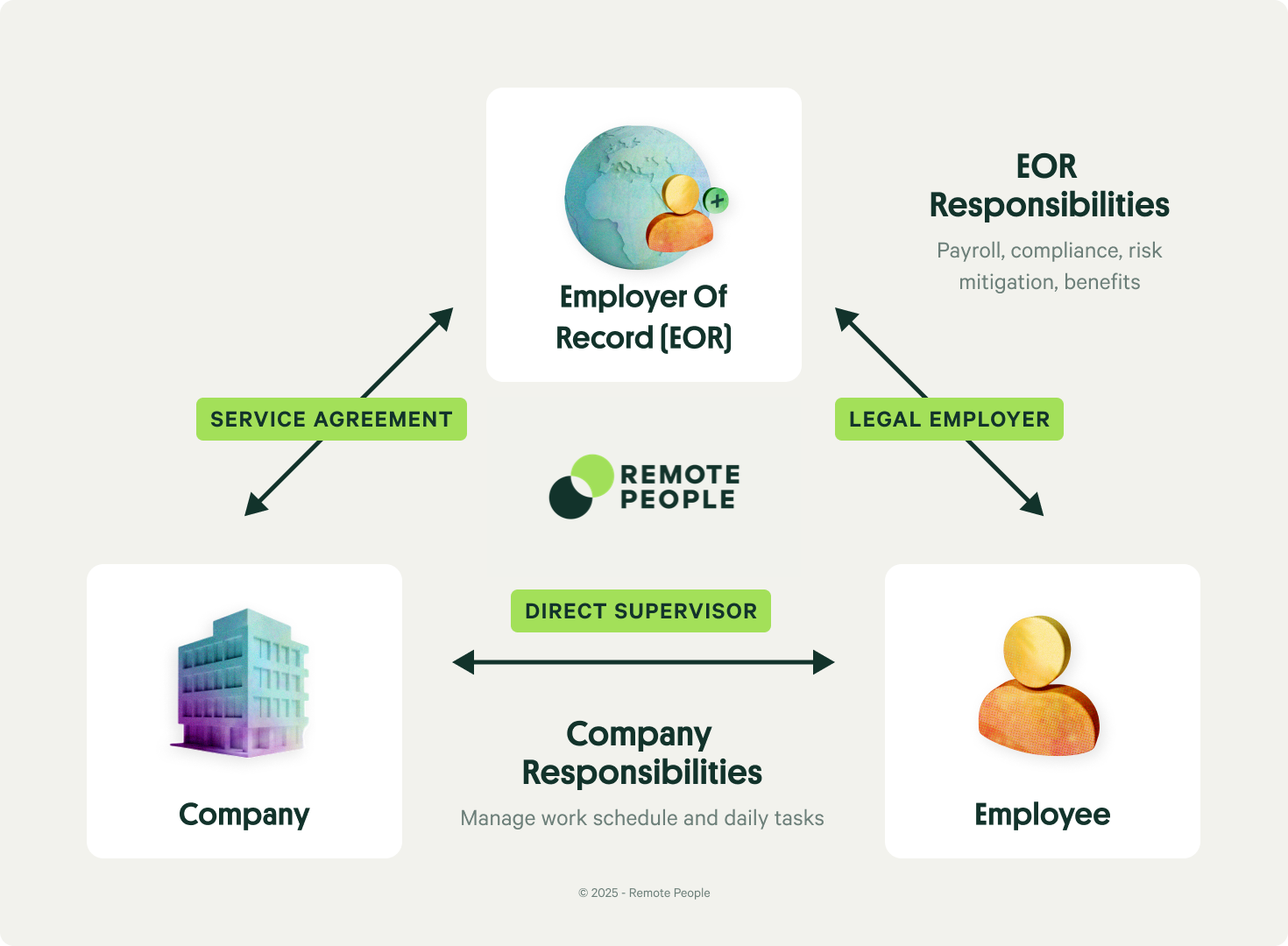
An Employer of Record is an organization that legally employs workers on behalf of another company. Acting as the legal employer, the EOR assumes responsibility for payroll, taxes, compliance, and benefits. This arrangement allows businesses to hire talent internationally without establishing a legal entity in each country, simplifying global expansion and helping manage complex labor laws.
Reasons to Consider Switching EOR Providers
Reason 1 - Limited Employee Benefits and Talent Retention
Several factors might prompt a company to change its EOR provider. One common reason is the limited employee benefits offered by some EORs. They may focus primarily on employer compliance rather than employee satisfaction, providing only minimal benefits. For instance, in countries like the UK, employers can take advantage of benefits such as salary sacrifice schemes for pensions, electronics, and cars, which offer tax efficiencies for both employer and employee.
If your current EOR company doesn’t facilitate these benefits, it might hinder your ability to attract and retain top talent. Understanding the costs and pricing of EOR services can help assess whether your provider offers value beyond basic compliance.
Reason 2 - Service Quality and Operational Efficiency
Service quality and support are also critical considerations. Changes in customer service quality can significantly impact your operations. Some businesses have reported a decline in service quality with their EORs, experiencing issues like accounting errors, delayed responses, and a lack of competent support staff.
If your EOR no longer provides the level of service required, it may be time to consider alternatives. Evaluating the pros and cons of using an EOR can guide your decision.
Reason 3 - Legal and Compliance Risks
Legal and compliance challenges can also prompt a switch. Alterations in how an EOR handles employment contracts and terminations can pose legal risks. Some companies have faced difficulties when their EOR changed policies regarding employee termination, leading to unexpected costs and complications.
Being aware of the risks of using a global EOR is essential to mitigate potential legal issues.
Reason 4 - Geographical Coverage and Expansion Challenges
Geographical limitations are another factor. As your company expands, your existing EOR might not operate in all your target regions. Managing multiple EORs can complicate compliance and increase administrative burdens. For instance, a company hiring in Spain found that their EOR couldn’t support them effectively, prompting a switch to a provider with broader coverage.
Reason 5 - Impact on Employees and Employment Rights
The impact on employees is a critical consideration. The way an EOR handles employee contracts and benefits can significantly affect your staff. In some cases, switching EORs might impact employees’ continuous employment rights, affecting benefits that accrue over time.
It’s important to consider how a change will affect your employees and to communicate transparently with them throughout the process.
Reason 6 - Cost Efficiency and Savings
Switching to a more cost-effective EOR provider can significantly reduce operational expenses. Some EORs offer competitive pricing structures or flexible plans that better align with your business needs. Additionally, switching may allow you to avoid hidden fees or unnecessary charges that your current provider might be imposing, ultimately helping your company save on global hiring and compliance costs.
Challenges in the Transition
- Employee Rights and Continuous Employment: Switching EOR providers involves several challenges that require careful management. One major concern is employee rights and continuous employment. Changing EORs can impact employees’ rights, especially regarding continuous employment and associated benefits. For example, an employee with 22 months of service may be concerned about losing accrued rights when their company switches EORs. Ensuring that continuous employment is maintained is vital to protect employee rights and avoid legal complications.
- Data Migration and Compliance: Transferring sensitive employee data must comply with data protection regulations such as GDPR or HIPAA. Mishandling this process can result in compliance violations and erode employee trust. Establishing secure data transfer protocols is essential to prevent the leakage of sensitive information.
- Legal Complexity in Termination and Agreements: Legal complexity can arise when terminating contracts with an existing EOR and establishing new agreements. This process must adhere to local labor laws to avoid legal penalties. Issues may occur if termination policies change or differ across jurisdictions. Reviewing EOR contracts is essential to understand obligations and termination procedures.
- Service Disruptions During Transition: Some companies report lapses in service quality during EOR transitions, including accounting errors and unresponsive customer support. These disruptions can affect payroll accuracy, benefits administration, and overall employee satisfaction.
- Financial Risks and Hidden Costs: Unexpected costs may arise during the transition, including severance obligations or duplicated service fees.
Being aware of potential hidden EOR fees can help you budget more effectively and avoid surprises.
Steps to Ensure a Smooth Switch
1
Assessing Your Current EOR’s Performance
Evaluate whether your EOR provides adequate benefits, responsive customer service, and compliance support. If employees are missing out on benefits common in their country – like salary sacrifice schemes in the UK – it may be time to reconsider your provider.
Understanding the costs and pricing of EOR services can help in this assessment.
2
Researching Alternative EOR Providers
Look for EORs that offer comprehensive benefits packages and have a strong track record of supporting both employers and employees. Some providers now offer creative benefits solutions, including stipends for employees to self-source perks.
Investigate options that align with your company’s values and employee expectations.
3
Consulting Legal Experts
Consult with legal experts to understand how switching EORs will affect employee rights, especially concerning continuous employment and accrued benefits.
This is crucial in regions with strict labor laws, such as the EU.
4
Carefully Planning the Transition
Develop a detailed plan that includes timelines, responsibilities, and communication strategies. Ensure that all stakeholders, including HR, legal, finance, and management teams, are aligned. Address potential challenges, such as maintaining continuous employment for staff and securing necessary benefits.
5
Transparent Communication with Employees
Transparency is key. Inform your employees about the reasons for the switch, how it will affect them, and what measures are being taken to protect their rights. For example, if continuous employment can be maintained, explain how this will be achieved.
6
Closely Monitoring the Transition
Keep a close eye on the process, addressing any issues promptly. Work closely with the new EOR to set up payroll, benefits, and compliance systems. Ensure that all employee data is transferred securely.
Key Considerations When Selecting a New EOR
Choosing the right EOR involves several important factors.
Prioritizing Employee Benefits
Select an EOR that offers robust benefits packages aligned with local standards. This not only helps in attracting and retaining talent but also ensures employee satisfaction. Some EORs have started providing creative benefits offerings and stipends for employees to self-source perks.
Service Quality and Support
Ensure the provider offers responsive customer service with competent support staff. Negative experiences, such as unresponsive support and accounting errors, highlight the importance of service quality.
Compliance Expertise
Compliance expertise is non-negotiable. The EOR should have in-depth knowledge of local labor laws and be able to handle complex situations, such as terminations and contract transfers, without exposing your company to legal risks.
Cost Transparency
Be cautious of potential hidden EOR fees. Transparent pricing models help you budget effectively and avoid unexpected expenses.
Protecting Employee Rights
The EOR should have mechanisms to maintain employees’ continuous employment and protect their accrued rights, especially when transferring from another EOR.
Real-World Experiences and Lessons Learned
Companies have shared various experiences that offer valuable insights.
Some businesses reported that their EOR’s service quality declined over time, leading to significant financial losses and employee dissatisfaction. Issues included accounting errors, unresponsive support and changes in termination policies without clear communication.
The impact on employees has also been highlighted. Employees working through EORs have expressed concerns about limited benefits and the impact of EOR changes on their employment rights. For instance, one employee was anxious about losing accrued rights after nearly two years of service due to an EOR switch.
Legal and compliance challenges have caused significant issues for some companies. They faced challenges when EORs altered their handling of employment contracts and terminations, potentially exposing them to legal risks. In some cases, EORs suggested termination agreements that were disadvantageous to employees.
These experiences underscore the importance of choosing an EOR that not only meets your business needs but also prioritizes employee well-being and compliance.
What Are the Costs Involved in Switching an EOR?
While switching your Employer of Record (EOR) provider can unlock major cost savings in the long run, there are a few short-term expenses to keep in mind.
Some common costs associated with changing EORs include:
Onboarding Fees: Your new EOR may charge a one-time fee to set up new employee contracts, payroll, and benefits administration.
Termination Fees: Depending on your contract, your current EOR might require a notice period or charge an early termination fee.
Legal and Compliance Costs: You may need legal support to review contracts, protect employee rights, and ensure smooth data migration.
Transition Costs: There could be administrative expenses tied to transferring payroll systems, employee benefits, and internal HR processes.
Typically, these costs are one-time and are quickly offset by the savings of switching to a more transparent, efficient EOR provider. Planning ahead and budgeting for these items can help your transition stay smooth and stress-free.
When Is the Best Time to Switch an EOR?
The best time to switch your Employer of Record (EOR) is typically at the end of your contract cycle, during a slow business season, or before a major hiring or expansion initiative. Many companies also time the switch to align with the start of a new fiscal year for easier payroll and tax reporting. Planning the transition carefully ensures you avoid service disruptions and maintain compliance throughout the process.
If you’re wondering about the timing for changing EOR providers, early preparation is key to a smooth and successful move.
Final Thoughts
Switching EOR providers is a complex process that requires careful consideration and planning. By thoroughly assessing your current provider’s performance, researching alternatives, and addressing potential challenges, you can make a transition that benefits both your company and your employees. Protecting employee rights, ensuring robust benefits, and maintaining high service quality are essential factors in this decision.
Frequently Asked Questions (FAQs)
It can be complex, but with careful planning, it’s very manageable. Having a clear timeline, communicating with employees early, and working closely with both your old and new EOR providers can help make the process smooth and disruption-free.
Most transitions take anywhere from 2 to 8 weeks, depending on the size of your team, the countries involved, and how quickly contracts and employee data can be migrated.
If handled correctly, employees should not lose important benefits or employment continuity. It's critical to work with a new EOR that understands how to preserve accrued rights like vacation days, retirement contributions, and tenure.
Sometimes. Some EOR agreements include early termination clauses or require advance notice (usually 30 to 90 days). It’s important to review your current contract carefully to avoid unexpected costs.
Focus on providers that offer strong compliance expertise, clear and transparent pricing, responsive support, and flexible benefits packages that align with your business goals and your employees' needs.




