
 Recruit


Thinking about hiring across borders but don’t want the headache of setting up a legal entity in every country? That’s where an Employer of Record (EOR) comes in, and it might just be the smartest move you make during global expansion.
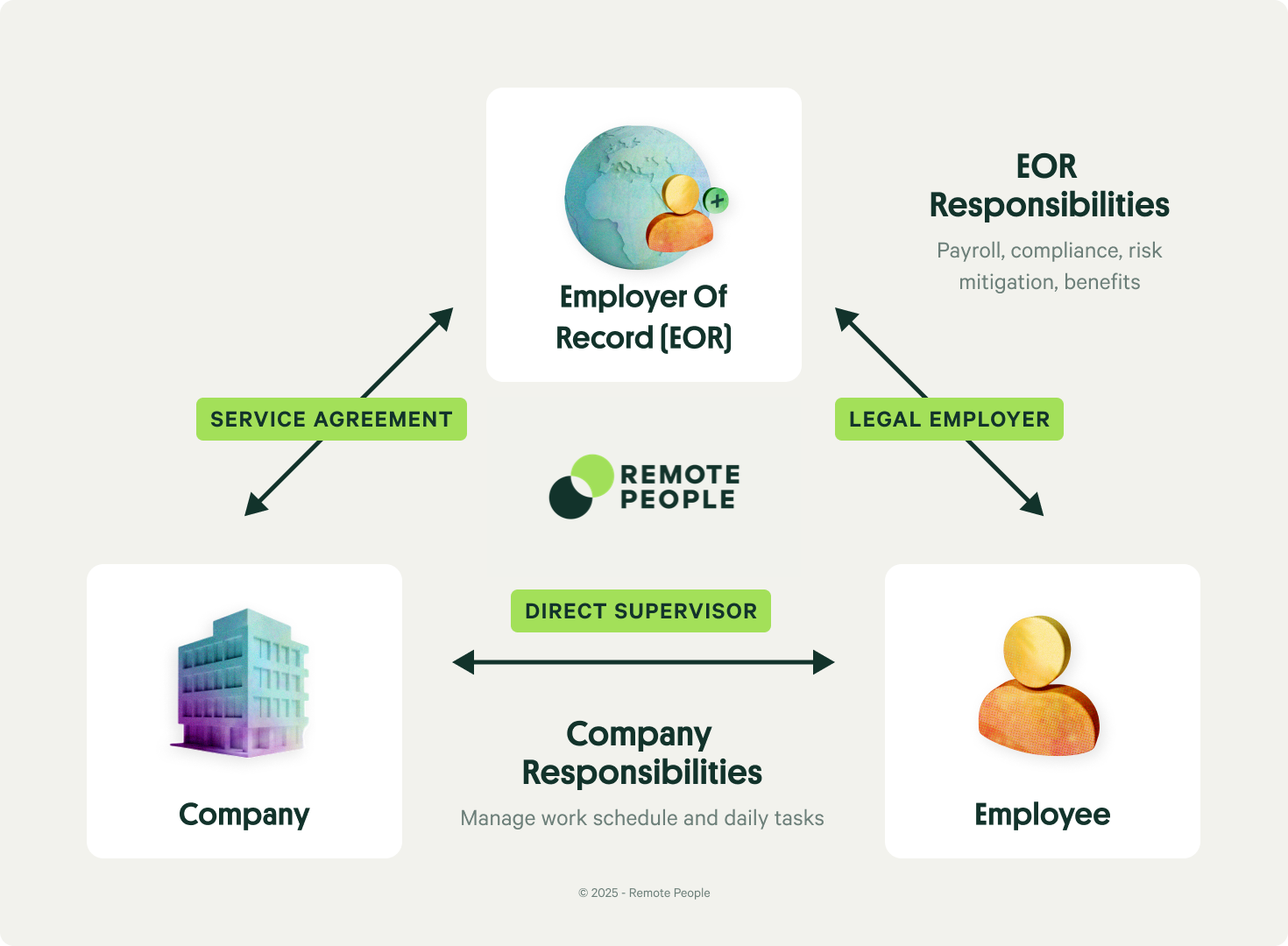
An EOR acts as the legal employer for your international hires, handling payroll, taxes, benefits, contracts, and compliance with local labor laws. You get the talent, they handle the red tape.
But here’s the catch: not all EORs are created equal. With so many providers out there, how do you choose the right one? What should you expect from a great EOR and how do you know when it’s time to bring one on board?
This guide will walk you through everything you need to know about finding the perfect EOR for your global hiring needs, including 9 must-ask questions to help you make the right call.
What Is an Employer of Record?
If the term “Employer of Record” sounds a little corporate and mysterious, don’t worry, we’ll break it down. An EOR is essentially a third-party organization that legally employs workers on your behalf in countries where you don’t have a local entity. You still manage your team’s day-to-day work and performance, but the EOR handles the backend heavy lifting, such as payroll, taxes, benefits, and making sure everything complies with local labor laws.
In other words, it’s your shortcut to hiring globally, minus the paperwork, legal red tape, and setup costs of opening a foreign branch.
EORs are especially useful for companies that want to move fast. Instead of spending months creating a local entity, you can onboard top talent in a new market within days and stay compliant while you do it.
And this isn’t just theory. Major companies are leaning into this model. In early 2024, Google reportedly laid off 200 U.S. employees and rehired in Mexico and India; a move made possible by EORs and global employment platforms. As more businesses shift toward distributed teams, the EOR model is becoming a go-to strategy for companies that want to grow without borders.
How Is an EOR Different from Other Employment Models?
Not all hiring models are built the same and if you’re wondering where an Employer of Record fits in, here’s the breakdown.
An EOR takes on the full legal responsibility of employing someone in another country. That means they’re not just helping you find talent; they’re handling the employment contract, payroll, taxes, and compliance from start to finish. It’s a clean, end-to-end solution.
Now, compare that to staffing agencies. They usually focus on temporary or contract workers, often for short-term gaps or project-based work. EORs, on the other hand, are built for long-term global hiring and strategic expansion.
Then there’s the Professional Employer Organization (PEO) model. PEOs operate through co-employment, which means you still share some legal responsibilities with the provider and usually need to have a registered entity in the country. With an EOR, it’s different, as they become the sole legal employer, which takes that burden off your shoulders entirely.
Curious about how EORs stack up against PEOs? Check out this full comparison of EOR vs. PEO.
The Benefits of Using an EOR
Using an Employer of Record isn’t just a convenience; it’s a strategic advantage. The biggest win? You can hire in new countries fast, without going through the time-consuming (and expensive) process of setting up a legal entity. That means faster market entry, lower overhead, and more room to move.
But speed isn’t the only perk.
EORs bring regional expertise to the table. They understand the labor laws, tax codes, and compliance requirements in each country where you want to hire. So instead of decoding local regulations on your own, you’ve got a partner who already knows the playbook.
And because the EOR handles all the admin, such as contracts, payroll, tax filings, benefits, you get to keep your focus on what really matters: growing your business, leading your team, and getting results.
9 Questions to for Choosing an EOR
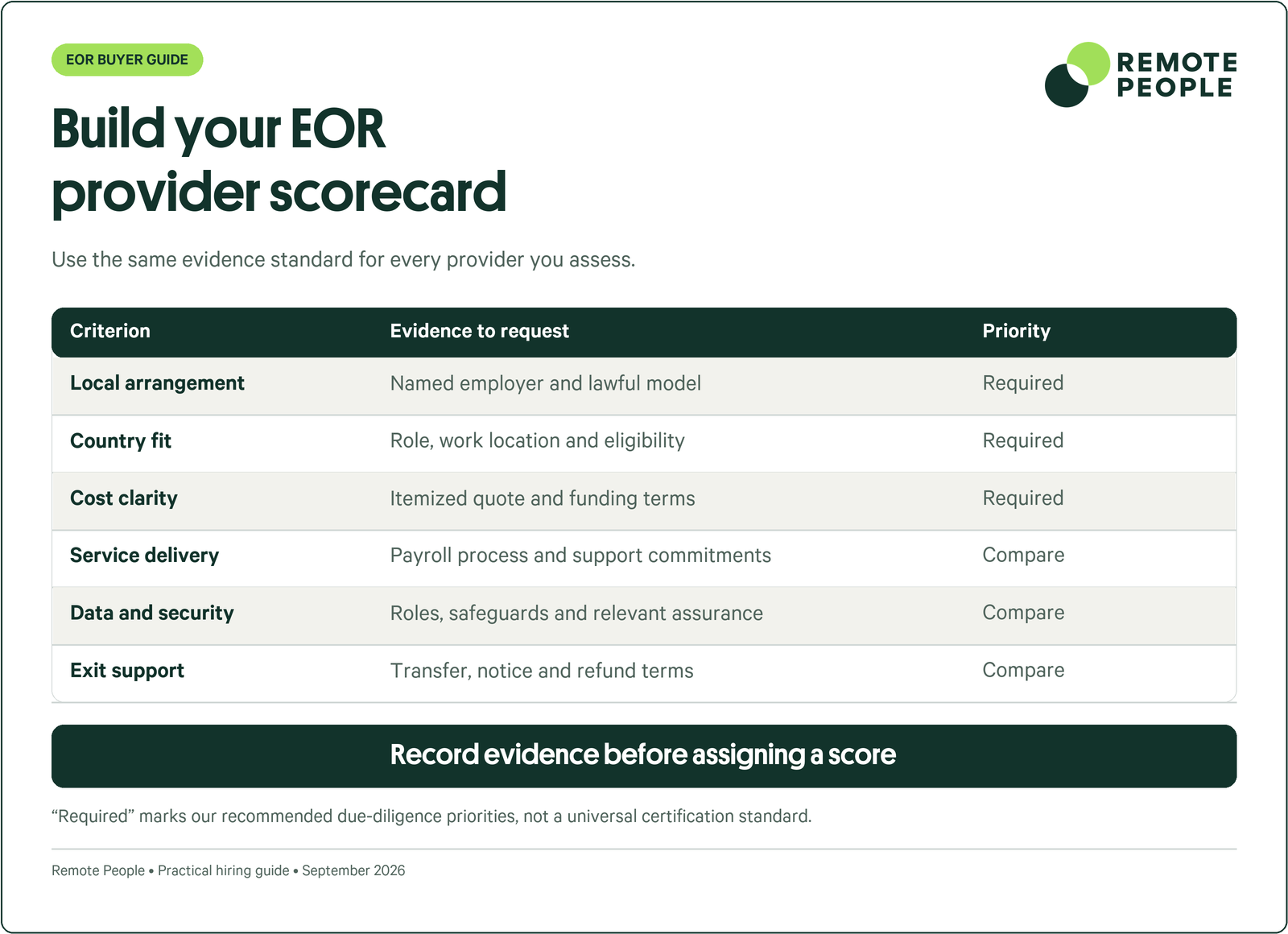
As promised, here’s your expert guide to picking the right Employer of Record, starting with the questions that actually matter. These will help you cut through the noise and find a provider that truly fits your business.
1
What Are Your Business Needs?
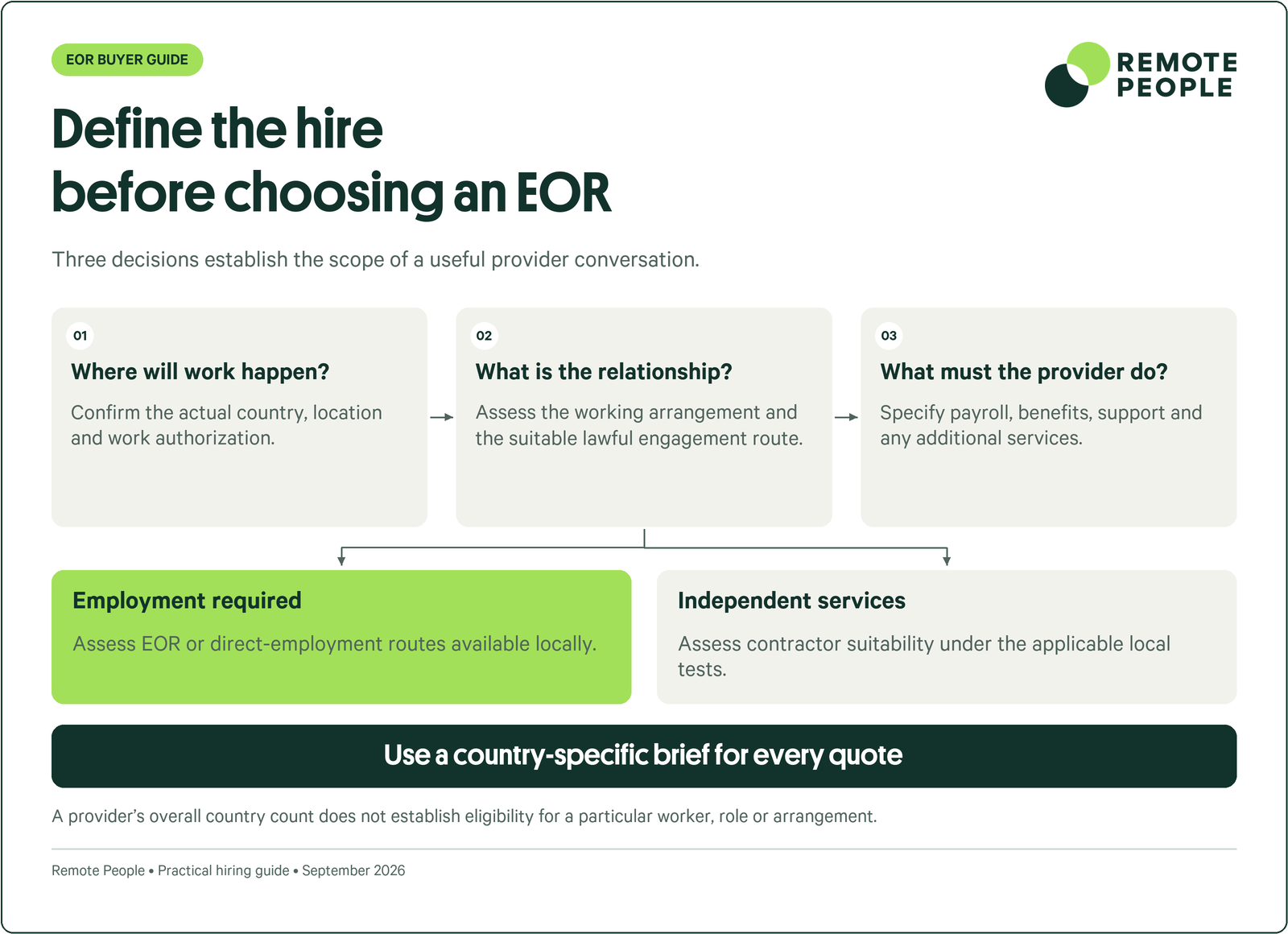
Before you start comparing EOR providers, take a step back and get crystal clear on your own goals. Where do you plan to hire? How many people do you need, right now and down the road? And how hands-on do you want the EOR to be?
Some providers specialize in certain regions or industries, while others offer broader global coverage with a full-service approach. The right fit depends on what you’re building and where you’re headed.
Make sure your specific needs – countries, roles, timelines, and support level – are clearly outlined in the agreement. The more aligned your expectations, the smoother the partnership will be.
2
Which Countries Are Supported by the EOR?
Not all EORs are built for the same map. Some cover the globe and others stick to one region and do it really well. That’s why one of the first questions to ask is: Where exactly can this EOR legally employ talent?
Big-name providers like Deel, Horizons, or Papaya Global usually have global reach, with coverage across North America, Europe, Asia-Pacific, Latin America, the Middle East, and Africa. Meanwhile, niche players like Connect Resources focus on specific regions, such as the Middle East and North Africa.
But here’s the catch; just because an EOR says they’re “global” doesn’t mean their reach is the same as their competitors. For example, Deel supports around 180 countries, while Remote covers about 100. That’s a huge difference if you’re scaling fast or planning to enter multiple markets.
So don’t assume. Ask for a full list of supported countries and dig into the depth of their local expertise in each one. Where they operate and how well can make or break your hiring plans.
3
Which EOR Services Do You Need?
Every EOR will help you hire and onboard talent abroad; that’s the baseline. But beyond that? The features start to vary, and so does the value. Some providers stick to the basics. Others go the extra mile with bonus tools and services that could seriously level up your global hiring strategy.
Here’s a taste of what’s out there:
- Horizons offers in-house recruitment, which is rare in the EOR world. If you want help sourcing candidates, they’ve got you covered.
- Remote runs a remote job board, letting you post open roles at a competitive rate to attract top global talent.
- Deel handles equipment provisioning, so your new hires get the gear they need, delivered right to their door. They also offer a payroll-only option if you don’t need full EOR services; great for teams with mixed needs. (Want to dive deeper? Check out our EOR vs Global Payroll guide.)
- Bradford Jacobs brings something unique to the table: international marketing and branding support to help establish your presence in new markets.
- WorkMotion can go a step further and register your overseas branch, then manage payroll directly through that local entity.
So ask yourself, what kind of support do you actually need? Recruiting? Equipment logistics? Branding? Entity setup? The more aligned your provider’s offerings are with your goals, the smoother your expansion will be.
4
How Much Does the EOR Cost?
Like most things in global hiring, EOR pricing isn’t one-size-fits-all. The cost can swing depending on where you’re hiring, how many employees you’re bringing on, and how complex the local labor laws are. But in general, you’ll see two main pricing models: percentage-based and flat-fee.
- Percentage-Based Fees: Some EORs charge a cut of each employee’s gross salary, usually somewhere between 10% and 20%, though it can go higher in countries with intense compliance requirements. The higher the salary, the higher the fee. This model scales with compensation, which can work for some teams and budgets.
- Flat Monthly Fees: Other providers keep things simple with a flat monthly rate per employee. That number typically falls between $200 and $2,000 depending on the market, the role, and the services included. Companies that want predictability and easier budgeting often lean toward this option.
- Extra Costs to Watch For: Some services don’t come standard, like visa sponsorship, extra HR support, or compliance audits. Always ask for a detailed cost breakdown so you’re not caught off guard by add-ons and hidden fees.
At the end of the day, yes, EORs cost money. But the time, risk, and red tape they save you from setting up a local entity? For most companies, that’s worth every penny.
5
Does the EOR Hire Directly or Sub-Contract?
Not all EORs operate the same way and how they hire behind the scenes can have a real impact on your business. So here’s the key question: Does the EOR hire employees directly through its own legal entities, or does it subcontract through local partners?
Let’s break it down.
- Direct EOR Model: Some providers like Remote and Atlas, own and operate their own legal entities in the countries where they offer EOR services. This means they directly employ your talent and manage everything in-house, from contracts to compliance. The upside? Fewer middlemen, more control, and a single point of accountability if anything goes sideways.
- Aggregator or Subcontracted EOR Model: Others, like Papaya Global, work through a network of local partners or in-country providers (ICPs). These affiliates technically become the employer of record, while the EOR manages the relationship and handles coordination on your behalf. This setup is common in regions where the provider doesn’t have a direct presence and is often called an aggregator model.
- Hybrid EOR Model: Many EORs fall somewhere in between. They might operate directly in some countries and rely on partners in others. This hybrid model can offer a balance of control and reach, especially useful if you’re hiring in both major and niche markets.

So, what’s the best model for you?
- If you want one partner, one contract, and minimal risk, direct EORs may be the way to go.
- If you prioritize local expertise in each market, a well-managed aggregator model might actually give you better results.
- If you’re scaling across multiple regions and need flexibility, a hybrid EOR could offer the best of both worlds.
Whatever you choose, transparency is key. Make sure your provider is upfront about where they operate directly and where they rely on local partners, so you know exactly who’s employing your team.
6
What Is the EOR’s Compliance Expertise?
When it comes to hiring globally, compliance isn’t just a box to check; it’s the foundation. Your EOR absolutely must have a deep, working knowledge of local labor laws, tax regulations, benefits requirements, and employment standards in every country where you plan to hire.
Ask the hard questions.
- How do they stay on top of legal changes across multiple jurisdictions?
- Do they have local legal experts on the ground?
- What’s their process for managing and updating compliance protocols?
- How do they interact with local authorities to resolve issues before they become expensive problems?
You’re trusting this partner to keep you out of hot water, so don’t just take their word for it. If an EOR has a history of compliance failures or has faced litigation in key markets, that’s a red flag worth paying attention to.
In short: the right EOR doesn’t just keep up with regulations; they stay ahead of them.
7
What Is the EOR SaaS Platform Like?
The tech side of an EOR can make or break your experience. A sleek platform with smart features can save you hours each week. A clunky, outdated one? Total headache.
So when you’re vetting providers, ask to see their platform in action. Look for:
- User-friendly dashboards that make it easy to manage payroll, benefits, and contracts in one place
- Employee self-service tools so your team can access pay stubs, update info, and onboard themselves without bugging HR
- Real-time reporting so you always know where things stand
- Built-in compliance alerts to flag any red tape before it trips you up
And support matters, too. You want more than a chatbot and a knowledge base. Look for 24/7 access to real humans and ideally, a dedicated account manager who actually knows your name.
If deep integrations and robust HR features are a priority, consider platforms like Rippling or Deel. These providers combine EOR services with full-blown HR tech stacks, perfect for companies that want everything in one ecosystem.
The bottom line? Great tech doesn’t just make things easier; it gives you the visibility and control you need to scale with confidence.
8
Is the EOR Transparent?
EOR pricing can get murky fast. Some charge flat monthly fees, others adjust based on employee count, regions, or the specific services you use. And while the cheapest option isn’t always the best value, you still need to know exactly what you’re paying for.
That’s why transparency is key. A trustworthy EOR will walk you through their pricing model, break down every fee, and explain how their services map to those costs. No guesswork. No fine print surprises.
If a provider dodges direct questions about pricing or seems vague about what’s included, that’s a red flag. You deserve clear answers and full visibility, especially when you’re trusting someone to manage your global team.
9
What Do Client Reviews Say About the EOR?
You can learn a lot from the companies that came before you. Ask for references. Browse reviews. Scan through real client stories. Their experiences can tell you more than any sales pitch ever could.
Check platforms like G2 or Trustpilot for honest user feedback. Look for case studies or testimonials from companies that are similar to yours in size, industry, or growth stage. Better yet, tap into your network and see who’s used the provider and what their hiring journey actually looked like.
In the end, reputation speaks volumes. A strong EOR should come highly recommended, not just for what they promise, but for what they consistently deliver.
Is Your Organization Ready to Choose an Employer of Record?
By now, you’ve done your research, asked the right questions, and narrowed down your options. But here’s the final gut check: is your company truly ready to take the leap?
Choosing an Employer of Record is a strategic move, and timing matters. So how do you know if it’s the right time to bring one on board?
Here are a few clear signs your organization is ready to reap the benefits of an EOR.
New Market Expansion
Thinking about taking your business global, but not quite ready to tackle international employment laws on your own? That’s where an EOR comes in. If you’re eyeing new markets but lack the legal infrastructure or in-house expertise to hire locally, an Employer of Record can fast-track your expansion.
Instead of spending months setting up a local entity, an EOR lets you hit the ground running. You get to hire local talent quickly, stay fully compliant, and avoid drowning in red tape. It’s a smart shortcut to scaling globally without slowing down.
Your Team Is Growing Fast
If your workforce is expanding faster than your HR team can keep up, you’re not alone. Managing payroll, benefits, taxes, contracts, and compliance across multiple jurisdictions can stretch even the strongest internal teams to the breaking point.
This is where an EOR becomes a game-changer. They take the admin load off your plate so your team can focus on what really matters, building a thriving company culture, strengthening employee experience, and driving your business forward.
Increasing Demand for Talent
Talent shortages are real and local hiring pools aren’t always enough. More and more companies are going global to fill the gap. According to Deel’s 2024 Global Hiring Report, remote hiring continues to rise in places like the U.S., UK, and Australia, even as return-to-office policies make a comeback.
With an EOR, you can unlock talent in nearly any region, quickly, compliantly, and without having to set up shop. When hiring speed matters, an EOR helps you move fast and stay competitive.
Concerns about Global Hiring Compliance
Hiring across borders isn’t just a matter of signing a contract. It’s navigating a maze of labor laws, tax codes, and regional nuances. Without the right support, things can go sideways fast: financial penalties, legal slip-ups, even brand damage.
That’s why working with an experienced EOR is a smart move. The right provider brings boots-on-the-ground knowledge of local regulations and helps you stay compliant from day one. They don’t just protect your business, as they help you build sustainably and with confidence.
Emphasis on Core Operations
When managing international payroll, benefits, and compliance starts pulling your team away from what they do best, it’s time to re-evaluate.
An EOR steps in to handle the backend admin, so your internal team can get back to driving strategy, scaling your product, and delivering on business goals. It’s not just outsourcing; it’s reclaiming your focus. Plus, the right EOR becomes more than a vendor; they become a strategic partner in your global growth journey.
What Happens If You Don’t Use an EOR?
Expanding into new markets without the support of an Employer of Record can feel like trying to run a marathon in flip-flops. It’s doable, maybe, but slow, painful, and full of risk. Here are a few of the most common setbacks businesses face when they go it alone:
Increasing Costs
Opening a local entity isn’t cheap. Between legal fees, tax registrations, office setup, licenses, and hiring costs, things can spiral quickly. An EOR helps you bypass all that and start operating right away, without the financial drag.
Compliance Problems
Every country has its own set of labor laws, and they’re rarely simple. Without expert guidance, it’s easy to get tripped up on tax rules, benefits requirements, or worker classification. Mistakes here don’t just cost money; they can damage your reputation and bring legal trouble.
Team Overwhelm
Trying to manage international payroll, contracts, and compliance without external help can stretch your HR and finance teams to the limit. When overwhelmed employees are juggling unfamiliar regulations, mistakes happen and morale takes a hit.
Slower Global Growth
Setting up a legal entity in another country can take months. Meanwhile, your competitors may already be hiring and building their presence with the help of an EOR. Without one, you risk falling behind before you even get started.
Choosing the right Employer of Record is a strategic move that helps you grow globally without getting bogged down in complexity. If your business is ready to scale, partnering with an EOR might be the smartest step you take.
EOR Red Flags: What to Watch Out For
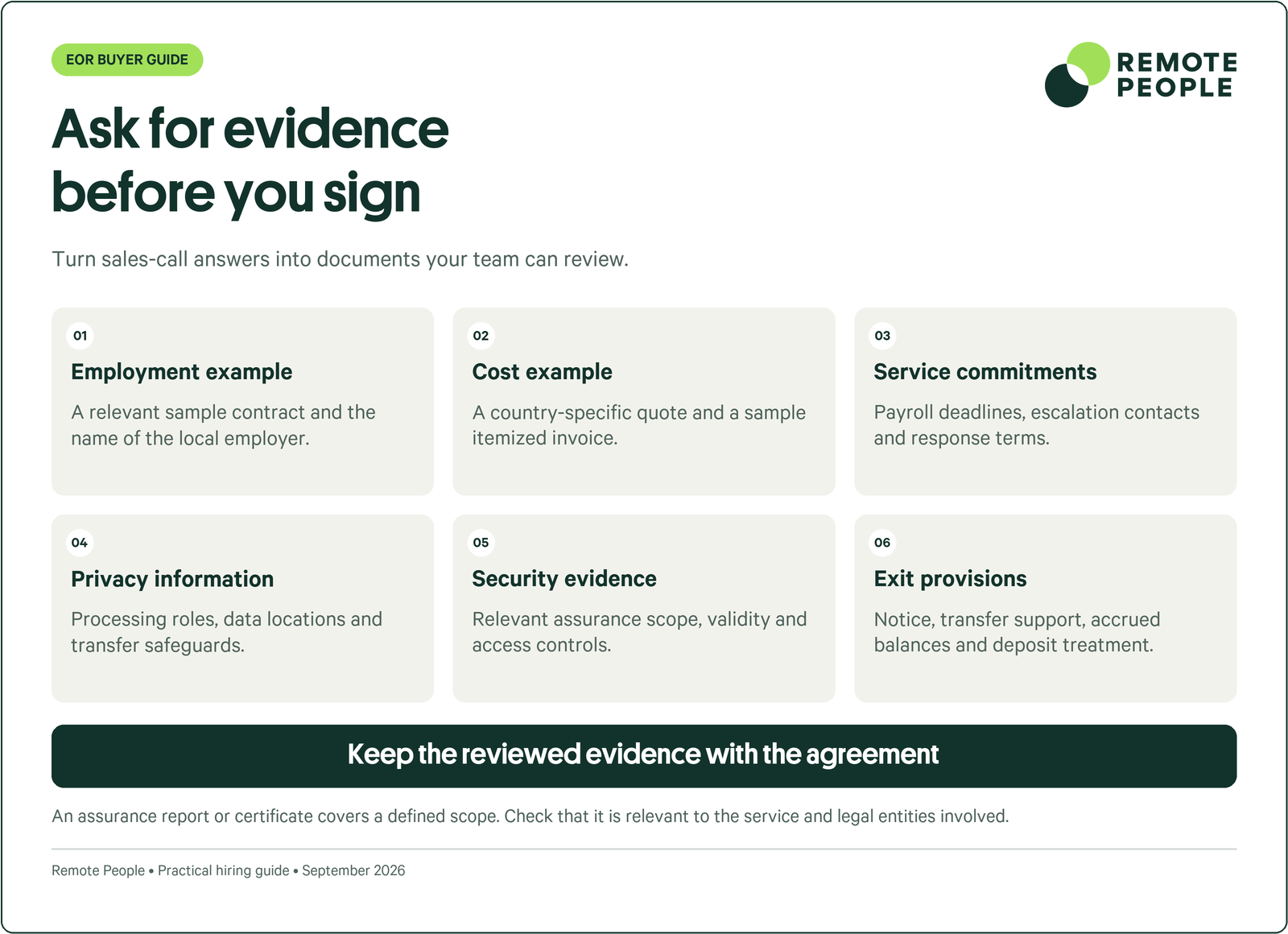
Not every EOR provider is created equal. And while some will genuinely help you scale with ease, others may leave you tangled in red tape, extra costs, or worse – compliance nightmares. Before you sign anything, keep an eye out for these warning signs:
- Vague or Hidden Pricing: If an EOR can’t clearly explain what you’re paying for or hits you with surprise fees later, it’s a no-go. Transparent, upfront pricing is non-negotiable.
- No Clarity on Local Presence: Are they hiring directly or through a local partner? If the provider isn’t crystal clear about their model (direct, partner-based, or hybrid), it’s hard to know who’s really responsible for your employees.
- Weak Compliance Knowledge: Ask how they stay updated on labor laws. If their answer is fuzzy or generic, that’s a red flag. You need someone who understands the laws in every country you plan to hire.
- Poor Communication or Support: If you’re stuck talking to a chatbot or bouncing between reps before you even sign the contract, imagine what support will be like when you really need help. Look for providers that offer a dedicated point of contact and reliable response times.
- Lack of Reviews or References: Can’t find client feedback? Can’t get a reference call? That’s a red flag. Reputable EORs should have case studies, testimonials, or at the very least, happy clients willing to vouch for them.
Choose the Best EOR for your Business
With so many EOR providers out there, finding the right fit can feel overwhelming. But narrowing it down doesn’t have to be a guessing game. Focus on what matters most: service offerings, global coverage, transparent pricing, compliance track record, and real-world reviews.
When you’re ready to simplify global hiring and scale with confidence, RemotePeople is here to support you. We help you implement the right EOR solution for your goals, so you can expand internationally without unnecessary complexity.
Reach out today and take the first step toward smarter, faster international hiring.
Frequently Asked Questions About Choosing the Right EOR
An EOR becomes the legal employer of your international hires and handles all compliance, payroll, and HR tasks without requiring you to set up a local entity. A PEO, on the other hand, operates under a co-employment model, which typically requires you to have a legal presence in the country.
You’re likely ready if you're expanding into new markets, facing compliance challenges, or need to scale quickly without establishing local entities. An EOR helps simplify operations and reduce risk while giving you access to global talent.
Look for transparency in pricing, legal compliance expertise, geographic coverage, tech capabilities, and real client reviews. Your ideal EOR should align with your hiring goals and offer support that grows with your business.
Yes, switching providers is possible, but it requires careful planning to avoid disruptions in payroll, contracts, and employee experience. Choose an EOR with flexibility and exit support if future scalability is a concern.
Costs vary based on country, role, and services, but most EORs charge either a flat monthly fee per employee or a percentage of each employee’s salary. Always request a detailed breakdown to avoid hidden fees.