Recruit


With remote work becoming increasingly prevalent, companies are considering expanding their workforce internationally more than ever.
Hiring international employees brings diverse perspectives and specialized skills and provides access to top talent at a lower cost. To get the most out of global hiring, choosing the best international hiring solution for your specific business is essential.
Hiring overseas is becoming almost a strategic necessity. With skill shortages in most developed economies, global talent acquisition is often the only way to fill your workforce needs. It’s also often much more affordable than hiring locally.
In this guide, I draw on my long experience in employment and HR law to assess all the options for compliantly hiring employees overseas. Depending on your needs, international recruitment agencies, Employers of Record, Global Mobility providers, and company formation agents are all viable options. I explain what each option involves and then explain when it might benefit your business.
Top 6 Benefits of Hiring International Remote Workers
1
Access to a Global Talent Pool
Expanding your search beyond national borders gives you access to qualified professionals that may not be available locally. For example the tech talent shortage in Germany has led to a record number of international hires in 2024.
By looking overseas, you can find candidates with the exact skills and expertise your company needs.
2
Enhanced Brand Image
Building a multicultural workforce can significantly boost your company’s brand and appeal to future candidates. Collaborating with professionals from diverse backgrounds fosters a dynamic and innovative work environment. It also demonstrates your commitment to diversity, collaboration, and inclusive problem-solving.
3
Around-the-Clock Productivity
Hiring remote workers across different time zones can provide continuous productivity for your business. For instance, team members in various regions can ensure that work progresses even after your local office hours.
If time zone alignment is essential, hiring from regions like Latin America (LatAm) can offer near-synchronous working hours.
4
Cost Savings on Salaries
International hiring can lead to significant cost savings due to lower living expenses in other regions. Salary expectations are often more modest compared to domestic employees.
For instance, U.S. companies hiring skilled professionals from regions such as LatAm and APAC can save between 30% and 70% on salary costs. This allows businesses to reallocate resources to other critical areas, such as marketing or product development.
Let’s take IT profiles as an example!
Hiring IT professionals from emerging countries offers substantial cost advantages over sourcing similar talent locally in Europe or the U.S. By tapping into our service, you can access highly skilled IT experts in regions like APAC and LatAm at competitive rates, optimizing your recruitment budget without sacrificing quality. This approach helps meet your technical needs and brings fresh, global perspectives to your team, maximizing value and efficiency in every hire.
| 5 years exp | United States | West Europe | Philippines | Vietnam | India | South Africa | Mexico | Romania |
|---|---|---|---|---|---|---|---|---|
| Software Developer | $120,000 | $70,000 | $18,000 | $25,000 | $20,000 | $28,000 | $25,000 | $35,000 |
| Systems Analyst | $100,000 | $65,000 | $15,000 | $22,000 | $18,000 | $22,000 | $19,000 | $32,000 |
| Network Engineer | $95,000 | $60,000 | $13,000 | $20,000 | $15,000 | $26,000 | $17,000 | $30,000 |
| Data Scientist | $140,000 | $75,000 | $22,000 | $35,000 | $30,000 | $40,000 | $35,000 | $45,000 |
| IT Project Manager | $115,000 | $68,000 | $24,000 | $30,000 | $25,000 | $35,000 | $30,000 | $40,000 |
5
Cultural Diversity and Fresh Perspectives
International employees bring unique cultural insights and diverse perspectives that can enrich your company culture. Their varied backgrounds encourage open exchange of ideas and collaborative problem-solving, leading to innovation and enhanced team dynamics.
6
Multilingual Capabilities
If you’re expanding into global markets, having team members who are fluent in different languages is invaluable. They can communicate effectively with international clients and stakeholders, and provide insights into cultural nuances that can inform your business strategies.
How to Recruit Workers from Other Countries
There are two primary approaches to sourcing international remote talent: doing it yourself or partnering with a recruitment agency.
In-House Recruitment
If you choose to manage the hiring process independently, follow these steps:
- Define the Ideal Candidate: Identify the skills, qualifications, and experience required for the role.
- Craft a Detailed Job Description: Clearly outline the responsibilities, expectations, and any specific requirements.
- Advertise Internationally: Post the job on global job boards like Indeed, LinkedIn, and Glassdoor, and consider using social media platforms to reach a wider audience.
- Leverage Professional Networks: Engage with industry groups and professional organizations that can share your job posting with potential candidates.
- Network Within the Industry: Connect with other professionals who may refer qualified candidates.
- Standardize the Interview Process: Develop a consistent set of interview questions to fairly evaluate all candidates.
- Plan for Onboarding: Create a robust virtual onboarding process to integrate new hires smoothly into your team.
Recruitment using an International Recruitment Agency
If managing the talent acquisition process seems complicated, partnering with an agency that specializes in international recruitment can streamline it. These agencies have access to extensive networks and can handle the complexities of sourcing and vetting candidates. It is common for international recruitment agencies to specialize in certain industries such as tech and software development, marketing, or executive search.
Offshore or Nearshore Staffing Agencie
Another option is to hire an international staffing agency. These are similar to recruitment agencies, except they actually supply the talent as well as recruiting them. Then, after a period of time, the client company often has the choice whether to add the employee to their own payroll. The two key options are offshore and nearshore agencies.
Offshore and nearshore staffing agencies offer distinct approaches to international hiring, each with unique advantages and drawbacks. Offshore staffing means hiring talent in countries typically far from the home office, often in regions with significantly lower labor costs, such as Southeast Asia or Africa. This model is particularly attractive for companies looking to save on operational expenses while accessing a broad pool of skilled workers, especially in IT, customer support, or manufacturing. Conversely, nearshore staffing involves hiring talent in neighboring or nearby countries, often within the same time zone or a few hours’ difference. This approach is favored by businesses seeking to balance cost-efficiency with enhanced communication and collaboration due to proximity.
One of the primary benefits of offshore staffing is cost savings, as labor in distant regions can be significantly cheaper. Additionally, offshore agencies often provide access to large pools of specialized talent in areas like technology and engineering. However, the geographic distance can pose challenges, such as time zone differences, cultural barriers, and potential language gaps, all of which can hinder communication and productivity. Moreover, managing compliance with unfamiliar legal and regulatory environments adds complexity, particularly when working with countries that have intricate labor laws or different employment standards.
Nearshore staffing, while typically more expensive than offshore options, offers improved collaboration due to closer time zones and cultural similarities. These factors often result in more seamless communication and faster response times, making nearshore staffing a preferred choice for projects that require frequent interaction or real-time collaboration. However, nearshore staffing may still carry higher operational costs compared to domestic hiring, and the talent pool, while closer and culturally aligned, might be more limited in size or diversity than offshore options. Ultimately, the choice between offshore and nearshore staffing depends on the company’s specific needs, budget, and priorities in international hiring.
Hiring Insights Made Simple: Country-Specific Guides
Hiring internationally can be both a challenge and an opportunity for businesses. On one hand, tapping into a global talent pool offers access to diverse perspectives, skills, and expertise that can transform your organization. On the other hand, each country comes with its own unique labor laws, cultural considerations, and hiring practices, making the process complex and often overwhelming.
To help simplify this journey, we’ve created a collection of country-specific hiring guides. These resources are designed to give you actionable insights into navigating the nuances of hiring in different regions, from understanding employment laws to crafting culturally tailored recruitment strategies.
Whether you’re planning to expand your workforce in Europe, Asia, the Americas, or beyond, these guides will help you make informed decisions and stay compliant. Below, you’ll find a table of hiring guides organized by country—an essential toolkit for building your global team.
By focusing on the unique needs of each region, these guides eliminate uncertainty and provide you with practical, reliable information tailored to local markets. From navigating visa requirements to understanding employer obligations, they serve as a one-stop resource to help your organization avoid costly mistakes and ensure a smooth hiring process.
With these tools, your hiring strategy becomes proactive rather than reactive, empowering you to confidently expand into new territories and connect with top-tier talent.
How to Compliantly Hire After Recruitment
Once you have worked out your approach to recruitment, you then have several options for compliantly hiring those candidates:
Establish a Legal Entity
Setting up a legal entity in a foreign country allows you to hire employees directly. This process give you maximum control over your international workforce, but involves significant upfront costs and administrative work, including registering your business, obtaining licenses, understanding local employment laws, and setting up payroll systems.
Partner with a Global Employer of Record (EOR)
An EOR acts as the official employer overseas on your behalf, handling all legal, HR, tax, and compliance responsibilities.
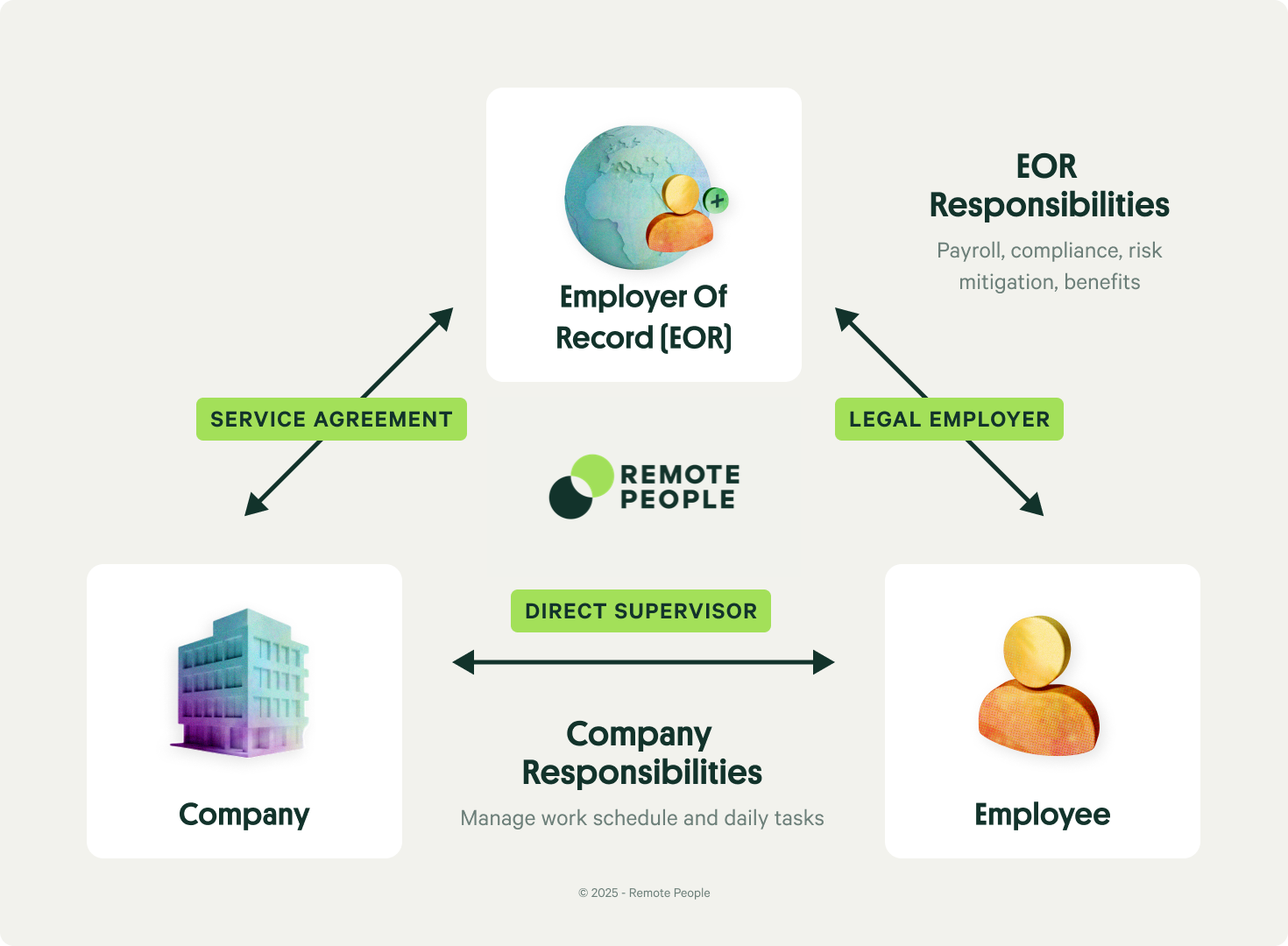
This arrangement simplifies hiring and reduces your need to understand complex local regulations. While you retain control over day-to-day management, the EOR ensures compliance with local laws.
This option saves your company on the significant cost of setting up an overseas entity and compliant payroll.
See a breakdown of the costs involved in our detailed EOR vs Legal Entity Guide. In addition, to find out which kind of EOR might suit your company check out our guide to the top EOR companies.
Hire Independent Contractors
Engaging contractors is a flexible option that doesn’t require establishing a legal entity or partnering with an EOR. Contractors handle their taxes and benefits, and you pay them according to the agreed terms.
However, this model requires careful attention to legal classifications to ensure that workers are correctly classified as contractors rather than employees.
Solutions such as contractor management platforms streamline this process by handling crucial aspects like payment processing, compliance with local labor laws, and documentation. These companies are also known as Agents of Record or Contractor of Record companies.
These platforms provide a structured way to manage contractors globally, reducing misclassification risks and simplifying administrative tasks. With contractor management solutions, businesses can confidently engage talent across borders, ensuring seamless operations and adherence to worldwide regulatory standards.
Discover everything you need to know about contractor management solutions in our comprehensive guide, including an in-depth analysis and top recommendations for the best contractor management software.
9 Common Questions About Hiring International Remote Workers
1
Do Remote Workers Have to Pay U.S. Taxes?
Generally, remote workers pay taxes in their country of residence. However, tax obligations can vary, and some countries may require you to withhold taxes or submit tax documentation on behalf of the employee. Consult with a tax professional to understand your responsibilities.
2
Do I Need to Address Taxes in the Employee’s Home Country?
Yes, you may need to comply with the tax laws of the employee’s country. This could involve withholding taxes or contributing to social security systems. Partnering with a global payroll provider or consulting with local experts can help you navigate these requirements.
3
Are Benefits Like Health Insurance Necessary for Remote Workers?
If you’re hiring employees (not contractors), you may be required to provide certain benefits based on local employment laws. For contractors, benefits are typically not obligatory, but offering them can make your position more attractive.
4
Should Remote Workers Be Classified as Independent Contractors?
Classification depends on the nature of the work relationship. Contractors generally have more control over how they complete their work. Misclassification can lead to legal issues, so it’s important to consult with legal experts to determine the appropriate classification.
5
How Does the Independent Contractor Model Operate?
In this model, you engage a contractor to perform specific tasks or projects. They manage their own taxes and benefits, and you pay them based on deliverables or hours worked. This arrangement offers flexibility but requires clear agreements to define the scope of work.
6
Do International Remote Workers Need Visas?
No, if they work remotely from their home country, they don’t need a visa for your country. If they need to travel to your country for business purposes, they may require a temporary visa, depending on the duration and purpose of the visit.
7
Is Providing Equipment to Remote Workers Necessary?
For employees, providing necessary equipment can be part of your obligations. For contractors, they typically supply their own tools and equipment unless otherwise agreed upon.
8
Do Remote Workers Have Reliable Internet Access?
Internet reliability varies by location. It’s important to assess this during the hiring process to ensure they can perform their duties effectively. Consider discussing technical requirements during interviews.
9
How Can I Retain Top International Talent?
To retain international remote workers:
- Offer Competitive Compensation: Align salaries and benefits with local market rates.
- Provide Growth Opportunities: Offer training, mentorship, and clear career paths.
- Maintain Open Communication: Regular check-ins and feedback sessions strengthen engagement.
- Foster Inclusion: Create a company culture that values diversity and includes remote workers in team activities.
Can U.S. Companies Legally Hire Remote Workers from Other Countries?
Yes, U.S. companies can legally hire remote workers residing in foreign countries. While directly employing international workers without a legal entity in their country can be complex, hiring them as independent contractors is one viable solution.
This approach allows you to offer roles similar to full-time positions, including benefits like paid time off (PTO) and other perks such as health insurance or gym memberships through online platforms.
Doing so ensures remote workers can access everything they need for job satisfaction and optimal performance.
How to Pay International Remote Workers
Several platforms facilitate secure and efficient payments to international employees and contractors:
Deel

Deel offers compliance and payroll solutions for hiring international workers. It handles contracts, payments, and compliance documents, simplifying global hiring.
💡 Read our in-depth review: Deel Review
Multiplier

Multiplier provides global employment solutions, including onboarding, payroll, and compliance management for international teams.
💡 Read our in-depth review: Multiplier Review
Payoneer

Payoneer enables cross-border payments, allowing you to pay remote workers in their local currency. It’s known for its wide network and ease of use.
Wise

Wise specializes in low-cost international transfers, enabling seamless cross-border payments with transparent fees and mid-market exchange rates, ideal for businesses paying remote workers.
When selecting a payment platform, consider factors such as fees, exchange rates, compliance features, and user experience.
Roles Suitable for International Remote Workers
Many roles can be effectively performed remotely by international talent:
- Administrative Support
- Virtual Assistance
- Customer Service
- Finance and Accounting
- Marketing and Sales
- Software Development and IT Services
With the right infrastructure and communication tools, international remote workers can excel in these and many other positions.
Final Thoughts
Hiring international remote workers is a strategic move that can unlock access to global talent, drive innovation, and provide significant cost savings. By understanding the legal, cultural, and logistical aspects of international hiring, you can build a diverse and effective remote team that propels your business forward.
If you’re ready to explore hiring international talent or have questions about the process, consider consulting with experts who specialize in global recruitment. They can provide valuable guidance to ensure a smooth and compliant hiring experience.
To find out more about the best way for your company to hire globally, talk to one of our international talent acquisition experts.